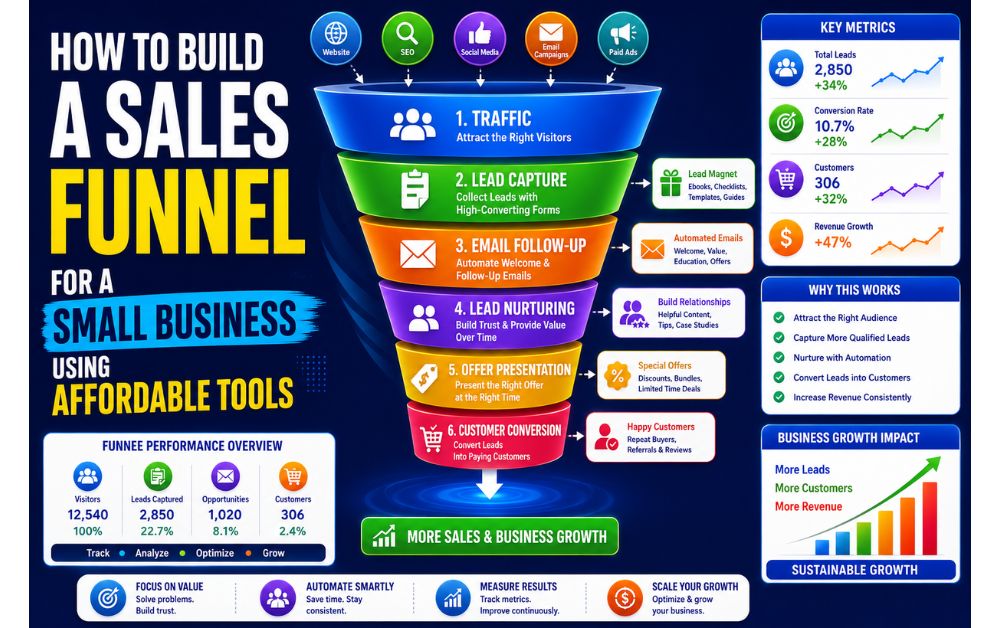
Building a sales funnel for a small business does not have to be complicated or expensive. Many business owners assume they need advanced software, large marketing budgets, or technical expertise to generate leads and convert customers. In reality, a simple and well-structured funnel can often outperform a complex system that is difficult to manage.
A sales funnel is a step-by-step process that guides potential customers from discovering your business to becoming paying customers. Instead of hoping visitors eventually make a purchase, a funnel creates a clear path that encourages action at every stage. It helps businesses attract the right audience, capture contact information, nurture relationships, and convert leads more consistently.
The good news is that affordable tools now make funnel building accessible for almost any business. Whether you run a local service company, online business, consulting agency, or small store, you can create an effective sales funnel without spending thousands of dollars. Understanding the fundamentals is the first step toward generating predictable leads and sustainable growth.
A sales funnel is a structured process that guides potential customers from their first interaction with a business to becoming paying customers. Instead of relying on random inquiries or one-time visits, a funnel creates a clear path that moves prospects through different stages of the buying journey.
The process typically begins when someone discovers your business through search engines, social media, referrals, or advertising. Once they show interest, the funnel encourages them to take a specific action, such as downloading a resource, requesting a quote, or joining an email list. From there, follow-up communication helps build trust and answer questions until the prospect is ready to make a purchase.
A sales funnel helps businesses understand where leads come from, how prospects interact with marketing efforts, and what actions lead to conversions. Rather than chasing customers manually, businesses can create a repeatable system that consistently attracts leads, nurtures relationships, and increases sales over time.
Why Every Small Business Needs a Sales Funnel
Many small businesses struggle with inconsistent sales because they do not have a process for turning visitors into customers. People may visit a website, view services, or ask questions, but without a structured system, most of those opportunities are lost.
A sales funnel helps solve this problem by guiding prospects through each stage of the buying process. Instead of relying on chance, businesses can actively move potential customers toward a decision using targeted communication and strategic follow-ups.
Another major benefit is predictability. When a funnel is working properly, business owners can identify where leads are coming from, which marketing activities are producing results, and how many prospects are converting into customers. This makes growth easier to manage and scale.
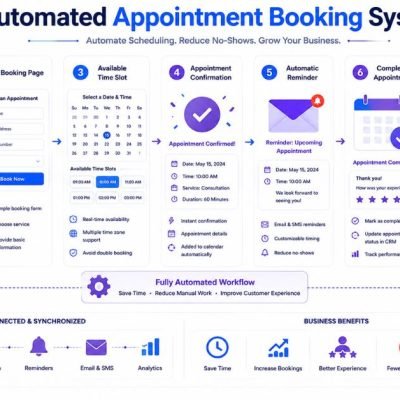
A sales funnel also saves time by automating repetitive tasks such as lead capture, email follow-ups, appointment scheduling, and customer nurturing. For small businesses with limited resources, a simple funnel can become one of the most valuable systems for generating consistent revenue and long-term growth.
Common Problems Small Businesses Face Without a Funnel
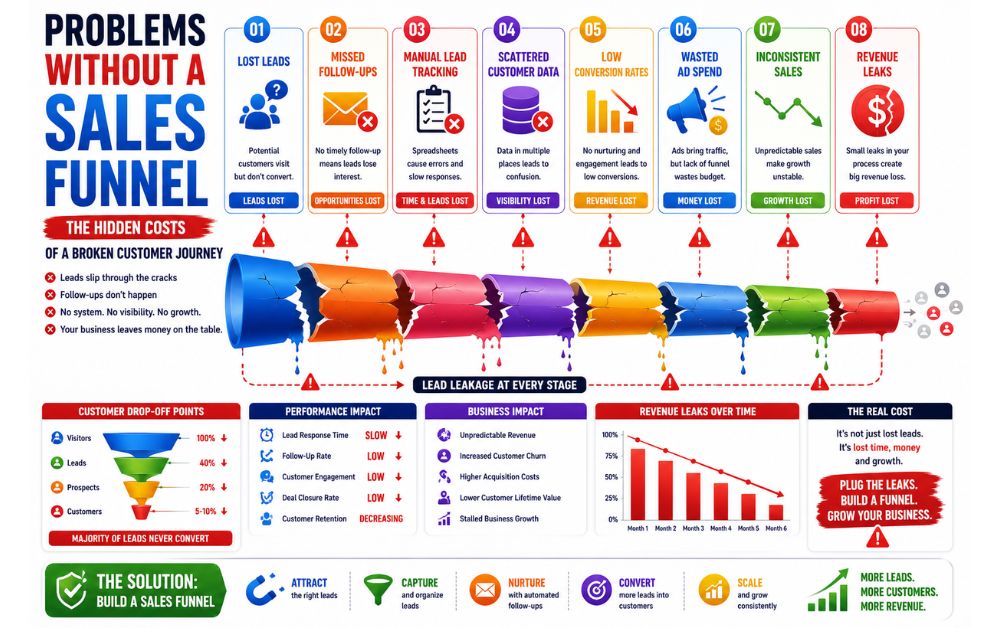
Many small businesses struggle to grow consistently because they do not have a clear process for turning visitors into customers. A potential customer may visit a website, view services, or request information, but without a structured follow-up process, that opportunity is often lost.
Another common problem is inconsistent lead management. Customer inquiries may come from websites, social media, referrals, and advertising campaigns, making it difficult to track every opportunity manually. As lead volume grows, businesses often miss follow-ups and lose potential customers.
Many businesses also struggle with poor visibility into marketing performance. Without a funnel, it becomes difficult to identify where leads originate, which campaigns generate results, and why prospects are not converting into customers. This often leads to wasted marketing budgets, inconsistent sales, and unpredictable revenue growth.
Businesses facing these challenges should also explore Local Business Marketing Automation: How to Generate and Follow Up With Leads Automatically to improve lead management and follow-up processes. Many funnel-building best practices promoted by ClickFunnels focus on creating structured customer journeys that reduce lead loss and improve conversions.
Understanding the Four Stages of a Sales Funnel
Every successful sales funnel follows a simple process that moves potential customers from awareness to purchase. Understanding these stages helps small businesses identify where prospects are in the buying journey and what actions are needed to move them forward.
The first stage is Attract, where businesses generate awareness through search engines, social media, referrals, content marketing, and advertising. The goal is to bring relevant visitors into the funnel.
The second stage is Capture, where businesses collect contact information through forms, landing pages, quote requests, or lead magnets. This allows future communication with potential customers.
The third stage is Nurture, where leads receive helpful information, follow-up messages, and educational content that builds trust and keeps the business top of mind. Most prospects do not purchase immediately, making this stage extremely important.
The final stage is Convert, where leads become paying customers. This can happen through consultations, sales calls, product purchases, service bookings, or special offers.
Businesses wanting to automate these stages can learn more from Marketing Automation for Service Businesses: A Complete Guide to Scaling Operations. Many businesses use GoHighLevel to manage lead capture, nurturing, and conversion activities within a single platform.
Stage 1: Attracting the Right Audience
The success of a sales funnel depends on attracting the right audience. Generating large amounts of traffic means little if those visitors are not interested in the products or services being offered.
Small businesses should focus on reaching people who already have a need, problem, or interest related to their offerings. This can be achieved through search engine optimization, local marketing, content creation, referrals, social media marketing, and targeted advertising campaigns.
Understanding customer pain points is equally important. When businesses create content and offers that address specific problems, they attract higher-quality leads who are more likely to convert later in the funnel.
For businesses focused on lead generation, How to Generate Leads for Local Businesses provides practical strategies for attracting qualified prospects. Platforms such as HubSpot emphasize audience targeting and customer journey mapping as critical factors for improving funnel performance and lead quality.
Stage 2: Capturing Leads Effectively
Once visitors arrive, the next step is capturing their contact information before they leave. Without a lead capture system, most visitors will leave a website and never return.
Lead capture typically happens through contact forms, quote requests, consultation bookings, downloadable resources, email subscriptions, or special offers. The goal is to provide enough value to encourage visitors to share their contact details.
Effective lead capture forms should be simple and ask only for essential information. Long forms often reduce conversion rates and discourage prospects from taking action.
It is also important to provide a clear reason for visitors to engage. Free guides, consultations, checklists, estimates, and discounts are commonly used to increase lead capture rates.
Businesses looking to improve lead management should also review Best CRM for Small Business Automation: 9 CRM Features That Save Time and Increase Sales. Many companies use ClickFunnels to create optimized landing pages and lead capture systems designed to improve conversion rates.
Stage 3: Nurturing Leads Until They Are Ready to Buy
Most leads do not become customers immediately. They often need time to compare options, research solutions, and build trust before making a decision. This is where lead nurturing becomes an important part of the sales funnel.
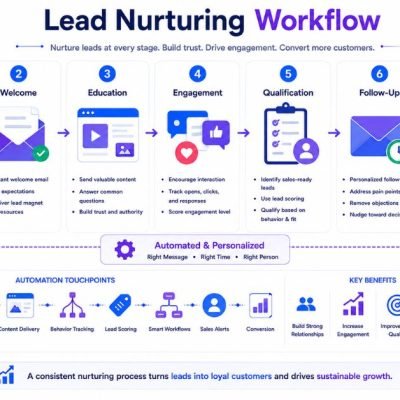
Lead nurturing involves staying connected with prospects through valuable content, educational emails, helpful resources, and consistent communication. Instead of pushing for an immediate sale, businesses focus on providing information that helps prospects move closer to a buying decision.
Regular follow-ups also keep the business visible while competitors are often forgotten. Automated email sequences, newsletters, and personalized messages help maintain engagement without requiring constant manual effort.
Businesses interested in improving follow-up systems can explore How I Automated My Email Follow-Ups in Systeme.io and Saved 6 Hours Every Week. Many companies use ActiveCampaign to automate lead nurturing campaigns and deliver personalized communication based on customer behavior.
Stage 4: Converting Leads Into Customers
The conversion stage is where prospects take the final step and become paying customers. By this point, they should already understand the value of the product or service and trust the business enough to move forward.
A strong offer plays a major role in improving conversions. Clear pricing, compelling benefits, testimonials, guarantees, and simple calls to action can help remove hesitation and encourage action. Businesses should also make the purchasing process as easy as possible.
Prompt responses are equally important. When prospects are ready to buy, delays can result in lost opportunities. Fast communication and clear next steps often improve conversion rates significantly.
Businesses looking to improve their conversion process can learn from 7 Mistakes Beginners Make Before Building Their First Funnel. Platforms such as ClickFunnels are commonly used to create conversion-focused sales pages and offers that help move leads toward a purchase decision.
Choosing Affordable Funnel Building Tools
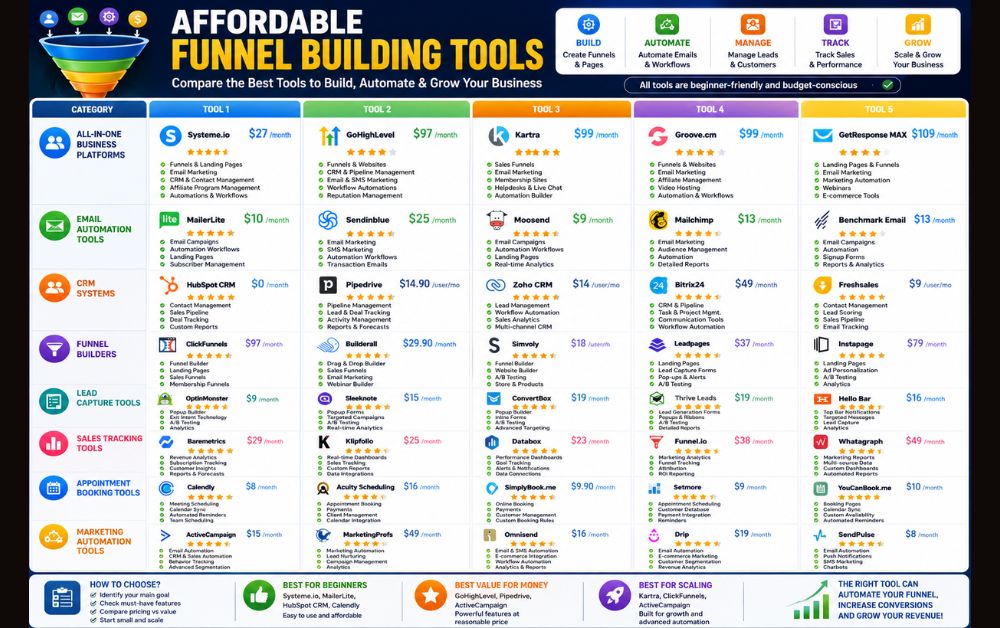
Building an effective sales funnel no longer requires expensive software or large marketing budgets. Today, small businesses can choose from several affordable tools that provide landing pages, lead capture forms, email automation, CRM functionality, and sales tracking.
The right platform depends on business goals and budget. Some businesses need an all-in-one solution, while others prefer combining multiple specialized tools. Service businesses often benefit from automation and CRM features, while creators may prioritize landing pages, email marketing, and digital product delivery.
For businesses comparing software options, Affordable Marketing Automation Tools: 11 Smart Options for Growing Businesses provides a detailed overview of available solutions and their use cases.
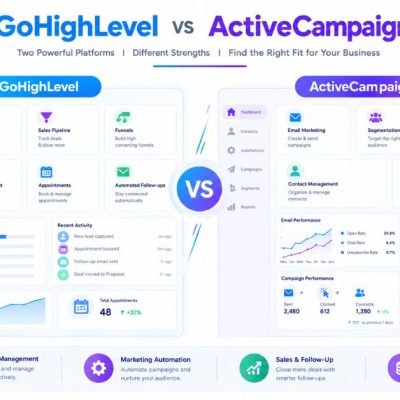
Popular affordable options include Systeme.io for budget-conscious small businesses, GoHighLevel for agencies and service providers, HubSpot for CRM and marketing automation, ActiveCampaign for advanced email automation, ClickFunnels for funnel building, Brevo for email marketing, and Zoho One for businesses needing a complete operational platform.
The best approach is to start with a tool that covers your immediate needs rather than purchasing multiple platforms. As the business grows, additional automation, CRM, and marketing features can be added without rebuilding the entire funnel system.
Setting Up a Landing Page That Converts
A landing page is one of the most important parts of a sales funnel because it is where visitors decide whether to take action or leave. Unlike a traditional website page, a landing page focuses on a single goal, such as generating leads, booking appointments, or collecting email subscribers.
A high-converting landing page starts with a clear headline that immediately explains the value being offered. Supporting text should focus on benefits rather than features and address the specific problem visitors want to solve. Strong calls to action help guide visitors toward the next step.
Trust-building elements are equally important. Testimonials, reviews, guarantees, and case studies can increase confidence and reduce hesitation. Forms should remain simple and only request essential information.
The page should also be mobile-friendly and load quickly, since many visitors browse using smartphones. Small improvements in design and messaging can significantly impact conversion rates.
Businesses looking for practical funnel examples can review How I Built My First Sales Funnel Using Systeme.io Without Hiring Anyone. Many businesses use ClickFunnels to create dedicated landing pages designed to increase lead generation and customer conversions.
Creating an Effective Lead Magnet
A lead magnet is a valuable resource offered in exchange for a visitor’s contact information. Its purpose is to encourage prospects to enter the sales funnel and begin a relationship with the business.
Effective lead magnets solve a specific problem and provide immediate value. Popular examples include checklists, templates, guides, free consultations, audit reports, discount offers, and downloadable resources. The more relevant the offer is to the target audience, the higher the conversion rate is likely to be.
The key is simplicity. Prospects should clearly understand what they will receive and how it will benefit them. Complicated offers often reduce engagement.
Businesses focused on attracting qualified leads can also explore How to Generate Leads for Local Businesses. Many marketers use HubSpot resources as examples of lead magnets that successfully convert visitors into leads.
Building an Automated Email Follow-Up Sequence
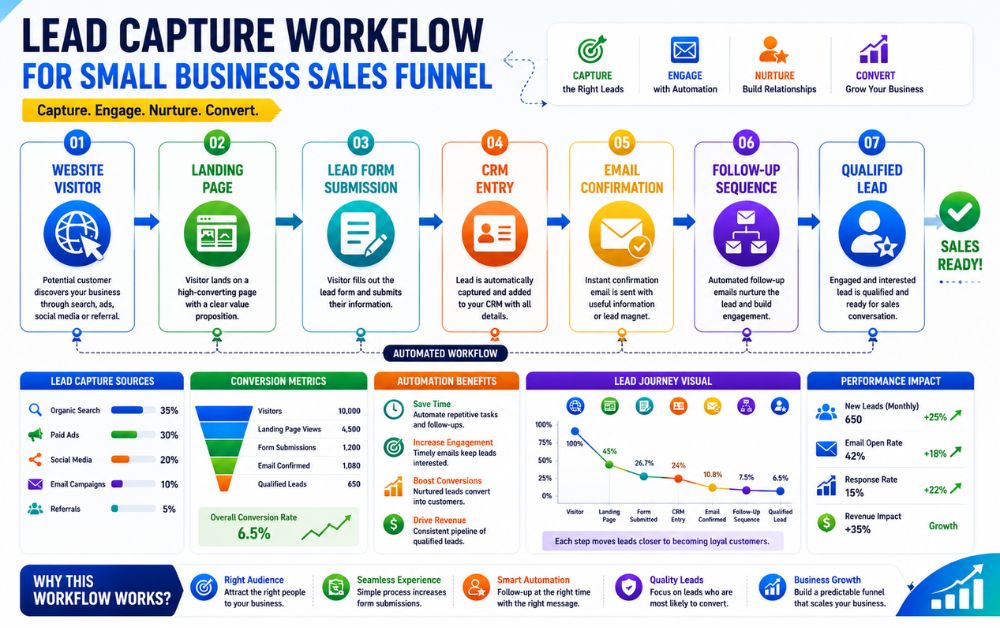
Capturing a lead is only the beginning of the sales funnel. Without follow-up communication, many prospects will lose interest or choose a competitor. An automated email sequence helps businesses stay connected and build trust over time.
The first email should be delivered immediately after a lead signs up. This message typically welcomes the subscriber, delivers the promised resource, and introduces the business. Additional emails can provide educational content, answer common questions, share success stories, and highlight solutions to customer problems.
A well-structured sequence gradually moves prospects toward a buying decision without appearing overly promotional. Consistency is important because regular communication keeps the business visible and builds credibility.
Automation also saves time by ensuring every lead receives the same nurturing experience regardless of when they enter the funnel. This creates a predictable process that can scale as lead volume grows.
Businesses interested in improving email automation can learn from How I Automated My Email Follow-Ups in Systeme.io and Saved 6 Hours Every Week. Many companies rely on ActiveCampaign to create behavior-based email sequences that automatically respond to customer actions and engagement levels.
Connecting Your Funnel to a CRM
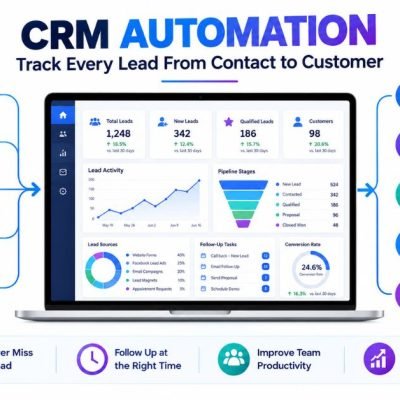
A CRM helps businesses organize, track, and manage leads after they enter the sales funnel. Without a CRM, customer information often becomes scattered across emails, spreadsheets, and multiple platforms, making follow-ups difficult to manage.
Connecting a funnel to a CRM ensures that every lead is automatically stored in a central location. Sales teams can track conversations, monitor deal progress, assign tasks, and maintain complete visibility into customer interactions.
This integration also improves reporting by showing how leads move through the funnel and where opportunities are being lost. Better data leads to better business decisions and higher conversion rates.
Businesses looking to strengthen their sales processes should review Best CRM for Small Business Automation: 9 CRM Features That Save Time and Increase Sales. Many organizations use GoHighLevel because it combines CRM functionality, automation, lead tracking, and customer communication within a single platform.
Tracking Funnel Performance and Conversions
Building a sales funnel is only the first step. To improve results, businesses must regularly track performance and measure conversions. Monitoring key metrics helps identify what is working and where potential customers are dropping out of the funnel.
Important metrics include website traffic, landing page conversion rates, lead capture rates, email open rates, click-through rates, appointment bookings, and customer conversion rates. These numbers provide valuable insights into the effectiveness of each stage of the funnel.
Tracking data also helps businesses make informed decisions instead of relying on assumptions. Small improvements in weak areas can often produce significant increases in leads and sales over time.
Businesses interested in improving automation and performance tracking should also read Marketing Automation for Service Businesses: A Complete Guide to Scaling Operations. Many companies use HubSpot analytics and reporting tools to monitor customer journeys, measure campaign performance, and identify opportunities for funnel optimization.
Common Funnel Building Mistakes to Avoid
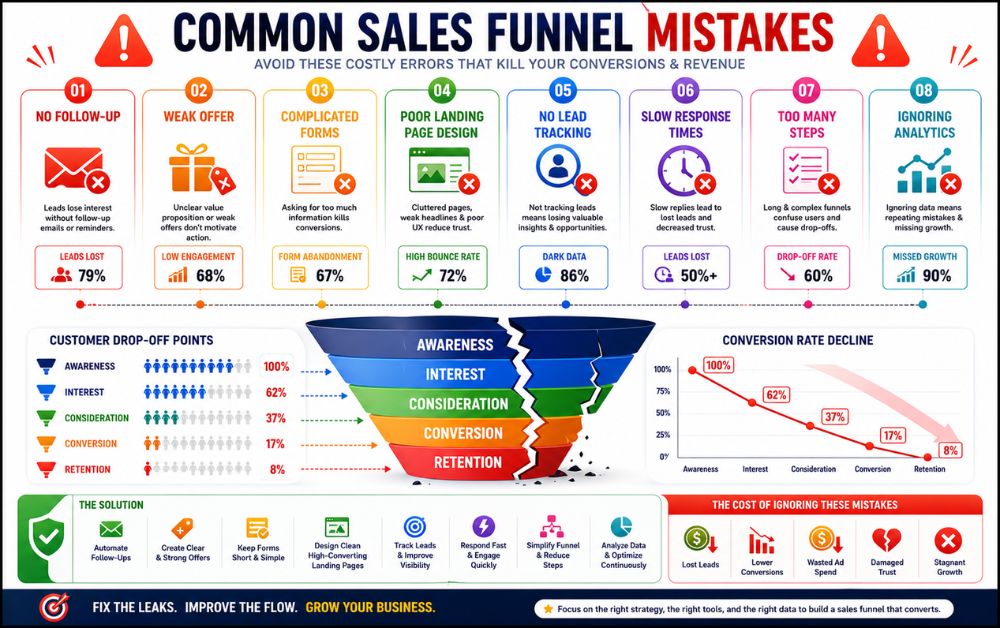
Many small businesses build sales funnels but fail to achieve results because of avoidable mistakes. One common error is trying to sell immediately without first building trust. Most prospects need information and reassurance before making a purchase decision.
Another mistake is creating complicated funnels with too many steps. Long forms, confusing navigation, and multiple offers often reduce conversions. Businesses should focus on simplicity and provide a clear path for visitors to follow.
Poor follow-up is another major issue. Capturing leads without nurturing them usually results in missed opportunities. Inconsistent communication often causes prospects to lose interest and move to competitors.
Many businesses also fail to test and improve their funnels regularly. Even small adjustments to headlines, offers, and calls to action can significantly improve performance.
For additional guidance, review 7 Mistakes Beginners Make Before Building Their First Funnel. Many funnel optimization strategies recommended by ClickFunnels focus on simplifying the customer journey and reducing friction throughout the conversion process.
Best Practices for Small Business Funnel Success
Successful sales funnels are built on simplicity, consistency, and continuous improvement. Instead of creating a complicated system with multiple offers and unnecessary steps, small businesses should focus on guiding prospects through a clear customer journey.
Start by understanding your target audience and the problems they want to solve. Create valuable content, offers, and lead magnets that address those needs. Make sure landing pages have a clear message and a strong call to action.
Consistent follow-up is equally important. Automated email sequences, appointment reminders, and lead nurturing campaigns help maintain engagement and improve conversion rates. Businesses should also review funnel performance regularly and optimize weak areas based on real data.
Testing different headlines, offers, and calls to action can often produce significant improvements over time. Businesses looking to strengthen their marketing systems should explore Affordable Marketing Automation Tools: 11 Smart Options for Growing Businesses. Many companies use GoHighLevel to combine lead generation, automation, CRM management, and customer communication in one platform.
Final Verdict
A sales funnel for small business provides a structured system for attracting visitors, capturing leads, nurturing relationships, and converting prospects into customers. Without a funnel, businesses often struggle with inconsistent lead generation, poor follow-up, and unpredictable sales results.
The good news is that building an effective funnel no longer requires expensive software or advanced technical skills. By combining the right strategy with affordable tools, small businesses can create a repeatable process that generates leads and supports long-term growth. A simple, well-optimized funnel often delivers better results than a complex system that is difficult to manage and maintain.
FAQs
A sales funnel is a process that guides potential customers from first contact to becoming paying customers.
A funnel helps generate leads, improve follow-ups, increase conversions, and create more predictable sales.
Every stage matters, but lead nurturing is often critical because most prospects do not buy immediately.
Yes. Many affordable tools allow businesses to create landing pages, automate emails, and manage leads efficiently.
The best choice depends on business needs. Many businesses compare Systeme.io, GoHighLevel, and ClickFunnels when building sales funnels.