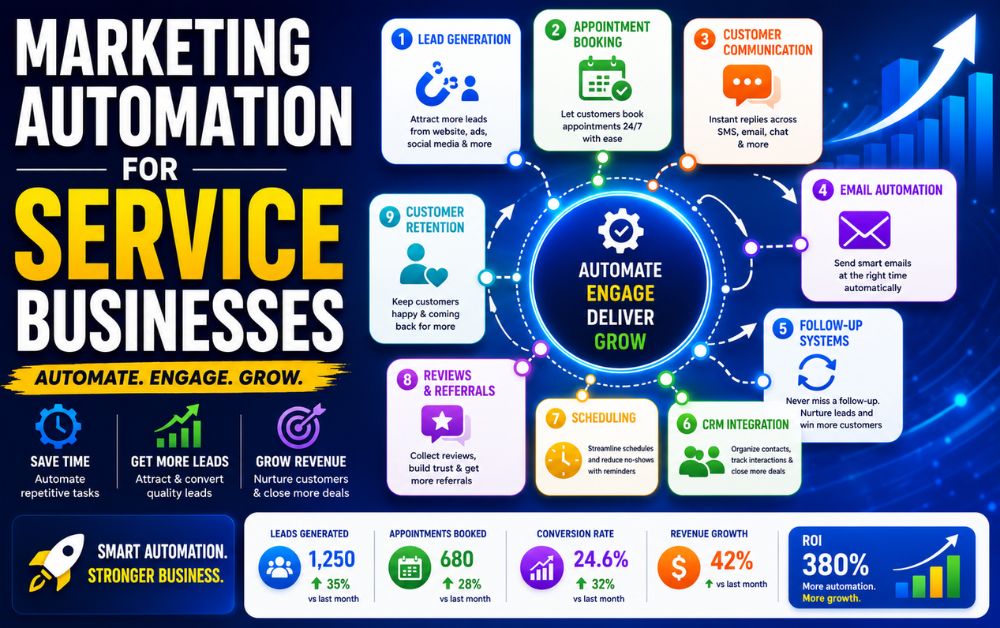
Service businesses often face challenges such as managing leads, scheduling appointments, following up with prospects, and maintaining consistent customer communication. As a business grows, handling these tasks manually becomes time-consuming and can slow down operations. Marketing automation helps solve this problem by automating repetitive processes and creating a more efficient workflow. Instead of spending hours sending emails, tracking inquiries, or managing follow-ups, businesses can use automation tools to handle these tasks automatically. This allows teams to focus on delivering services and improving customer satisfaction. Marketing automation can also help service businesses capture more leads, reduce response times, improve customer engagement, and increase conversion rates. Whether you operate a consulting firm, agency, home service company, healthcare practice, or professional service business, automation can support growth without significantly increasing workload. Understanding how marketing automation works is the first step toward building a scalable system that supports long-term business success.
Marketing automation for service businesses is the use of software and automated workflows to manage marketing, lead generation, customer communication, and follow-up activities more efficiently. Instead of manually responding to inquiries, sending appointment reminders, or nurturing leads through emails, automation tools handle these tasks automatically based on predefined rules and customer actions. Service businesses can automate lead capture forms, email campaigns, appointment confirmations, review requests, follow-up sequences, and customer engagement activities. The goal is to reduce repetitive work while ensuring prospects and customers receive timely communication throughout their journey. Marketing automation helps create a more consistent experience, improves operational efficiency, and allows teams to focus on delivering high-quality services. Whether a business provides consulting, healthcare, legal, financial, home, or professional services, automation can streamline daily operations and support sustainable growth.
Why Service Businesses Need Marketing Automation
Service businesses often rely on a steady flow of leads, appointments, and customer interactions to maintain growth. As demand increases, manually handling inquiries, follow-ups, scheduling, and customer communication becomes difficult and time-consuming. Marketing automation helps solve these challenges by creating systems that work continuously without requiring constant manual effort. Automated workflows can respond to inquiries instantly, send appointment reminders, nurture leads, and maintain customer engagement throughout the buying process. This reduces response times, improves customer satisfaction, and minimizes missed opportunities. Automation also helps businesses stay organized by ensuring every lead receives proper follow-up and no customer request is overlooked. In competitive industries, faster communication and consistent engagement can significantly improve conversion rates. By reducing administrative workload and improving efficiency, marketing automation allows service providers to focus more on serving clients and growing their business rather than managing repetitive operational tasks.
Common Challenges Faced by Service Businesses
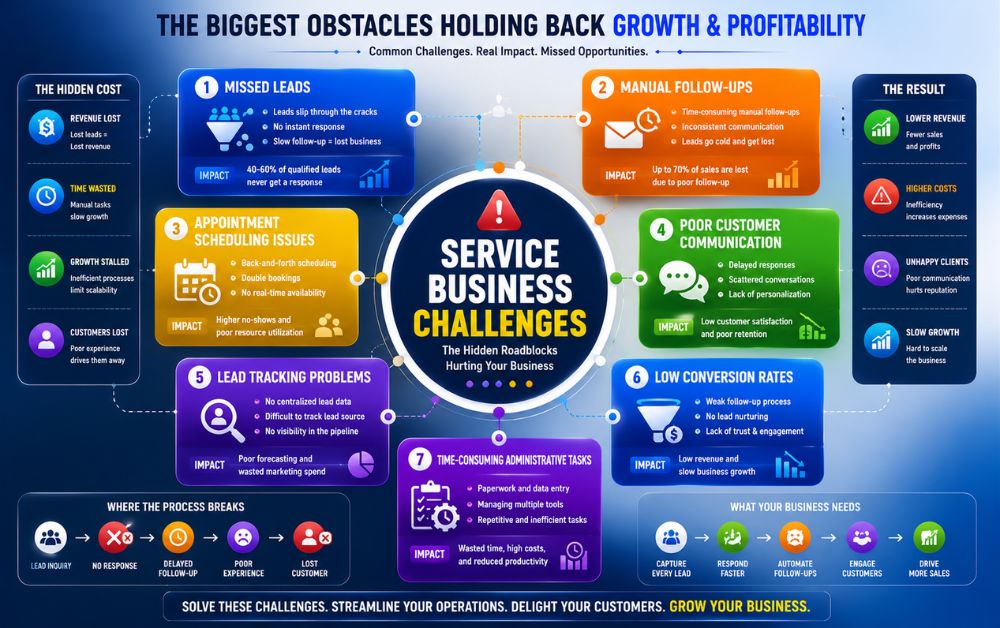
Service businesses face several operational challenges that can limit growth and reduce efficiency. One of the most common issues is inconsistent lead management, where inquiries are missed or follow-ups are delayed because processes rely heavily on manual work. Many businesses also struggle with appointment scheduling, customer communication, and tracking prospects throughout the sales process. As the number of leads increases, managing everything through spreadsheets, phone calls, and email threads becomes difficult and time-consuming. Another challenge is maintaining consistent customer engagement after the initial inquiry, which can result in lost opportunities and lower conversion rates. Businesses often encounter difficulties deciding whether automation or customer management systems should be implemented first, which is discussed in Marketing Automation vs CRM: Which One Does Your Business Need First?. Choosing the right tools is equally important, and Affordable Marketing Automation Tools: 11 Smart Options for Growing Businesses can help businesses evaluate cost-effective solutions. Industry platforms such as HubSpot also highlight how automation can simplify service-based operations and improve customer experiences.
Key Benefits of Marketing Automation
Marketing automation helps service businesses save time by reducing repetitive tasks such as follow-up emails, appointment reminders, and customer communication. Instead of manually managing every interaction, businesses can create automated workflows that run continuously in the background.
Another major benefit is improved lead nurturing. Prospective customers receive timely and relevant communication throughout the buying journey, increasing engagement and conversion opportunities. This helps businesses stay connected with leads without requiring constant manual effort.
Marketing automation also improves consistency. Every inquiry receives a prompt response, every lead enters a structured follow-up process, and every customer experiences a more professional communication system. Businesses looking for practical automation strategies can explore Marketing Automation for Startups: 9 Practical Ways to Build a Scalable Business. Solutions such as ActiveCampaign also demonstrate how automation can improve productivity while supporting business growth.
Lead Generation Automation for Service Businesses
Lead generation is one of the most important activities for any service business, but manually managing inquiries can quickly become overwhelming as demand increases. Marketing automation helps capture, organize, and nurture leads automatically, ensuring fewer opportunities are missed.
Automated lead capture forms, landing pages, and follow-up sequences allow businesses to respond to prospects immediately after they express interest. Faster response times often lead to higher conversion rates and better customer experiences.
Automation also helps qualify leads by tracking actions such as form submissions, email engagement, and website activity. This allows businesses to focus their attention on the most promising prospects instead of spending time on unqualified leads. For businesses interested in attracting more customers, How to Generate Leads for Local Businesses provides additional lead-generation strategies. Platforms like HubSpot are commonly used to automate lead capture and improve lead management processes.
Automating Appointment Booking and Scheduling
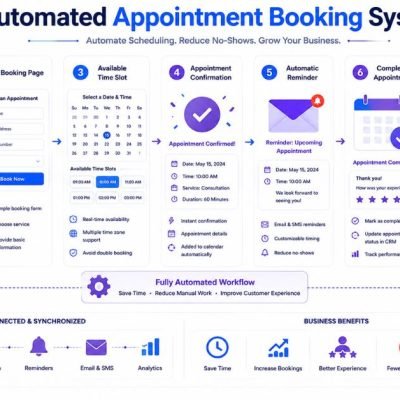
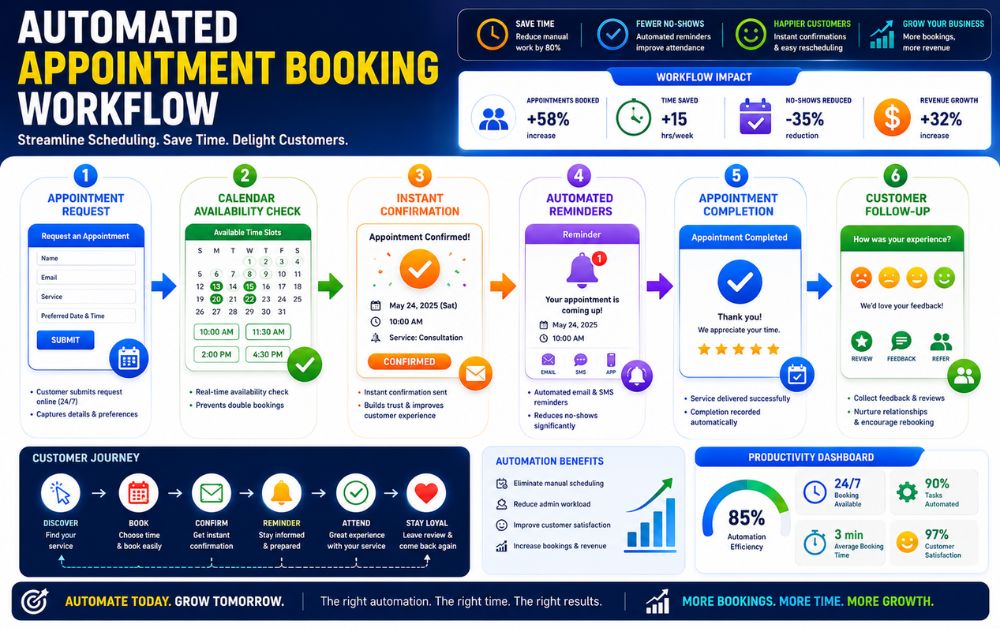
Appointment scheduling is a critical part of many service businesses, but managing bookings manually can consume valuable time and increase the risk of errors. Marketing automation simplifies this process by allowing customers to schedule appointments through online booking systems without requiring direct staff involvement.
Automated scheduling tools can instantly confirm bookings, send reminders, and notify customers about upcoming appointments. This reduces missed appointments and helps maintain a more organized workflow. Businesses can also automate rescheduling requests and follow-up messages, improving convenience for both customers and staff.
Another advantage is availability management. Automated systems update calendars in real time, preventing double bookings and reducing scheduling conflicts. This creates a smoother customer experience while improving operational efficiency. Businesses interested in streamlining operations can explore Best CRM for Small Business Automation: 9 CRM Features That Save Time and Increase Sales. Solutions such as Calendly are widely used to automate appointment scheduling and reduce administrative workload.
Email Marketing Automation for Service Businesses
Email marketing automation helps service businesses stay connected with leads and customers without spending hours sending manual messages. Instead of creating individual emails for every inquiry, businesses can build automated campaigns that deliver relevant information based on customer actions and interests.
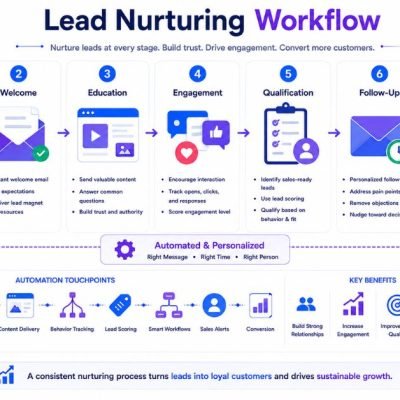
A welcome email sequence can introduce new prospects to the business, explain services, and build trust from the beginning. Automated nurture campaigns can then provide educational content, case studies, testimonials, and service information that help move prospects closer to making a decision.
Email automation is also valuable for existing customers. Businesses can send appointment reminders, follow-up messages, feedback requests, and special offers automatically. This helps maintain engagement and encourages repeat business.
Another advantage is personalization. Modern email automation tools can deliver targeted messages based on customer behavior, service interests, and previous interactions. This creates a more relevant experience and often improves open rates and conversions. Businesses looking for affordable automation solutions can explore Affordable Marketing Automation Tools: 11 Smart Options for Growing Businesses. Platforms such as Mailchimp are widely used to automate customer communication while improving marketing efficiency and customer retention.
Automated Follow-Up Systems
Many service businesses lose potential customers simply because follow-ups are delayed or forgotten. Automated follow-up systems help solve this problem by ensuring every lead receives timely communication after making an inquiry.
When a prospect fills out a form, requests information, or books a consultation, automation can instantly send confirmation emails and schedule future follow-up messages. This keeps prospects engaged and reduces the likelihood of losing interest.
Automated follow-ups also create consistency. Every lead receives the same structured communication process, reducing human error and improving conversion opportunities. Businesses interested in improving their automation processes can explore How I Automated My Email Follow-Ups in Systeme.io and Saved 6 Hours Every Week. Solutions such as Brevo can also help automate follow-up sequences and customer engagement workflows.
Customer Communication Automation
Consistent communication plays a major role in customer satisfaction and business growth. Marketing automation helps service businesses maintain regular contact with customers through automated emails, notifications, reminders, and follow-up messages.
Automated communication ensures customers receive important information at the right time without requiring manual effort from staff. This can include appointment confirmations, service updates, review requests, satisfaction surveys, and post-service follow-ups.
Communication automation also improves response speed. Customers expect quick answers, and automated systems help businesses acknowledge inquiries immediately while directing prospects toward the next step in the process.
As service businesses grow, maintaining communication manually becomes increasingly difficult. Automation provides a scalable solution that keeps customers informed and engaged throughout their journey. Businesses evaluating communication systems often compare tools such as Mailchimp and Brevo to improve customer engagement while reducing administrative workload.
CRM Integration and Lead Management
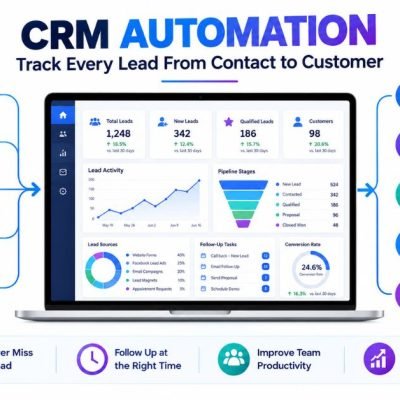
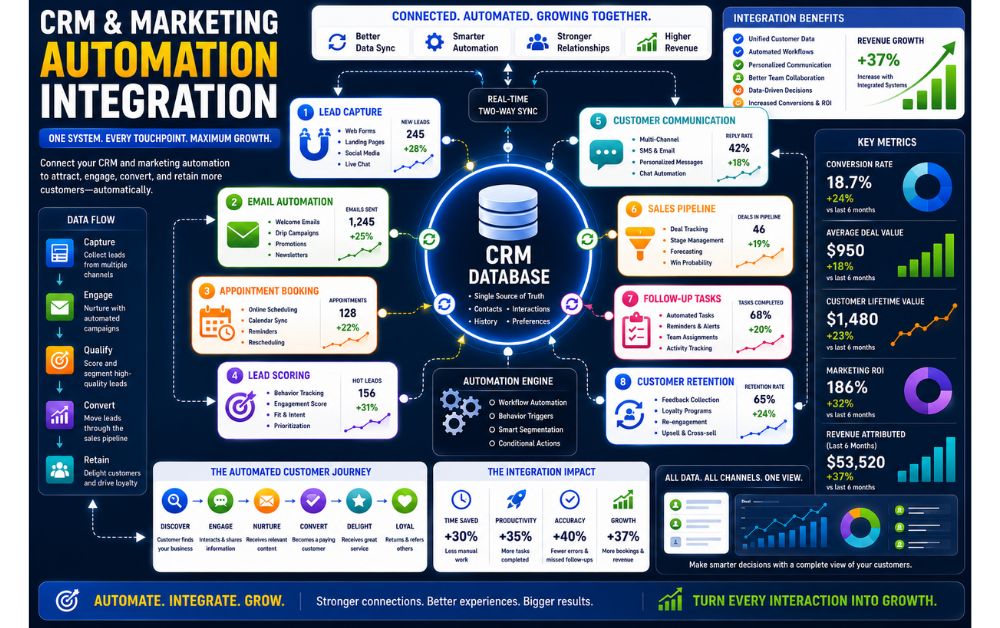
Marketing automation becomes even more powerful when it is connected to a CRM system. While automation helps generate and nurture leads, CRM software helps organize customer information, track interactions, and manage opportunities throughout the sales process. Together, these tools create a seamless workflow that improves efficiency and reduces manual work.
When a prospect submits a form, books an appointment, or responds to a campaign, their information can automatically be transferred into the CRM. This eliminates manual data entry and ensures customer records remain accurate and up to date. Sales teams can immediately view lead details, communication history, and engagement activity from a single location.
CRM integration also improves lead management by helping businesses prioritize opportunities. Leads can be categorized, assigned to team members, and tracked through different stages of the sales pipeline. This creates better visibility into the customer journey and reduces the risk of missed follow-ups.
Another major advantage is improved collaboration between marketing and sales teams. Both departments can access the same customer data, making communication more consistent and effective. Businesses interested in improving customer management can explore Best CRM for Small Business Automation: 9 CRM Features That Save Time and Increase Sales. Platforms such as HubSpot CRM are commonly used to connect marketing automation with lead management systems.
How Marketing Automation Improves Customer Experience
Customer experience improves significantly when businesses can provide fast, consistent, and relevant communication throughout the customer journey. Marketing automation helps achieve this by ensuring prospects and customers receive the right information at the right time without unnecessary delays.
Automated responses acknowledge inquiries instantly, while appointment reminders, follow-up emails, and service updates keep customers informed and engaged. This reduces frustration and creates a more professional experience.
Automation also allows businesses to personalize communication based on customer behavior, interests, and previous interactions. Customers receive content and offers that are more relevant to their needs, which can increase satisfaction and trust.
Another benefit is consistency. Every customer follows a structured communication process, helping businesses deliver a reliable experience at scale. Companies looking to improve customer engagement can learn from Marketing Automation vs CRM: Which One Does Your Business Need First?. Solutions such as ActiveCampaign are commonly used to create personalized customer experiences through automation.
Choosing the Right Marketing Automation Software
Choosing the right marketing automation software depends on business goals, budget, and operational requirements. Service businesses should focus on platforms that provide essential features such as lead capture, email automation, appointment scheduling, CRM integration, and customer communication tools.
Ease of use is another important factor. A platform should be simple enough for teams to adopt quickly while still providing the flexibility needed as the business grows. Scalability is equally important because switching systems later can be time-consuming and costly.
Businesses should also evaluate reporting capabilities, integration options, automation workflows, and customer support before making a decision. For businesses comparing available solutions, Affordable Marketing Automation Tools: 11 Smart Options for Growing Businesses provides a useful starting point. Popular platforms such as HubSpot, Brevo, and Mailchimp are frequently considered because they offer automation features suitable for a wide range of service businesses.
Common Mistakes to Avoid
One of the most common mistakes service businesses make is automating processes before establishing clear workflows. Automation works best when it improves an existing process rather than trying to fix a poorly designed one.
Another mistake is relying too heavily on automation and neglecting personal customer interactions. While automation can improve efficiency, building trust still requires genuine human communication when needed.
Many businesses also create overly complex workflows that are difficult to manage and maintain. Simple automation systems are often more effective and easier to optimize over time. Failing to monitor performance is another common issue, as businesses may continue using ineffective campaigns without reviewing results.
Poor CRM integration, inconsistent data management, and delayed follow-up strategies can also reduce automation effectiveness. Businesses interested in simplifying operations can explore Business Process Automation Software: Why Simpler Systems Usually Work Better for Small Online Businesses. Platforms such as HubSpot provide reporting tools that help businesses identify and correct automation issues before they affect performance.
Best Practices for Successful Implementation
Successful marketing automation starts with clear business goals and a well-defined customer journey. Before creating workflows, businesses should identify how leads are generated, how customers interact with the business, and where automation can provide the most value.
Start with simple automation processes such as lead capture, appointment reminders, and follow-up sequences. Once these workflows are performing well, additional automation can be introduced gradually. This approach reduces complexity and makes optimization easier.
Regularly reviewing campaign performance is also important. Businesses should monitor conversion rates, response rates, customer engagement, and workflow effectiveness to identify improvement opportunities.
Maintaining accurate customer data is another essential practice because automation depends on reliable information. Businesses should also ensure marketing and sales teams work from the same processes and customer records. For businesses building scalable systems, Workflow Automation Software: How I Finally Stopped Wasting Time on Repetitive Tasks provides practical implementation insights. Platforms such as ActiveCampaign offer reporting tools that support continuous optimization and business growth.
Final Verdict
Marketing automation can help service businesses improve efficiency, generate more leads, reduce manual work, and create a better customer experience. By automating lead capture, appointment scheduling, customer communication, and follow-up processes, businesses can scale operations without significantly increasing workload. While automation is not a replacement for great service, it provides the systems needed to support consistent growth and stronger customer relationships. Businesses that combine automation with effective lead management and clear workflows are often better positioned to improve productivity, increase conversions, and create a more scalable operation capable of supporting long-term business success.
FAQs
Marketing automation for service businesses uses software to automate lead generation, customer communication, appointment scheduling, follow-ups, and other repetitive marketing tasks.
Automation helps businesses capture more leads, improve response times, increase efficiency, reduce manual work, and maintain consistent customer communication.
Yes. Small service businesses can use automation to streamline daily operations, improve customer engagement, and scale more efficiently without hiring additional staff.
Important features include lead capture, email automation, appointment scheduling, CRM integration, customer communication tools, reporting, and workflow automation.
Yes. Marketing automation and CRM systems work together by automating lead generation while CRM software manages customer relationships and sales opportunities.