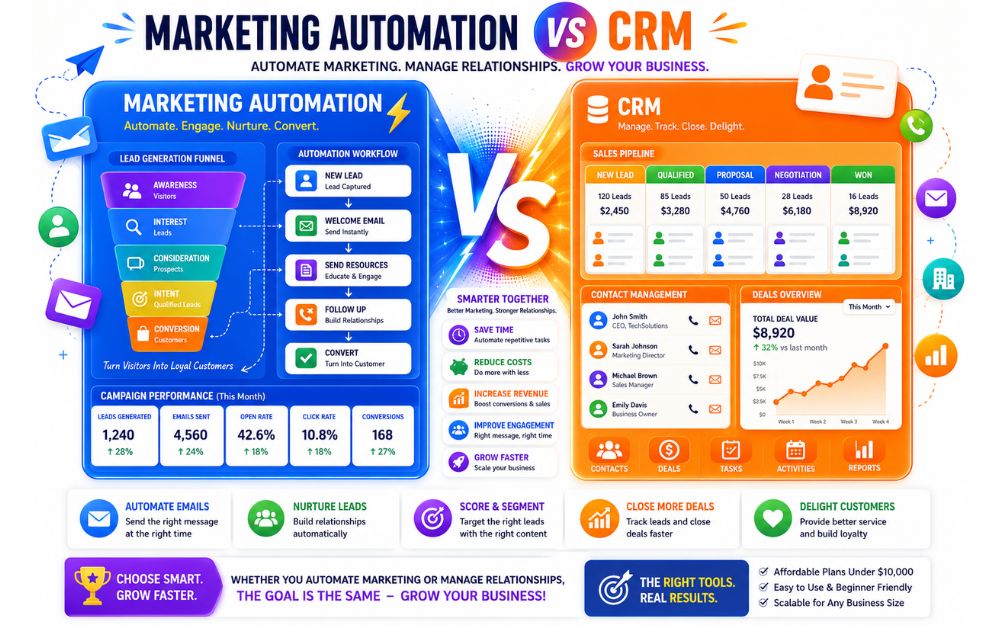
Many small business owners struggle to decide whether they need marketing automation or CRM software first. Both tools can help businesses grow, improve efficiency, and increase revenue, but they serve different purposes. Marketing automation focuses on attracting, nurturing, and converting leads through automated workflows, while CRM software helps organize customer information, track interactions, and manage sales opportunities. Choosing the wrong solution first can lead to wasted time, higher costs, and poor results. Understanding how each system works makes it easier to invest in the right technology for your current business stage. In this guide, you’ll learn the key differences between marketing automation and CRM, their benefits, ideal use cases, and which solution should come first based on your business goals. By the end, you’ll have a clear roadmap for building a scalable system that supports lead generation, customer management, and long-term business growth.
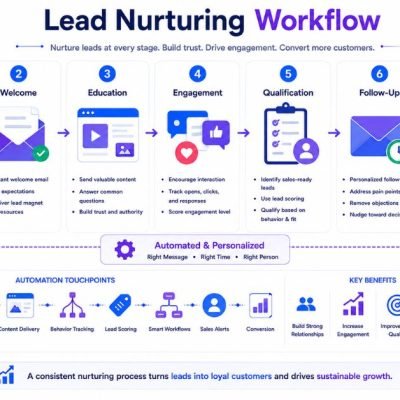
Marketing automation is the use of software to automate repetitive marketing tasks and improve customer engagement. Instead of manually sending emails, tracking leads, or following up with prospects, businesses can create automated workflows that handle these activities automatically. The goal is to save time, increase efficiency, and move potential customers through the buying journey more effectively. Common marketing automation features include email campaigns, lead capture forms, lead scoring, customer segmentation, SMS marketing, and follow-up sequences. These tools help businesses generate leads, nurture relationships, and improve conversion rates without requiring constant manual effort. For small businesses with limited resources, marketing automation can reduce workload while ensuring prospects receive timely and relevant communication. When implemented correctly, it creates a consistent customer experience and helps businesses scale their marketing efforts more efficiently.
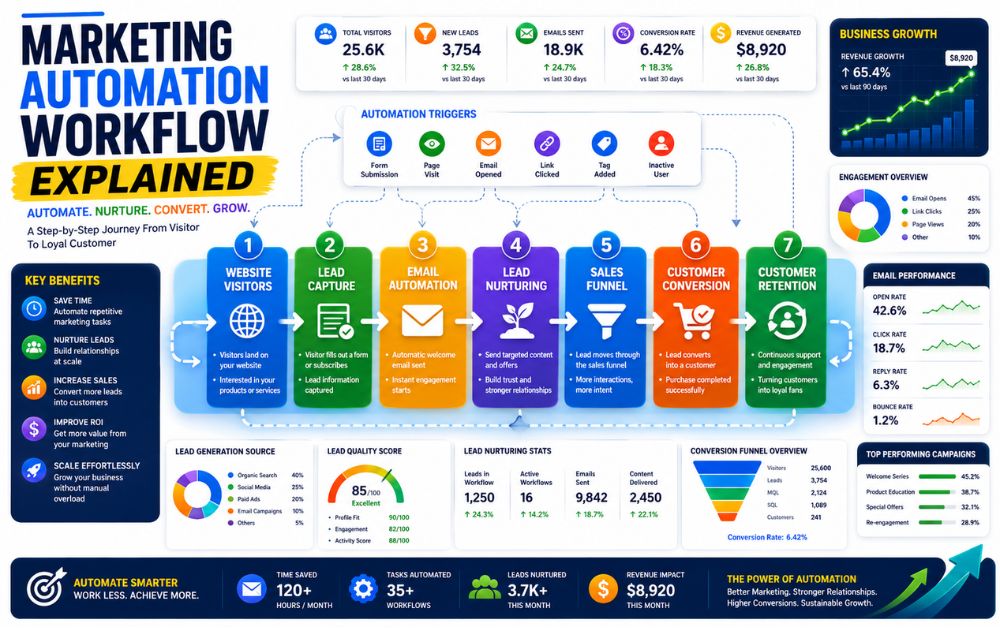
Key Features of Marketing Automation
Marketing automation software offers a wide range of features designed to help businesses automate repetitive tasks, improve customer engagement, and increase marketing efficiency. One of the core features is lead capture, which gathers visitor information through forms, landing pages, and signup pages. Email automation enables businesses to deliver personalized messages automatically based on customer actions and behavior. Lead scoring helps prioritize prospects by identifying those most likely to convert into paying customers. Customer segmentation allows marketers to group contacts based on interests, demographics, or engagement levels for more targeted campaigns. Automated follow-up workflows ensure that leads receive timely communication without manual intervention. Most marketing automation platforms also include analytics and reporting capabilities, allowing businesses to monitor campaign performance, conversion rates, and customer interactions. Additional features such as SMS automation, workflow automation, and customer journey mapping help create a more seamless marketing process. Businesses evaluating automation tools often compare solutions like HubSpot Marketing Hub, ActiveCampaign, Brevo, and Mailchimp. For a more detailed overview of available options and features, explore Best Marketing Automation Software for Small Businesses: Complete Buyer’s Guide.
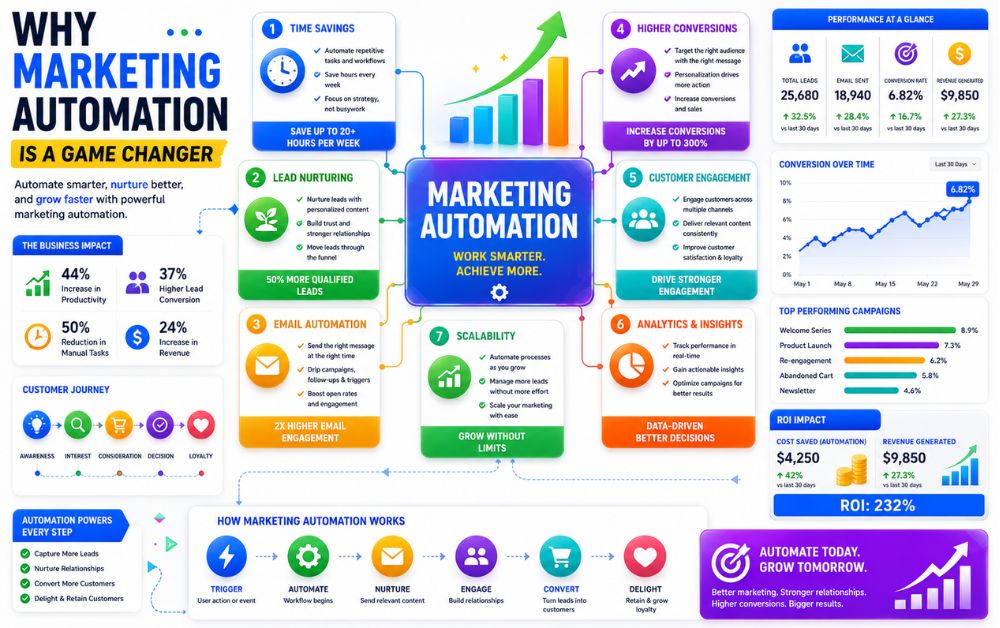
Benefits of Marketing Automation
Marketing automation provides several advantages for businesses that want to improve productivity, strengthen customer engagement, and achieve better marketing results. One of the most valuable benefits is the ability to automate repetitive tasks such as email follow-ups, lead nurturing campaigns, and customer communications, allowing teams to focus on higher-value activities. Automation also improves lead management by delivering the right message to the right prospect at the right stage of the buying journey. Consistent and timely communication helps build trust, maintain engagement, and increase the likelihood of conversion. Personalized campaigns based on customer behavior, interests, and interactions can further improve conversion rates and customer experiences. Another significant advantage is scalability, enabling businesses to manage growing numbers of leads without significantly increasing workload or resources. In addition, built-in analytics and reporting tools provide actionable insights into campaign performance, customer engagement, and conversion trends, helping businesses make more informed marketing decisions. Companies that apply strategies from Lead Generation Automation for Small Businesses: Complete Guide to Consistent Lead Flow often generate higher-quality leads, while integrating automation with Sales Funnel Building for Small Businesses: Turn Visitors Into Paying Customers can help maximize conversion opportunities and overall business growth.
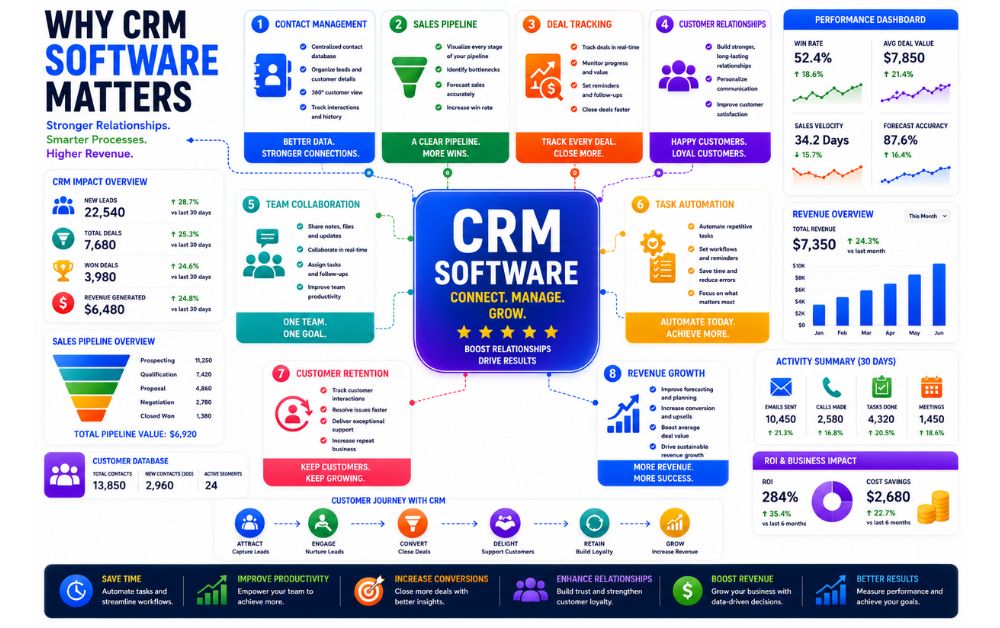
What Is CRM Software?
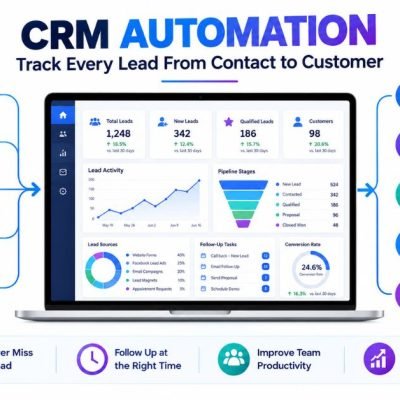
CRM (Customer Relationship Management) software helps businesses manage customer information, sales activities, and interactions from a single centralized platform. Rather than relying on spreadsheets, scattered notes, or multiple disconnected tools, a CRM system organizes contacts, communication history, tasks, and sales opportunities in one place. This allows teams to easily track customer interactions, monitor deal progress, and maintain a clear overview of the entire sales pipeline. CRM software is particularly valuable for businesses that generate a consistent flow of leads and need a structured process for managing follow-ups and customer relationships. Key capabilities often include contact management, sales pipeline tracking, task scheduling, activity monitoring, and performance reporting. By improving visibility across the sales process, CRM systems help businesses increase efficiency, strengthen customer relationships, and close more deals. Popular solutions such as Salesforce CRM are widely used to streamline customer management and sales operations. Businesses interested in improving their sales processes can also explore CRM Automation for Small Businesses: Manage Leads, Customers and Sales Efficiently to learn how CRM systems support long-term growth and operational efficiency.
Key Features of CRM
CRM software offers a variety of features that help businesses organize customer information, manage sales processes, and improve overall relationship management. One of its most important functions is contact management, which stores customer details, communication records, and interaction history in a centralized database. Sales pipeline management enables teams to track leads and opportunities as they move through different stages of the sales cycle, providing greater visibility into potential revenue. Deal tracking helps businesses monitor opportunities, forecast sales, and identify high-priority prospects. Task and activity management ensure follow-ups, meetings, and important actions are completed on schedule, reducing the risk of missed opportunities. Customer interaction tracking records emails, calls, notes, and other touchpoints, giving teams a complete understanding of each customer relationship. Most CRM platforms also include reporting and analytics tools that help measure sales performance, identify trends, and uncover areas for improvement. Businesses evaluating CRM solutions often compare platforms such as Zoho CRM and Pipedrive based on their features and scalability. For a deeper understanding of CRM implementation and best practices, explore CRM Automation for Small Businesses: Manage Leads, Customers and Sales Efficiently.
Benefits of CRM
CRM software delivers a range of benefits that help businesses strengthen customer relationships, improve sales efficiency, and support long-term growth. One of its biggest advantages is centralized organization, allowing teams to store customer information, communication history, sales activities, and important records in a single location. This makes customer data easier to access and reduces the risk of missed information or lost opportunities. CRM systems also provide greater visibility into the sales pipeline, enabling businesses to track leads, monitor deal progress, and identify areas where sales processes can be improved. With access to real-time data and reporting, teams can make more informed decisions and focus on high-value opportunities. Another key benefit is enhanced customer service, as employees can quickly review previous interactions and provide more personalized support. CRM software also improves productivity by automating routine administrative tasks, reminders, and follow-up activities. Businesses evaluating customer management solutions often compare platforms such as Pipedrive to identify features that match their needs. Companies that integrate CRM with Sales Automation for Small Businesses: Close More Deals with Less Manual Work can further streamline operations, improve conversion rates, and build stronger customer loyalty over time.
Marketing Automation vs CRM Comparison
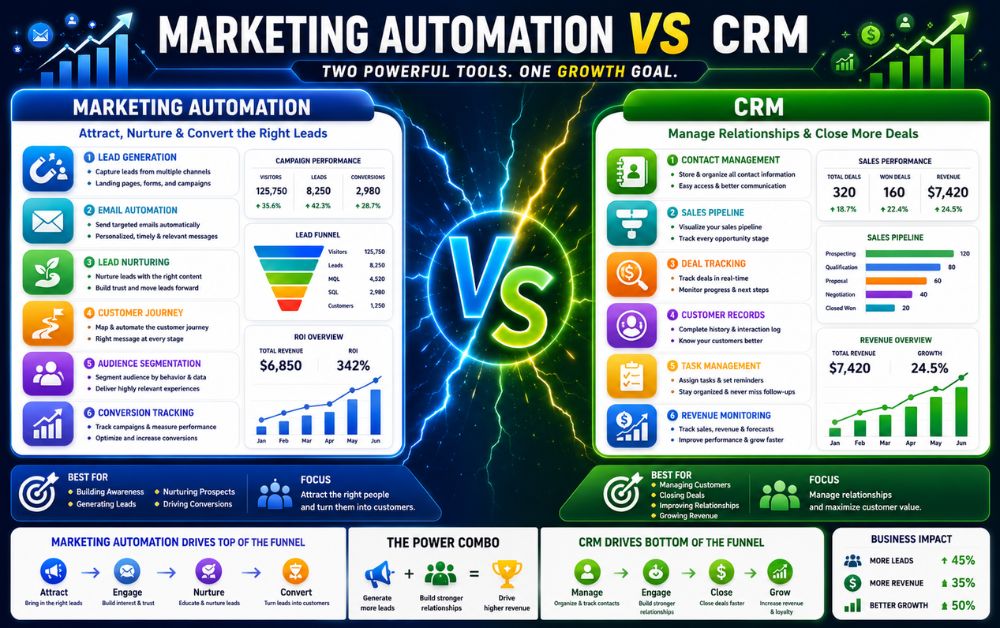
Marketing automation and CRM software are frequently compared because both play important roles in business growth, but they are designed to solve different challenges. Marketing automation focuses on attracting potential customers, nurturing leads, and guiding prospects through the early stages of the buying journey using automated campaigns and workflows. It helps businesses capture leads, automate email communication, segment audiences, and maintain engagement until prospects are ready to speak with sales. CRM software, on the other hand, is built to manage customer relationships, organize sales activities, and track opportunities once leads enter the sales pipeline. It provides a structured system for managing contacts, monitoring deal progress, recording customer interactions, and improving sales performance.
The primary difference lies in their focus. Marketing automation is centered on lead generation and nurturing, while CRM is focused on relationship management and sales execution. Businesses struggling to generate qualified leads often see greater value from marketing automation first, whereas companies with an established lead flow but disorganized sales processes typically benefit more from CRM software. While each tool can deliver value independently, they are most effective when used together. Marketing automation helps generate and qualify leads, while CRM ensures those leads are managed effectively throughout the sales cycle. Businesses that implement CRM Automation for Small Businesses: Manage Leads, Customers and Sales Efficiently alongside strong lead-generation strategies often create a more scalable and efficient growth system. For businesses evaluating automation platforms, solutions such as ActiveCampaign demonstrate how marketing automation and CRM capabilities can work together to support both marketing and sales objectives.
When Marketing Automation Should Come First
Marketing automation should be the first priority when a business finds it difficult to attract leads, nurture prospects, or maintain consistent communication throughout the customer journey. If website traffic is growing but conversions remain low, automation can help bridge the gap by automatically engaging visitors through targeted campaigns and follow-up workflows. Businesses that depend on manual processes, spreadsheets, or inconsistent outreach often struggle to scale their marketing efforts effectively. By automating repetitive tasks such as email sequences, lead nurturing, and audience segmentation, companies can save time while improving engagement and lead quality. Marketing automation also ensures potential customers receive relevant information based on their interests and behavior, helping move them through the buying process more efficiently. For businesses aiming to build a predictable lead-generation system, Lead Generation Automation for Small Businesses: Complete Guide to Consistent Lead Flow offers valuable strategies for attracting qualified prospects. Integrating automation with Sales Funnel Building for Small Businesses: Turn Visitors Into Paying Customers can further improve conversion rates by creating a structured path from initial interest to final purchase. Additionally, platforms like HubSpot Marketing Hub demonstrate how automation can streamline marketing operations while supporting long-term business growth.
When CRM Should Come First
CRM should come first when a business already has a consistent flow of leads but lacks an organized system to manage customer relationships and sales opportunities. As lead volume grows, relying on spreadsheets, email threads, or disconnected tools can create confusion, missed follow-ups, and lost revenue opportunities. A CRM provides a centralized platform where businesses can store customer information, track interactions, monitor deal progress, and manage the entire sales pipeline more effectively. It becomes especially valuable for companies with multiple sales representatives or complex sales processes that require better visibility and coordination. CRM software helps teams stay organized, prioritize opportunities, and ensure every prospect receives timely follow-up. It also provides reporting and analytics that make it easier to evaluate performance and identify areas for improvement. Businesses seeking to improve sales operations can benefit from CRM Automation for Small Businesses: Manage Leads, Customers and Sales Efficiently, while Sales Automation for Small Businesses: Close More Deals with Less Manual Work can help streamline repetitive sales activities. Many organizations also evaluate solutions such as Salesforce CRM when looking for a scalable platform to support customer management, improve productivity, and drive sustainable business growth.
Why Most Businesses Need Both
Most businesses eventually need both marketing automation and CRM software because each solution manages a different stage of the customer journey. Marketing automation is responsible for attracting potential customers, nurturing leads, and keeping prospects engaged through automated campaigns and personalized communication. CRM software takes over once those leads enter the sales process, helping businesses organize customer information, track interactions, manage opportunities, and build stronger relationships. When these systems work together, they create a seamless process that supports growth from initial lead generation to long-term customer retention.
Using both tools also improves efficiency by reducing manual work and ensuring important information flows smoothly between marketing and sales teams. Marketing automation helps businesses deliver the right message at the right time, while CRM provides complete visibility into customer activities, deal progress, and sales performance. This integration helps eliminate communication gaps, improve collaboration, and create a better overall customer experience. As businesses scale, relying on only one system often limits growth and creates operational bottlenecks. Companies that implement Email Marketing Automation for Small Businesses: Build Relationships and Increase Revenue alongside a well-structured CRM strategy can create a more predictable and sustainable growth engine. Platforms such as ActiveCampaign demonstrate how marketing automation and CRM functionality can work together to streamline operations, improve conversions, and strengthen customer relationships. By combining both systems, businesses build a solid foundation for generating leads, managing sales, and supporting long-term success.
Common Mistakes Businesses Make
Businesses often make costly mistakes when implementing marketing automation or CRM software, reducing the effectiveness of their investment. One common mistake is purchasing advanced software before establishing clear marketing or sales processes. Without a strategy, even the best tools deliver poor results. Another frequent error is failing to train team members properly, which leads to low adoption rates and inconsistent usage. Many businesses also neglect data quality, allowing duplicate, outdated, or incomplete customer records to accumulate over time. Some companies focus too heavily on automation and forget the importance of building genuine customer relationships. Others fail to track key performance metrics, making it difficult to measure success or identify areas for improvement. Integration issues are another common challenge, especially when marketing and sales systems do not communicate effectively. Businesses evaluating platforms such as HubSpot or Salesforce should focus on process improvement first, then use technology to support and scale those proven workflows.
Recommended Setup for Small Businesses
For most small businesses, the best approach is to implement marketing automation and CRM software in stages rather than trying to deploy everything at once. Start by identifying your biggest challenge. If generating leads is difficult, focus first on marketing automation to build lead capture systems, automated follow-ups, and nurturing campaigns. Businesses can learn proven strategies from Lead Generation Automation for Small Businesses: Complete Guide to Consistent Lead Flow and Sales Funnel Building for Small Businesses: Turn Visitors Into Paying Customers. Once a consistent flow of leads is established, implement a CRM system to organize customer information, manage sales opportunities, and improve follow-up processes. As the business grows, integrate email marketing, sales automation, and customer communication tools into a unified workflow. Many small businesses use platforms such as HubSpot or ActiveCampaign because they offer both automation and CRM capabilities. This phased approach reduces complexity, improves adoption, and creates a scalable foundation for long-term growth.
Final Verdict
There is no universal answer to the marketing automation versus CRM debate because the right choice depends on your current business needs. If your biggest challenge is generating and nurturing leads, marketing automation should come first. If you already have leads but struggle with organization, follow-ups, and sales management, CRM is the better starting point. Over time, most businesses benefit from using both systems together to create a complete customer acquisition and retention process. By combining automation, customer management, and effective sales workflows, businesses can improve efficiency, increase conversions, and build a stronger foundation for sustainable growth.
FAQs
Marketing automation focuses on generating, nurturing, and qualifying leads through automated campaigns and workflows. CRM software focuses on managing customer relationships, tracking sales opportunities, and organizing customer data after leads enter the sales process.
It depends on the business's biggest challenge. If lead generation and nurturing are the main issues, marketing automation is usually the better first investment. If sales organization and customer management are the problems, CRM should come first.
Yes. Marketing automation and CRM complement each other. Marketing automation generates and nurtures leads, while CRM manages those leads throughout the sales cycle and customer relationship journey.
Some modern platforms such as HubSpot and ActiveCampaign offer both CRM and marketing automation features. However, many CRM systems focus primarily on customer and sales management rather than advanced marketing automation.
Yes. Marketing automation can save time, improve lead nurturing, increase customer engagement, and help businesses scale their marketing efforts without significantly increasing workload or staffing requirements.