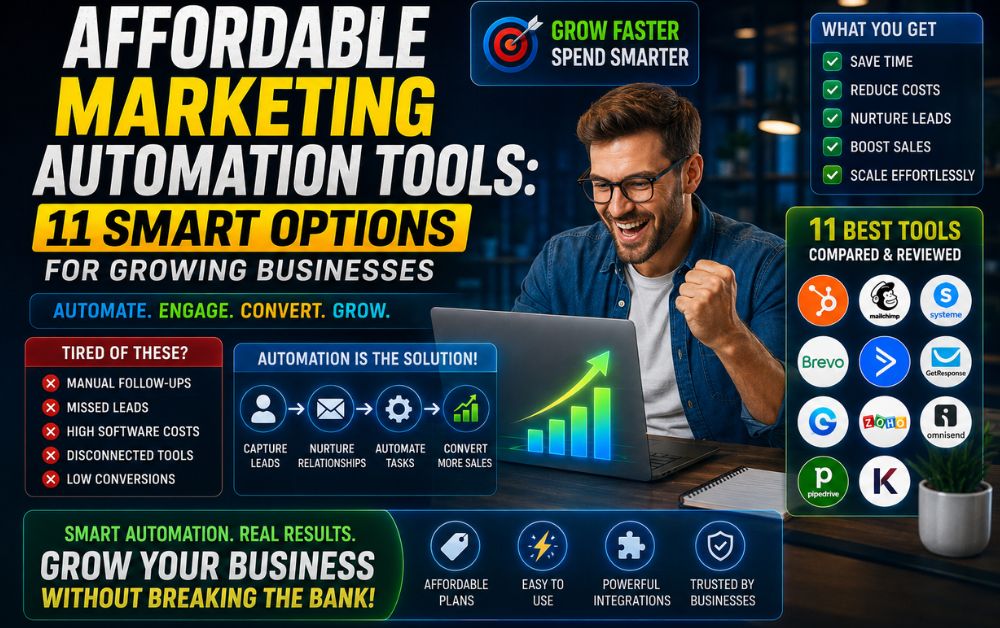
Affordable marketing automation tools can help businesses save time, improve customer communication, and scale operations without investing in expensive enterprise software. For startups, small businesses, agencies, and online entrepreneurs, finding the right balance between cost and functionality is often one of the most important decisions they make.
Many business owners still rely on manual processes to manage leads, send follow-up emails, track customer interactions, and nurture prospects. While this approach may work in the early stages, it quickly becomes difficult to maintain as the business grows. Missed follow-ups, inconsistent communication, and disorganized customer data can slow growth and reduce conversion opportunities.
Marketing automation solves this problem by turning repetitive tasks into automated workflows. Instead of spending hours each week on routine activities, businesses can focus on serving customers, generating revenue, and improving their products or services.
The good news is that effective automation no longer requires a large budget. Today’s market offers a wide range of affordable solutions that provide features such as email automation, CRM management, lead tracking, workflow automation, sales funnels, and analytics. Businesses can now access tools that were once available only to larger organizations.
Before choosing a platform, it’s important to understand which features actually matter for long-term growth. Our guide on Marketing Automation Software for Small Businesses explains the core capabilities businesses should evaluate before making a decision.
In this guide, we’ll compare some of the most affordable marketing automation tools available today, examine their strengths and limitations, and help you determine which platform offers the best value based on your business goals, budget, and growth stage.
Growing a business requires more than attracting new customers. As operations expand, business owners often find themselves spending an increasing amount of time on repetitive tasks such as responding to inquiries, following up with leads, sending emails, updating customer records, and tracking sales opportunities.
In the beginning, managing these activities manually may seem manageable. However, as customer numbers grow, manual processes can quickly become inefficient. Important conversations get buried in inboxes, follow-ups are delayed, and potential customers may lose interest before receiving a response.
This is where marketing automation becomes valuable.
Affordable marketing automation tools help businesses create systems that handle routine tasks automatically. Instead of repeating the same actions every day, owners and teams can focus on higher-value activities such as sales, customer relationships, product development, and business strategy.
Another advantage is consistency. Customers expect timely communication regardless of the size of a business. Automation helps ensure that leads receive follow-ups, onboarding messages, reminders, and relevant information at the right time. This creates a better customer experience while reducing workload.
Perhaps most importantly, affordable automation tools make growth more sustainable. Businesses no longer need expensive enterprise software to benefit from automation. Modern platforms provide access to powerful features that were once available only to large organizations, allowing smaller businesses to compete more effectively.
The businesses that scale successfully are often not the ones working the hardest. They are the ones building efficient systems that allow them to serve more customers without dramatically increasing their workload.
The Hidden Cost of Doing Everything Manually
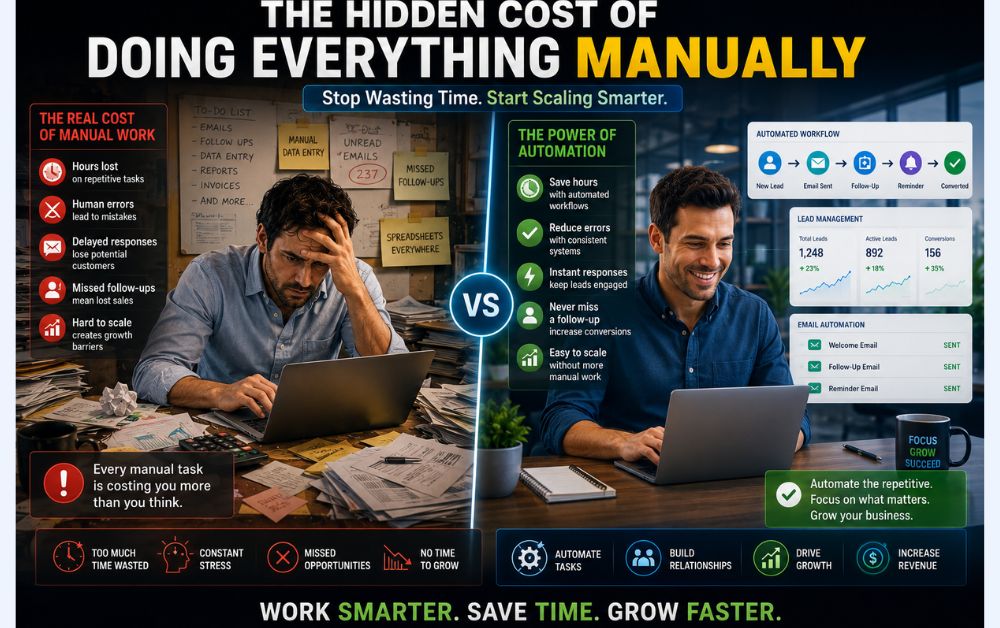
Many business owners focus on the visible costs of software subscriptions but overlook the hidden costs of manual work. While avoiding automation may seem like a way to save money, it often creates inefficiencies that become more expensive over time.
Every manual task consumes time that could be spent on revenue-generating activities. Responding to leads individually, tracking customer information in spreadsheets, sending follow-up emails, and managing repetitive administrative work can quickly add up to several hours each week.
The biggest cost, however, is often missed opportunities. A delayed response can cause a potential customer to choose a competitor. A forgotten follow-up can result in a lost sale. As lead volume increases, these small mistakes become more frequent and more costly.
Manual processes also make scaling difficult. What works for a handful of customers may become overwhelming when inquiries, appointments, and sales conversations start increasing. Business growth should create opportunities, not operational bottlenecks.
Automation helps eliminate many of these challenges by creating consistent systems that work in the background. Instead of spending valuable time on repetitive tasks, businesses can focus on building relationships, improving customer experiences, and driving growth.
What Makes a Marketing Automation Tool Truly Affordable?
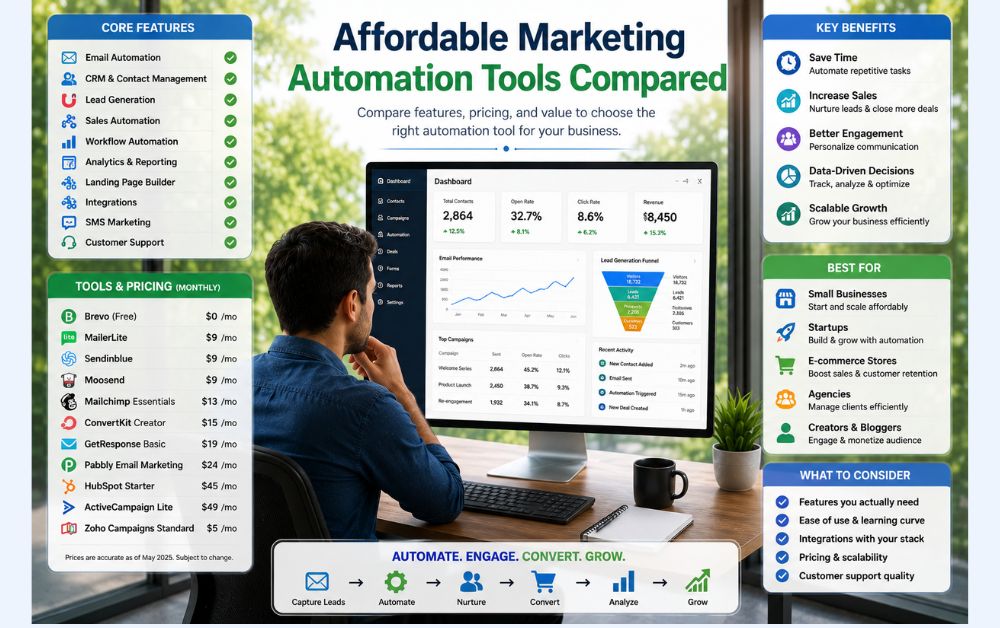
Many businesses assume that the cheapest software is automatically the most affordable option. In reality, affordability is about value, not just price. A tool that costs less each month but lacks essential features can end up costing more in lost productivity, missed opportunities, and future upgrades.
The first factor to consider is feature availability. An affordable marketing automation tool should provide the core functions most businesses need, including email automation, lead management, customer tracking, and workflow automation. Paying for multiple separate tools can quickly become more expensive than using a single platform that combines these capabilities.
Scalability is equally important. A platform may seem affordable when your business is small, but costs can increase significantly as your contact list grows or additional features become necessary. Choosing a tool that can support future growth helps avoid costly migrations later.
Ease of use also affects affordability. Software with a steep learning curve can require additional training, setup time, or technical support. A user-friendly platform allows teams to become productive faster and reduces operational friction.
Another factor businesses often overlook is hidden costs. Some providers charge extra for advanced automation, additional users, integrations, premium support, or higher contact limits. Understanding the total cost of ownership is just as important as comparing monthly subscription fees.
A truly affordable marketing automation tool is one that balances price, functionality, usability, and scalability. The best solution is not necessarily the cheapest option—it is the one that delivers the greatest long-term value while supporting business growth efficiently.
Essential Features Every Business Should Look For
Not all marketing automation tools are built the same. While pricing is important, businesses should focus on the features that directly support growth, efficiency, and customer engagement. Choosing a platform based solely on cost can lead to limitations as the business expands.
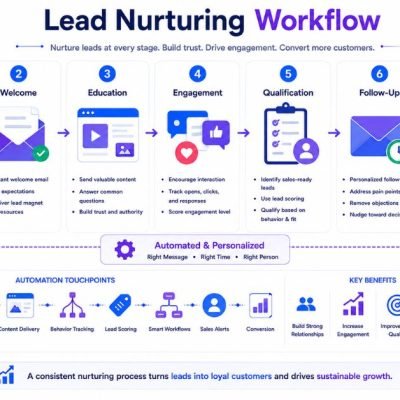
One of the most important features is email automation. Automated email sequences help businesses nurture leads, onboard customers, and maintain consistent communication without requiring manual effort. This ensures prospects continue moving through the sales process even when teams are busy.
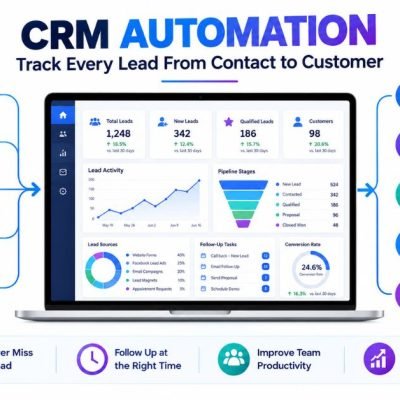
A reliable CRM (Customer Relationship Management) system is equally valuable. CRM functionality allows businesses to store customer information, track interactions, monitor sales opportunities, and maintain organized records in a single location.
Another essential feature is lead capture. Whether leads come from websites, landing pages, social media campaigns, or paid advertising, businesses need a simple way to collect and organize prospect information automatically.
Workflow automation helps eliminate repetitive tasks by creating predefined actions based on customer behavior. For example, a lead can automatically receive follow-up emails after submitting a contact form or downloading a resource.
Businesses should also look for analytics and reporting capabilities. Understanding where leads originate, which campaigns perform best, and how customers interact with content helps improve marketing decisions over time.
Finally, sales funnels and landing pages can play an important role in converting visitors into customers. Built-in funnel creation tools simplify lead generation and help businesses guide prospects through a structured buying journey.
The best marketing automation tools combine these core features into a user-friendly system that supports both current needs and future growth.
11 Affordable Marketing Automation Tools Compared
The marketing automation market has expanded significantly in recent years, giving businesses more options than ever before. From beginner-friendly email marketing platforms to advanced CRM and automation systems, there is now a solution for nearly every business type and budget.
The right platform depends on your goals. Some businesses prioritize email marketing, while others need advanced CRM capabilities, sales funnels, customer journey automation, or e-commerce integrations. Instead of choosing based solely on price, it’s important to evaluate which platform aligns best with your business model and future growth plans.
For example, startups often focus on affordability and ease of use, while agencies may require advanced lead management and automation workflows. E-commerce businesses typically need customer segmentation, abandoned cart automation, and sales tracking. Coaches, consultants, and creators often benefit from platforms that combine funnels, email marketing, and digital product delivery.
The tools below represent some of the most popular and affordable marketing automation platforms available today. Each offers a different balance of features, pricing, and scalability.
| Marketing Automation Tool | Best For | Main Strength |
|---|---|---|
| HubSpot | Growing Businesses | CRM & Scalability |
| Brevo | Budget-Conscious Businesses | Email Automation |
| Mailchimp | Beginners | Ease of Use |
| ActiveCampaign | Advanced Automation | Workflow Automation |
| ConvertKit | Creators & Bloggers | Audience Building |
| Zoho Marketing Automation | Small Businesses | Business Ecosystem |
| GetResponse | Lead Generation | Marketing Funnels |
| Omnisend | E-commerce Stores | Ecommerce Automation |
| Constant Contact | Local Businesses | Email Campaigns |
| GoHighLevel | Agencies & Service Businesses | CRM + Automation |
| Systeme.io | Startups & Solopreneurs | All-in-One Platform |
No single platform is perfect for every business. The best choice depends on your budget, technical requirements, customer acquisition strategy, and long-term growth goals. Understanding the strengths and limitations of each tool will help you make a more informed decision before investing in automation software.
HubSpot: Best for Businesses Planning Long-Term Growth
HubSpot is one of the most recognized marketing automation platforms in the industry, particularly among businesses focused on long-term growth and scalability. It combines CRM functionality, email marketing, lead management, automation workflows, reporting, and customer relationship tools within a single ecosystem.
One of HubSpot’s biggest advantages is its free CRM, which allows businesses to organize contacts, track interactions, and manage sales opportunities without an upfront investment. As a company grows, additional marketing and automation features can be added without switching platforms.
The platform is also known for its user-friendly interface. Even businesses with limited technical experience can create email campaigns, landing pages, and automated workflows with minimal setup. Detailed analytics and reporting tools help teams understand customer behavior and optimize marketing performance over time.
Pros
• Easy-to-use interface
• Powerful free CRM
• Excellent reporting and analytics
• Strong scalability for growing businesses
Cons
• Costs can increase significantly as businesses scale
• Advanced features are locked behind higher-tier plans
• May be expensive for startups with limited budgets
Best For
HubSpot is ideal for growing businesses that want a professional CRM and marketing automation platform capable of supporting long-term expansion. It is especially suitable for companies that expect to increase their marketing activities, customer database, and sales operations over time.
Brevo: Best Low-Cost Email Automation Platform
Brevo has become a popular choice for small businesses looking for affordable email marketing and automation features without the complexity of larger enterprise platforms. Formerly known as Sendinblue, the platform offers email campaigns, automation workflows, SMS marketing, contact management, and transactional email services in a budget-friendly package.
One of Brevo’s biggest strengths is its pricing model. Unlike many competitors that charge based on contact list size, Brevo primarily focuses on email sending volume. This makes it particularly attractive for businesses with growing subscriber lists that want to keep costs predictable.
The platform also provides a straightforward user experience. Businesses can build automated email sequences, segment audiences, create signup forms, and track campaign performance without needing advanced technical skills. For companies that primarily rely on email marketing, Brevo delivers strong value for the price.
Pros
• Affordable pricing structure
• Easy-to-use email automation tools
• SMS marketing capabilities
• Suitable for growing contact lists
Cons
• CRM features are less advanced than some competitors
• Limited funnel-building capabilities
• Advanced automation options may not satisfy power users
Best For
Brevo is best suited for startups, bloggers, small businesses, and marketers who want reliable email automation without paying for enterprise-level software. It provides an excellent balance between affordability, simplicity, and essential marketing automation features.
ActiveCampaign: Best for Advanced Automation Workflows
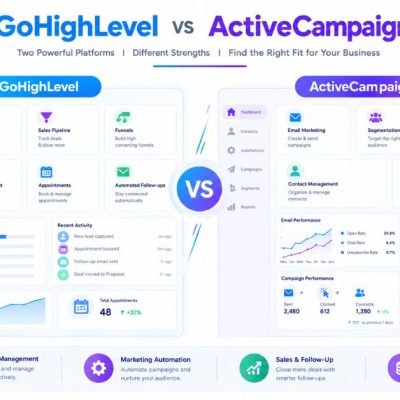
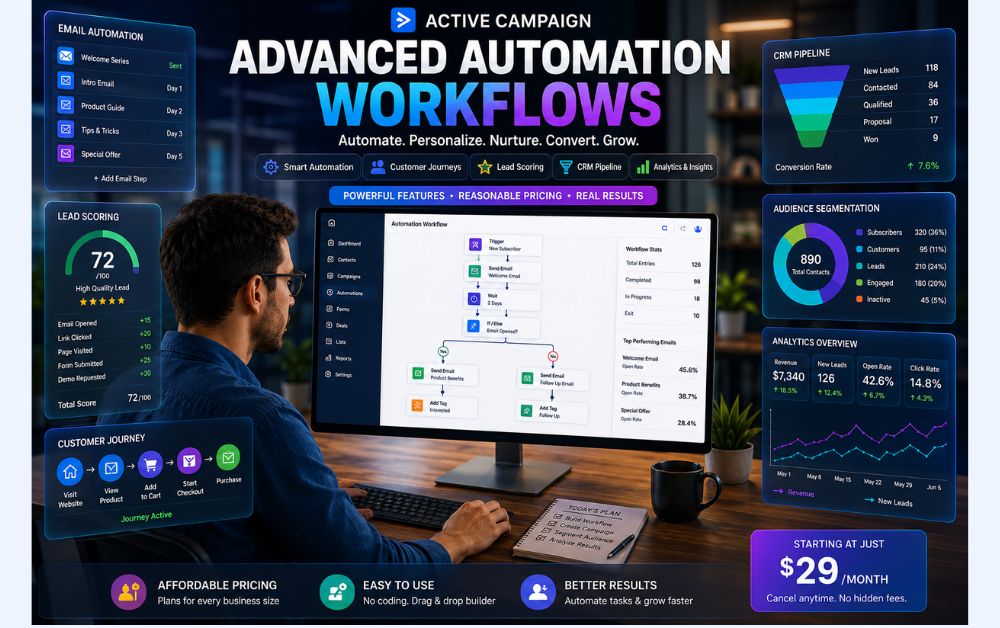
ActiveCampaign is widely recognized for its powerful automation capabilities and is often chosen by businesses that need more than basic email marketing. The platform combines email automation, CRM functionality, customer segmentation, lead scoring, and behavioral tracking into a single system designed to create highly personalized customer journeys.
One of ActiveCampaign’s biggest strengths is workflow automation. Businesses can build detailed automation sequences based on customer actions, engagement levels, website activity, and purchasing behavior. This level of customization allows marketers to deliver more relevant messages and improve conversion rates.
The platform also offers advanced segmentation features, helping businesses target the right audience with the right content at the right time. Combined with detailed reporting and analytics, ActiveCampaign provides valuable insights into campaign performance and customer engagement.
Pros
• Industry-leading automation capabilities
• Advanced audience segmentation
• Built-in CRM and lead scoring
• Detailed reporting and analytics
Cons
• Learning curve for beginners
• More complex than basic email platforms
• Pricing increases as contact lists grow
Best For
ActiveCampaign is ideal for businesses that want sophisticated automation workflows and highly personalized marketing campaigns. It is particularly well suited for growing companies, digital marketers, and businesses that rely heavily on customer segmentation and lead nurturing to drive sales.
Mailchimp: Best for Beginners and Small Teams
Mailchimp is one of the most widely recognized email marketing platforms and remains a popular choice for beginners, startups, and small teams. Its simple interface and straightforward setup process make it easy for businesses to start building email campaigns and automations without requiring extensive technical knowledge.
One of Mailchimp’s biggest advantages is ease of use. Users can quickly create email newsletters, audience segments, signup forms, and basic automation workflows through a visual drag-and-drop editor. This allows businesses to launch marketing campaigns faster while minimizing the learning curve.
The platform also provides useful reporting tools that help businesses monitor email performance, subscriber engagement, and campaign effectiveness. As businesses gain experience, they can gradually explore more advanced features such as customer journeys and behavioral targeting.
While Mailchimp offers strong email marketing capabilities, some businesses may eventually outgrow its automation features and require more advanced CRM or workflow management tools.
Pros
• Beginner-friendly interface
• Easy email campaign creation
• Free plan available
• Strong template library
Cons
• Advanced automation is limited compared to some competitors
• Pricing increases as subscriber lists grow
• CRM capabilities are relatively basic
Best For
Mailchimp is best suited for beginners, small businesses, bloggers, and startups that want an easy-to-use email marketing platform with basic automation features and minimal setup requirements.
GoHighLevel: Best for Agencies and Service Businesses
GoHighLevel is an all-in-one marketing automation platform designed primarily for agencies, consultants, coaches, and service-based businesses. Instead of using separate tools for CRM management, email marketing, lead tracking, appointment scheduling, and automation workflows, businesses can manage everything from a single dashboard.
One of GoHighLevel’s biggest advantages is its powerful CRM and pipeline management system. Businesses can track leads through every stage of the sales process while automating follow-ups and customer communication. This helps reduce manual work and ensures potential customers do not fall through the cracks.
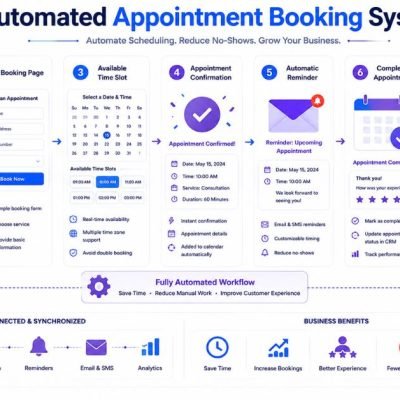
The platform also includes funnel building, landing pages, email automation, SMS marketing, and appointment scheduling features. For businesses that rely heavily on lead generation and client management, having these tools in one place can improve efficiency and simplify daily operations.
If you’re comparing multiple automation solutions before making a decision, our guide on Best Marketing Automation Tools for Small Business provides additional insights.
Businesses that need advanced automation and CRM capabilities can explore GoHighLevel to review its latest features and pricing.
Pros
• All-in-one business platform
• Advanced CRM and pipeline management
• Strong automation capabilities
• Built-in funnels and landing pages
Cons
• Learning curve for beginners
• Higher pricing than basic email tools
• Some features may be unnecessary for very small businesses
Best For
Agencies, consultants, coaches, local service businesses, and companies that need CRM management, lead tracking, automation workflows, and sales funnel functionality within a single platform.
Systeme.io: Best Budget-Friendly All-in-One Platform
Systeme.io has gained popularity among startups, solopreneurs, creators, coaches, and small business owners looking for an affordable all-in-one business platform. Instead of paying for separate tools for email marketing, sales funnels, automation, course hosting, and website building, users can manage these functions from a single dashboard.
One of the biggest advantages of Systeme.io is simplicity. The platform is designed for users who want to launch marketing campaigns, create funnels, build email sequences, and sell products without dealing with complicated software setups. This makes it particularly attractive for businesses operating with limited budgets and technical resources.
Another strength is its value for money. Many competing platforms require multiple subscriptions to achieve the same functionality. Systeme.io combines essential business growth tools into one platform, helping users reduce software expenses while keeping operations organized.
For readers interested in learning how funnels fit into an automation strategy, our guide on How I Built My First Sales Funnel Using Systeme.io provides additional insights.
Businesses that want to explore the platform’s features can review Systeme.io directly.
Pros
• Affordable all-in-one platform
• Funnel builder included
• Email marketing and automation tools
• Beginner-friendly interface
• Free plan available
Cons
• Less advanced CRM functionality
• Limited customization compared to some competitors
• Not ideal for complex enterprise workflows
Best For
Startups, solopreneurs, content creators, coaches, course sellers, and small businesses looking for a budget-friendly platform that combines funnels, email marketing, automation, and online business tools in one place.
How Different Businesses Should Choose Their Automation Tool
The best marketing automation platform depends on your business model, budget, growth stage, and operational requirements. A tool that works perfectly for one business may be unnecessary or limiting for another.
For Startups
Startups should focus on affordability, ease of use, and essential automation features. Email marketing, lead capture, basic CRM functionality, and sales funnels are often the highest priorities. New businesses benefit most from tools that can support growth without creating unnecessary complexity.
For Local Businesses
Local businesses typically need lead management, appointment scheduling, customer follow-ups, and reputation management. Automation can help ensure inquiries are answered quickly while reducing the amount of manual administrative work required each day.
For Agencies
Agencies often manage multiple clients, campaigns, and sales pipelines simultaneously. They usually require advanced CRM systems, workflow automation, reporting tools, and scalable client management capabilities. Centralized platforms can significantly improve operational efficiency.
For Coaches
Coaches need tools that simplify lead generation, appointment booking, email nurturing, and client communication. Automation helps maintain consistent engagement while reducing the time spent on repetitive administrative tasks.
For Course Creators
Course creators often prioritize landing pages, sales funnels, email sequences, digital product delivery, and audience building. Choosing a platform that combines these features can simplify business operations and reduce software costs.
For E-commerce Stores
E-commerce businesses should focus on customer segmentation, abandoned cart recovery, product recommendations, purchase tracking, and customer retention automation. These features help improve conversion rates while maximizing customer lifetime value.
Rather than choosing the most popular platform, businesses should identify their specific requirements first. The right automation tool is the one that supports current needs while remaining flexible enough to accommodate future growth.
Common Pricing Traps Most Buyers Miss
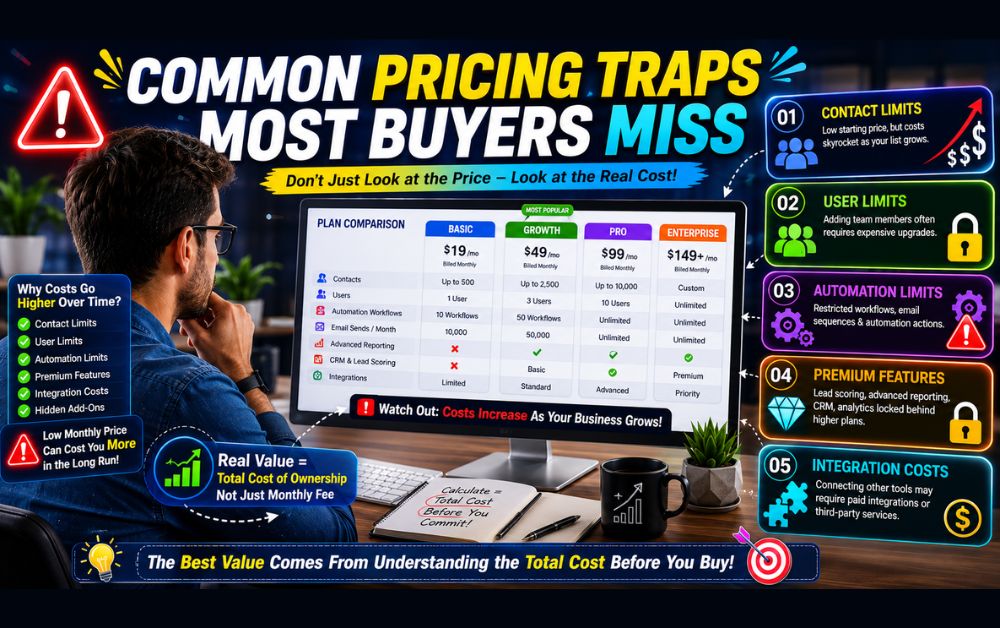
Many businesses compare software based only on the advertised monthly price. Unfortunately, the listed price rarely reflects the total cost of using a marketing automation platform as your business grows.
One of the most common pricing traps is contact limits. Some platforms appear affordable initially but become significantly more expensive once your subscriber list grows beyond a certain threshold. A low starting price can quickly double or triple as your audience expands.
Another hidden cost involves user limits. Many providers restrict the number of team members who can access the platform. Businesses often discover later that adding sales staff, marketers, or support representatives requires upgrading to a more expensive plan.
Automation limits can also create problems. Certain tools restrict the number of automation workflows, email sequences, or monthly automation actions available on lower-tier plans. Businesses may only realize these restrictions after building their processes.
Many vendors also place advanced capabilities behind paywalls. Features such as lead scoring, advanced reporting, CRM functionality, custom integrations, and detailed analytics are frequently classified as premium features requiring higher-tier subscriptions.
Finally, businesses should consider integration costs. Connecting marketing software with CRMs, payment processors, scheduling tools, or other applications may require paid integrations or third-party services that increase ongoing expenses.
The most affordable platform is not always the one with the lowest monthly fee. The best value comes from understanding the total cost of ownership before committing to a long-term solution.
Mistakes to Avoid When Choosing Affordable Marketing Software
Choosing the wrong marketing automation platform can create unnecessary costs and operational challenges. One of the most common mistakes is choosing based on price alone. A low monthly fee may look attractive, but limited functionality can lead to additional expenses later.
Another mistake is ignoring scalability. Some businesses select software that meets their current needs but cannot support future growth. Migrating data, contacts, and automation workflows to a new platform can be both time-consuming and costly.
Many companies also make the mistake of overbuying features. Purchasing enterprise-level software with advanced capabilities that will never be used often results in wasted budget and unnecessary complexity.
Poor integration planning is another common issue. Marketing automation tools should work smoothly with existing systems such as CRMs, payment processors, websites, and customer support platforms. Integration limitations can create workflow inefficiencies and manual work.
Finally, many buyers skip an important step: free trials and product testing. A platform may look impressive on paper but feel completely different during everyday use. Testing usability, automation builders, reporting dashboards, and customer workflows before purchasing can help avoid costly mistakes.
The best approach is to focus on long-term value, business requirements, ease of use, and future scalability rather than price alone.
FAQs
The answer depends on your requirements. Several platforms offer free plans or low-cost entry-level subscriptions. Tools like Brevo, Mailchimp, and Systeme.io are often considered budget-friendly options for small businesses and startups.
Mailchimp is commonly recommended for beginners because of its simple interface and easy setup process. Businesses that want an all-in-one platform may also find Systeme.io beginner-friendly.
Yes, free plans can be valuable for learning automation and managing small contact lists. However, growing businesses often need advanced features such as CRM management, workflow automation, and detailed reporting that require paid plans.
For businesses that need both CRM functionality and automation, GoHighLevel, HubSpot, and Zoho Marketing Automation are popular choices. The best option depends on business size and operational requirements.
For agencies, consultants, coaches, and service-based businesses, GoHighLevel can provide strong value because it combines CRM, automation, funnels, scheduling, and lead management within a single platform.
Yes. Systeme.io is often chosen by startups, solopreneurs, course creators, and small businesses because it combines funnels, email marketing, automation, and website-building tools at an affordable price.
Yes, but migrations can require significant time and effort. Moving contacts, automations, forms, funnels, and customer data is easier when businesses plan for scalability from the beginning.
There is no single answer for every business. Startups may prioritize affordability, agencies may need advanced CRM capabilities, and e-commerce businesses may focus on customer automation. The best value comes from choosing a platform that matches your current needs while supporting future growth.
Final Verdict: Which Affordable Marketing Automation Tool Is Right for You?
Choosing the right marketing automation platform is not about finding the most popular tool—it’s about finding the best fit for your business goals, budget, and growth strategy.
Some businesses need advanced CRM functionality and sales pipeline management. Others need affordable email automation, sales funnels, or customer nurturing tools. The ideal platform should solve today’s challenges while supporting future growth without forcing an expensive migration later.
If your primary goal is managing leads, automating follow-ups, and streamlining client communication, a CRM-focused solution may provide the greatest value. If you’re building funnels, growing an audience, or selling digital products, an all-in-one platform can reduce software costs and simplify operations.
Businesses that focus heavily on email marketing may benefit from specialized platforms designed around audience engagement and campaign optimization. Meanwhile, companies planning long-term expansion should consider scalability, integrations, reporting capabilities, and future automation requirements before making a decision.
The good news is that modern businesses have more affordable options than ever before. Whether you’re a startup, local business, agency, creator, or growing company, there is a platform capable of supporting your next stage of growth.
The best choice is the one that helps you save time, improve customer experiences, automate repetitive tasks, and create a system that can scale alongside your business.
Recommended for Agencies & Service Businesses
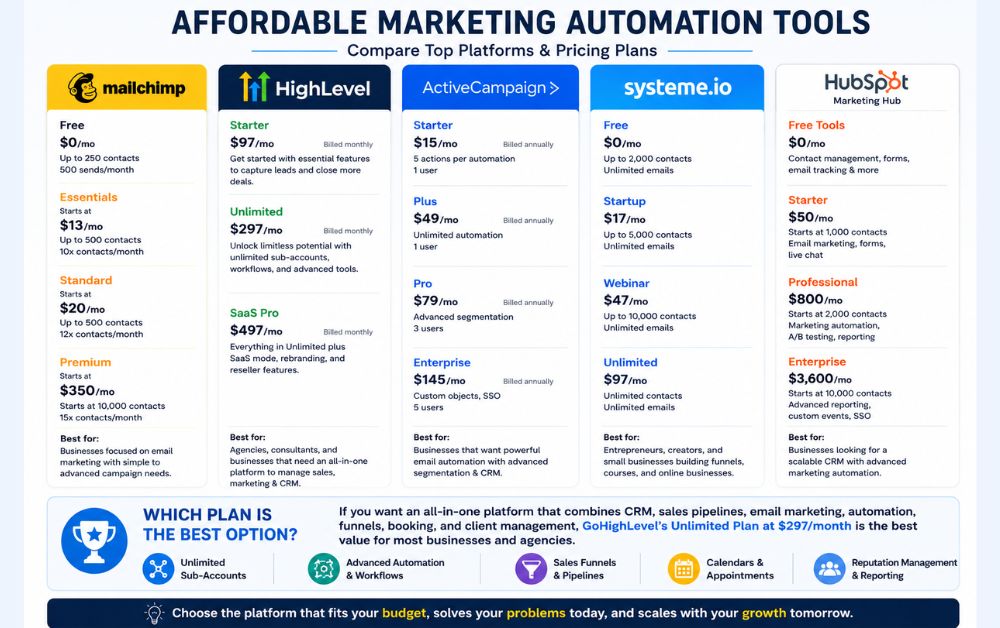
If your business depends on lead management, appointment scheduling, CRM pipelines, and advanced automation workflows, GoHighLevel is worth exploring. Its all-in-one approach helps agencies and service providers manage customer relationships and marketing activities from a single platform.
Recommended for Startups & Solopreneurs
If you’re looking for a budget-friendly platform that combines funnels, email marketing, automation, and online business tools, Systeme.io offers a simple and affordable starting point without requiring multiple software subscriptions.
Recommended for Email Marketing Focused Businesses
Businesses that primarily rely on newsletters, audience engagement, and email campaigns should consider Mailchimp, Brevo, or ActiveCampaign. These tools provide strong email automation capabilities while supporting customer communication, lead nurturing, and audience growth.
Recommended for Long-Term Business Growth
If scalability, CRM functionality, reporting, and future expansion are top priorities, platforms such as HubSpot, ActiveCampaign, and GoHighLevel can provide the flexibility needed to support long-term business growth.
Final Recommendation
Choose GoHighLevel if you run an agency, consulting business, coaching business, or local service company.
Choose Systeme.io if you’re a startup, solopreneur, creator, or small business owner looking for maximum value on a limited budget.
Choose Mailchimp or Brevo if email marketing is your primary focus.
Choose HubSpot if you’re building a business with long-term scalability and advanced CRM requirements in mind.
The right automation tool isn’t necessarily the cheapest one—it’s the one that saves the most time, improves efficiency, and helps your business grow consistently.