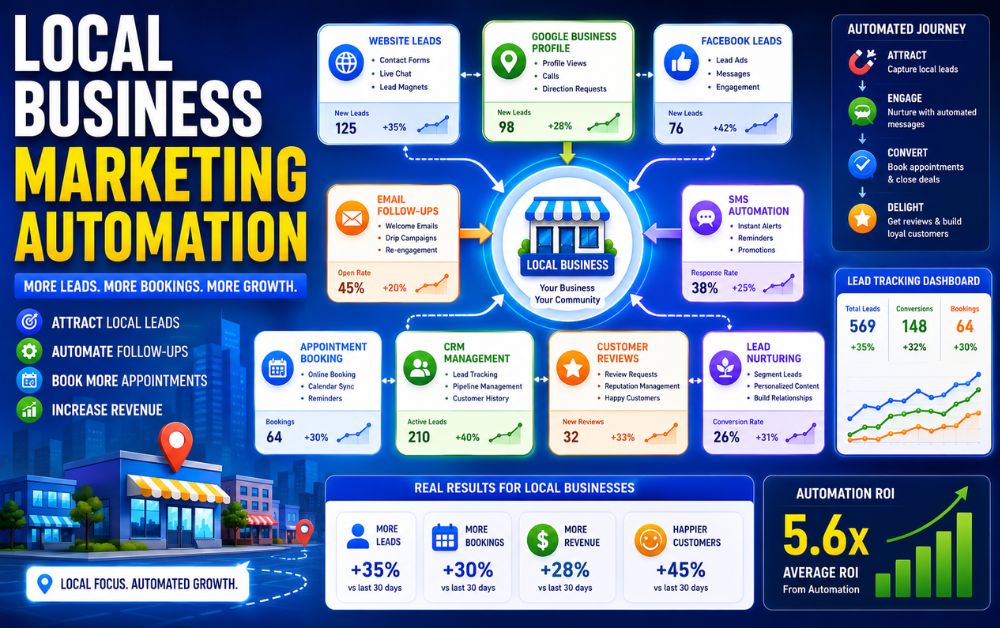
Local businesses depend on a consistent flow of leads to attract new customers and grow revenue. However, manually managing inquiries, responding to prospects, and following up with potential customers can quickly become overwhelming as lead volume increases. Many local businesses lose valuable opportunities simply because responses are delayed or follow-ups are forgotten. Local business marketing automation helps solve these challenges by creating systems that automatically capture leads, send follow-up messages, schedule appointments, and maintain customer communication. Instead of relying on manual processes, businesses can use automation to engage prospects immediately and guide them through the customer journey. This improves efficiency, increases conversion rates, and helps businesses provide a better customer experience. Whether you operate a home service company, dental clinic, real estate agency, fitness center, or local consulting business, automation can simplify lead management and support long-term growth. Understanding how local business marketing automation works is the first step toward building a more predictable and scalable lead-generation system.
Local business marketing automation is the use of software and automated workflows to attract leads, respond to inquiries, and follow up with potential customers without requiring constant manual effort. Instead of manually tracking every inquiry from websites, social media, or local search platforms, businesses can automate these processes and create a more efficient lead management system.
Automation tools can capture leads, send instant responses, schedule appointments, and nurture prospects through email or SMS campaigns. This helps businesses stay connected with potential customers while reducing administrative workload.
For local companies looking to build scalable systems, Marketing Automation for Service Businesses: A Complete Guide to Scaling Operations explains how automation improves day-to-day operations. Businesses evaluating solutions can also explore Affordable Marketing Automation Tools: 11 Smart Options for Growing Businesses.
Popular platforms such as HubSpot, Brevo, and ActiveCampaign provide automation features that help local businesses improve lead generation, customer communication, and conversion rates.
Why Local Businesses Need Marketing Automation
Many local businesses struggle to respond quickly to leads, especially when inquiries come from multiple channels such as websites, Google Business Profile, social media, and online directories. Delayed responses often result in lost customers and missed revenue opportunities.
Marketing automation helps solve this problem by creating systems that respond instantly and maintain consistent communication throughout the customer journey. Automated follow-ups, appointment reminders, and lead nurturing campaigns help businesses stay engaged with prospects until they are ready to buy.
Businesses that want to improve lead management should review Best CRM for Small Business Automation: 9 CRM Features That Save Time and Increase Sales. Understanding the difference between automation and customer management is also important, which is covered in Marketing Automation vs CRM: Which One Does Your Business Need First?.
Industry platforms such as Mailchimp, HubSpot, Zoho CRM, and Salesforce demonstrate how automation can help local businesses generate more leads, improve customer experiences, and increase conversion rates while reducing manual work.
Common Lead Generation Challenges for Local Businesses
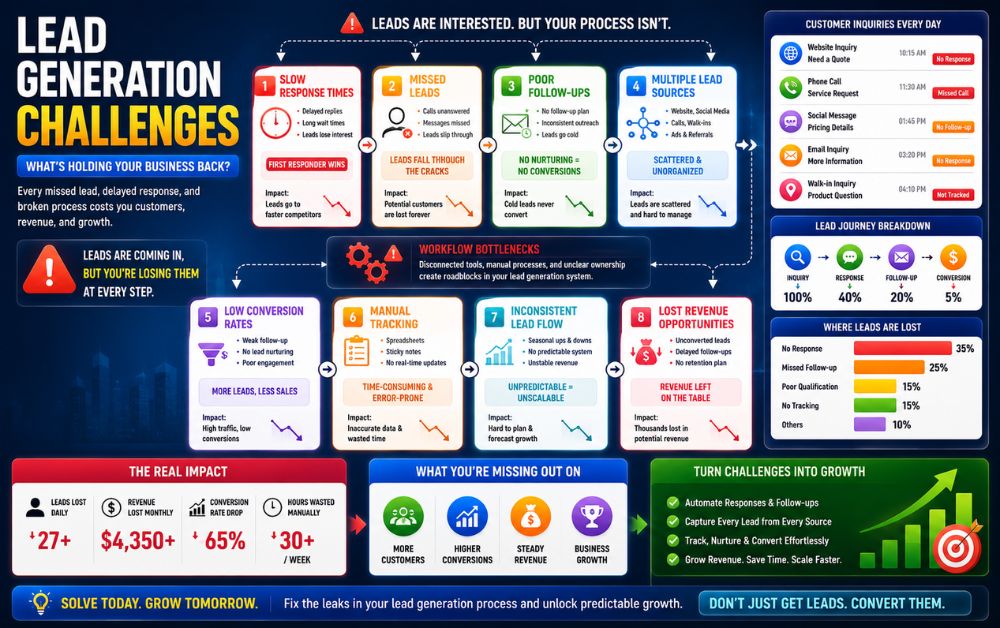
Many local businesses struggle to generate a consistent flow of qualified leads. One of the most common problems is slow response times. When potential customers submit inquiries and do not receive a quick response, they often contact competitors instead.
Another challenge is managing leads from multiple sources. Businesses may receive inquiries from websites, Google Business Profile, Facebook, online directories, and referrals. Without a proper system, important leads can easily be missed or forgotten.
Poor follow-up is also a major issue. Many businesses invest in lead generation but fail to stay in contact with prospects long enough to convert them into customers. This often results in lost revenue and lower marketing returns.
Tracking lead performance can be equally difficult. Without clear data, businesses struggle to identify which marketing channels are producing the best results. For businesses looking to improve lead acquisition, How to Generate Leads for Local Businesses provides additional strategies. Platforms such as HubSpot and Google Business Profile can help improve lead tracking and customer engagement.
Benefits of Local Business Marketing Automation
Local business marketing automation helps businesses respond to leads faster, improve customer communication, and reduce manual work. One of the biggest benefits is immediate engagement. When a prospect submits an inquiry, automation can instantly send a confirmation message and begin the follow-up process.
Automation also improves lead management by ensuring every inquiry is captured and tracked properly. This reduces the risk of missed opportunities and helps businesses maintain consistent communication throughout the customer journey.
Another advantage is higher conversion rates. Automated follow-ups keep prospects engaged and increase the likelihood of turning inquiries into paying customers. Businesses can also save significant time by automating repetitive tasks such as reminders, appointment confirmations, and nurture campaigns.
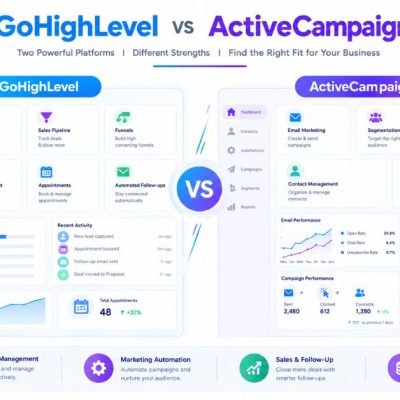
For businesses looking to build complete automation systems, Marketing Automation for Service Businesses: A Complete Guide to Scaling Operations provides additional insights. Platforms such as GoHighLevel are particularly popular among local businesses because they combine CRM, lead management, automation, and follow-up tools in a single system.
How Automated Lead Capture Works
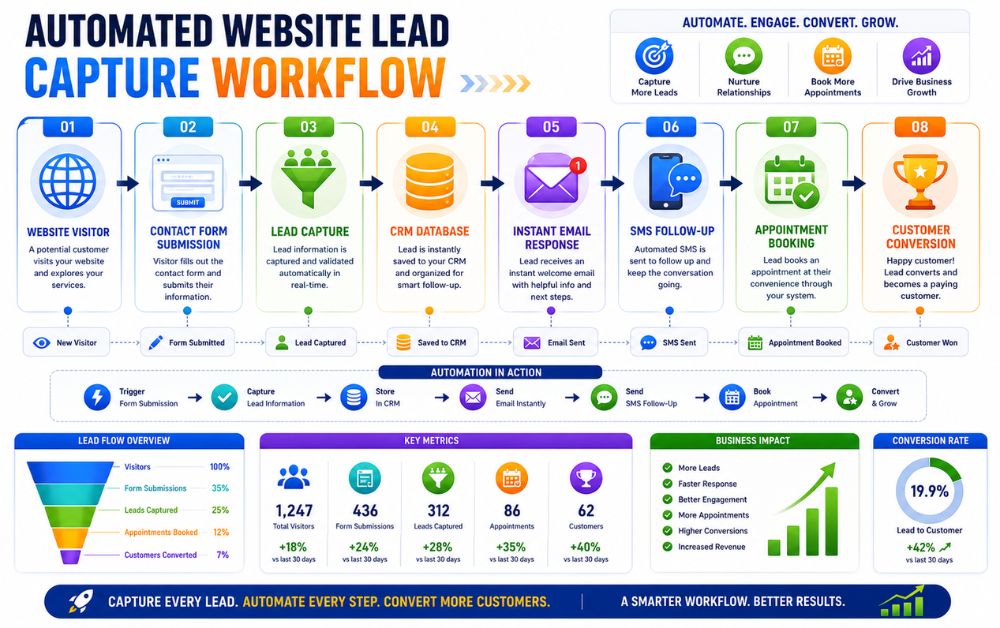
Automated lead capture allows local businesses to collect and organize customer inquiries without manual intervention. When a visitor completes a website form, requests a quote, books a consultation, or submits contact information, the lead is automatically stored and processed through a predefined workflow.
The system can instantly send confirmation emails, notify team members, assign leads to sales representatives, and trigger follow-up sequences. This ensures every prospect receives immediate attention while reducing administrative workload.
Lead capture automation also helps businesses track where inquiries originate. Whether leads come from websites, landing pages, Facebook campaigns, or local search listings, businesses gain better visibility into marketing performance and lead quality.
For businesses focused on improving lead generation, How to Generate Leads for Local Businesses offers practical strategies. Platforms such as HubSpot are commonly used for lead capture and CRM integration, while ActiveCampaign is often preferred when advanced email automation and lead nurturing are required.
Automating Website Lead Forms
Website lead forms are often the first point of contact between a local business and a potential customer. Automating these forms ensures every inquiry is captured, organized, and followed up on immediately without requiring manual action.
When a visitor submits a contact form, request form, or quote form, automation can instantly send a confirmation email, notify team members, and add the lead to a CRM system. This reduces response times and prevents valuable inquiries from being overlooked.
Automated lead forms also improve lead quality by collecting important information such as service requirements, location details, budget, and contact preferences. This helps businesses prioritize leads and provide more relevant responses.
Another benefit is seamless integration with follow-up campaigns. Leads can automatically enter email or SMS nurture sequences that keep them engaged until they are ready to make a decision. Businesses using Best CRM for Small Business Automation: 9 CRM Features That Save Time and Increase Sales often integrate lead forms directly into their CRM. Platforms such as GoHighLevel are widely used to automate form submissions and lead management workflows.
Google Business Profile Lead Automation
Google Business Profile is one of the most important lead sources for local businesses because potential customers often search for services with strong purchase intent. Automating lead management from Google Business Profile helps businesses respond faster and improve conversion rates.
When customers call, submit inquiries, request directions, or visit a website through a business profile, automation tools can track these actions and trigger follow-up workflows. Businesses can automatically send thank-you messages, appointment reminders, review requests, and customer satisfaction surveys.
Automation also helps organize incoming leads by sending information directly into a CRM system. This reduces manual data entry and ensures every inquiry receives proper follow-up. Businesses interested in improving customer management can explore Best CRM for Small Business Automation: 9 CRM Features That Save Time and Increase Sales. Platforms such as GoHighLevel are commonly used by local businesses because they combine lead tracking, CRM management, and automated follow-up tools designed for local customer acquisition.
Facebook Lead Generation Automation
Facebook remains a valuable channel for local lead generation because businesses can target potential customers based on location, interests, and demographics. However, manually managing Facebook leads can become difficult as campaign volume increases.
Marketing automation helps by instantly capturing lead form submissions and moving them into a structured follow-up process. New leads can automatically receive confirmation emails, SMS messages, and appointment booking invitations without requiring manual action.
Automation also improves response speed, which is often critical for converting Facebook leads into paying customers. Instead of waiting hours or days for a response, prospects receive communication immediately after submitting their information.
Businesses seeking scalable lead-generation systems can learn from Marketing Automation for Service Businesses: A Complete Guide to Scaling Operations. Platforms such as HubSpot are often used for Facebook lead synchronization, while GoHighLevel is popular among local businesses that want lead capture, CRM, and follow-up automation in one platform.
Automated Email Follow-Up Sequences
Many local businesses lose potential customers because they fail to follow up consistently after the initial inquiry. Automated email sequences solve this problem by delivering timely communication without requiring ongoing manual effort.
A typical sequence may begin with a welcome email, followed by service information, customer testimonials, frequently asked questions, and appointment reminders. These emails help build trust while keeping prospects engaged throughout the decision-making process.
Automation also allows businesses to personalize communication based on customer interests and actions. Leads receive relevant information at the right time, increasing the likelihood of conversion. Businesses can further strengthen follow-up systems by reviewing How I Automated My Email Follow-Ups in Systeme.io and Saved 6 Hours Every Week.
For businesses focused primarily on email marketing, ActiveCampaign, Brevo, and MailerLite provide strong automation capabilities. Local businesses that need email automation combined with CRM and lead management often choose GoHighLevel for a more complete solution.
SMS Follow-Up Automation
SMS follow-up automation helps local businesses connect with leads quickly and maintain engagement throughout the customer journey. Since text messages typically have higher open rates than email, SMS can be an effective channel for appointment reminders, quote follow-ups, service updates, and promotional offers.
When a lead submits a form or requests information, automated SMS workflows can instantly send confirmation messages and guide prospects toward the next step. This improves response speed and reduces the risk of losing potential customers to competitors.
SMS automation is also useful for appointment reminders and follow-up communication after a service has been completed. These messages help improve customer satisfaction while reducing missed appointments and no-shows.
Businesses looking to strengthen customer communication can also review Marketing Automation vs CRM: Which One Does Your Business Need First?. Platforms such as GoHighLevel and Keap are commonly used for SMS automation because they combine messaging, CRM management, and lead follow-up tools within a single system.
Managing Leads With CRM Automation
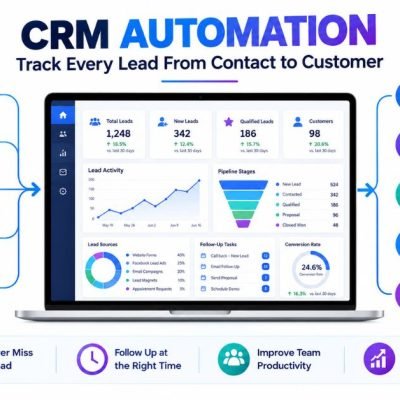
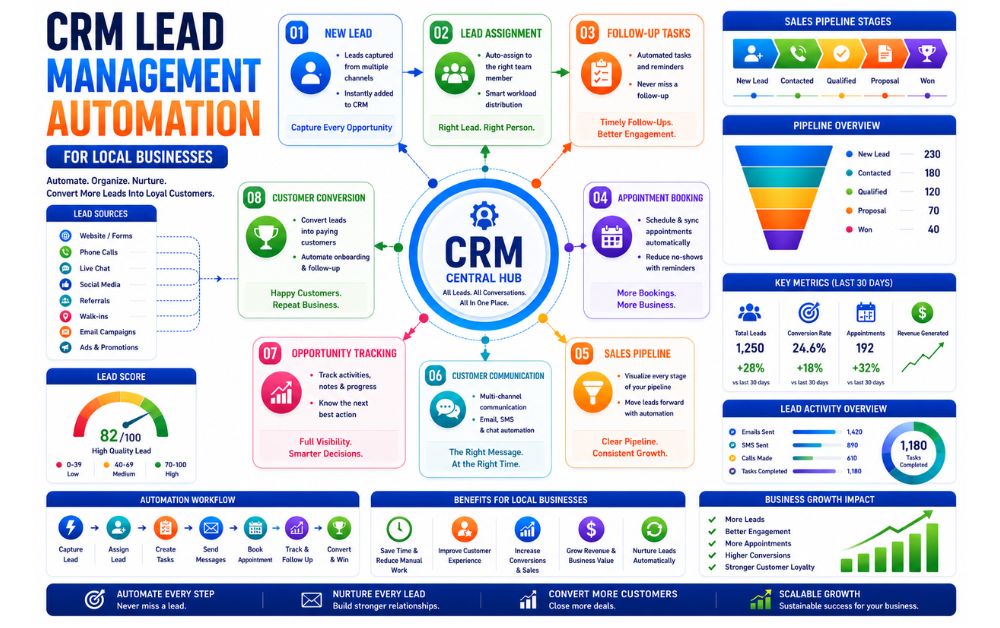
As local businesses generate more leads, keeping track of every inquiry becomes increasingly difficult. CRM automation helps organize lead information, automate follow-up tasks, and improve overall sales management. Instead of storing customer details across spreadsheets, email inboxes, and multiple applications, a CRM creates a centralized system for managing every lead.
When integrated with marketing automation, leads can automatically enter the CRM after submitting forms, requesting quotes, scheduling appointments, or responding to marketing campaigns. This eliminates manual data entry and helps maintain accurate customer records.
CRM automation also improves lead tracking by assigning leads to specific team members, updating pipeline stages, scheduling follow-up activities, and monitoring customer interactions. This ensures opportunities are not forgotten and sales processes remain organized.
Another major benefit is visibility. Business owners and sales teams can quickly see where leads are in the sales process, identify bottlenecks, and prioritize high-value opportunities. Companies interested in improving customer management can explore Best CRM for Small Business Automation: 9 CRM Features That Save Time and Increase Sales.
For local businesses, GoHighLevel is often chosen because it combines CRM, automation, SMS, and lead management tools. Businesses requiring advanced CRM functionality may also consider HubSpot CRM, Zoho CRM, or Keap depending on their operational requirements and growth goals.
Lead Nurturing Strategies for Local Businesses
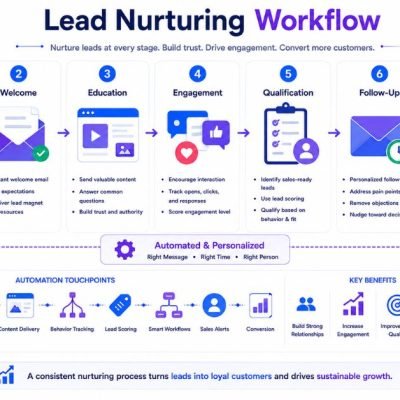
Generating a lead is only the first step. Many local businesses lose potential customers because they fail to stay in contact with prospects after the initial inquiry. Lead nurturing helps build trust and keeps the business top of mind until the customer is ready to make a decision.
Effective nurturing strategies include educational emails, customer success stories, testimonials, service updates, and helpful content that addresses common questions. Consistent communication helps prospects better understand the value of the services being offered.
Automation makes lead nurturing more efficient by delivering the right message at the right time. Businesses can create email and SMS sequences that guide prospects through the buying process without requiring constant manual effort. Companies looking to improve their nurturing process can explore How to Generate Leads for Local Businesses. Platforms such as ActiveCampaign are widely used for advanced lead nurturing, while GoHighLevel is popular among local businesses that need nurturing, CRM, and follow-up automation in a single platform.
Appointment Booking Automation
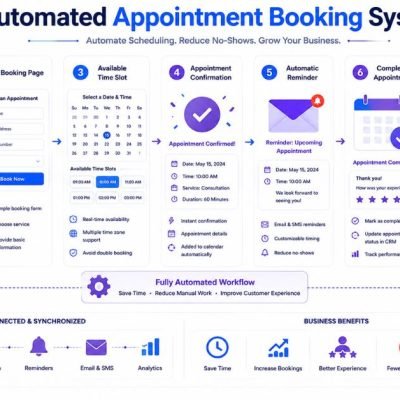
Appointment booking automation helps local businesses reduce administrative work while making scheduling easier for customers. Instead of handling bookings manually through phone calls and emails, businesses can allow customers to schedule appointments online at their convenience.
Automated booking systems can instantly confirm appointments, send reminders, and notify customers about schedule changes. This improves efficiency while reducing missed appointments and no-shows.
Another advantage is real-time calendar management. Available time slots are updated automatically, preventing scheduling conflicts and double bookings. Customers receive a smoother experience, and staff spend less time managing calendars.
Appointment booking automation works especially well when combined with lead generation and follow-up systems. Businesses interested in improving operational efficiency can review Marketing Automation for Service Businesses: A Complete Guide to Scaling Operations. Platforms such as GoHighLevel and Calendly are commonly used to automate appointment scheduling and customer reminders.
Tracking and Measuring Lead Performance
Tracking lead performance is essential for understanding which marketing activities generate the best results. Without accurate data, businesses may continue investing in channels that produce low-quality leads while overlooking more effective opportunities.
Automation platforms help track lead sources, conversion rates, customer actions, appointment bookings, and overall campaign performance. This information allows businesses to identify trends and make better marketing decisions.
Monitoring performance also helps improve lead quality. Businesses can determine which campaigns attract the most qualified prospects and allocate resources more effectively. Regular analysis supports continuous optimization and better return on investment.
Companies looking to improve lead management should review Best CRM for Small Business Automation: 9 CRM Features That Save Time and Increase Sales. Platforms such as HubSpot provide advanced reporting and analytics capabilities, while GoHighLevel offers lead tracking, attribution reporting, and performance monitoring designed specifically for local businesses.
Common Mistakes to Avoid
One of the most common mistakes local businesses make is responding too slowly to new leads. Delayed responses often result in lost opportunities because prospects frequently contact multiple businesses before making a decision.
Another mistake is failing to create a structured follow-up process. Many businesses generate leads successfully but lose potential customers because communication stops after the initial inquiry. Consistent follow-up is critical for improving conversions.
Some businesses also invest in multiple tools that do not integrate properly, creating data silos and inefficient workflows. Choosing systems that work together can significantly improve lead management and customer communication.
Ignoring lead tracking and performance data is another costly mistake. Without monitoring results, businesses cannot identify what is working or where improvements are needed. Companies interested in simplifying their processes can explore Business Process Automation Software: Why Simpler Systems Usually Work Better for Small Online Businesses. Platforms such as Keap and GoHighLevel help reduce complexity by combining automation, CRM, and lead management features within a unified system.
Best Practices for Successful Implementation
Successful local business marketing automation starts with a clear process for capturing, managing, and following up with leads. Before implementing automation, businesses should identify where leads come from and map out the customer journey from inquiry to conversion.
Start with simple workflows such as lead capture forms, appointment reminders, and automated follow-up messages. Once these systems are working effectively, additional automation can be added gradually. This reduces complexity and makes optimization easier.
Maintaining accurate customer data is also essential. Clean and organized records improve automation performance and help businesses deliver more relevant communication. Regularly reviewing campaign results and lead conversion metrics allows businesses to identify improvement opportunities and maximize return on investment.
Businesses should also ensure marketing, sales, and customer service teams follow consistent processes. Companies looking to build scalable systems can explore Workflow Automation Software: How I Finally Stopped Wasting Time on Repetitive Tasks. Platforms such as GoHighLevel provide automation, CRM, lead management, and reporting tools that support long-term business growth.
Final Verdict
Local business marketing automation helps businesses generate more leads, improve follow-up consistency, reduce manual work, and increase conversion rates. By automating lead capture, customer communication, appointment scheduling, and lead management, businesses can create a more efficient and scalable growth system. The key is implementing automation gradually while maintaining a strong focus on customer experience and lead quality. Businesses that combine automation with effective CRM processes and performance tracking are often better positioned to attract more customers, improve operational efficiency, and build sustainable long-term growth in competitive local markets.
FAQs
Local business marketing automation uses software to automate lead generation, follow-ups, appointment scheduling, customer communication, and lead management processes.
Automation captures leads instantly, responds faster to inquiries, nurtures prospects automatically, and helps businesses convert more opportunities into customers.
Many local businesses use GoHighLevel because it combines CRM, lead management, automation, SMS, email marketing, and appointment booking in one platform.
Yes. Marketing automation helps small businesses save time, improve customer communication, increase conversions, and manage more leads without hiring additional staff.
Yes. Marketing automation helps generate and nurture leads, while CRM software organizes customer information and manages opportunities throughout the sales process.