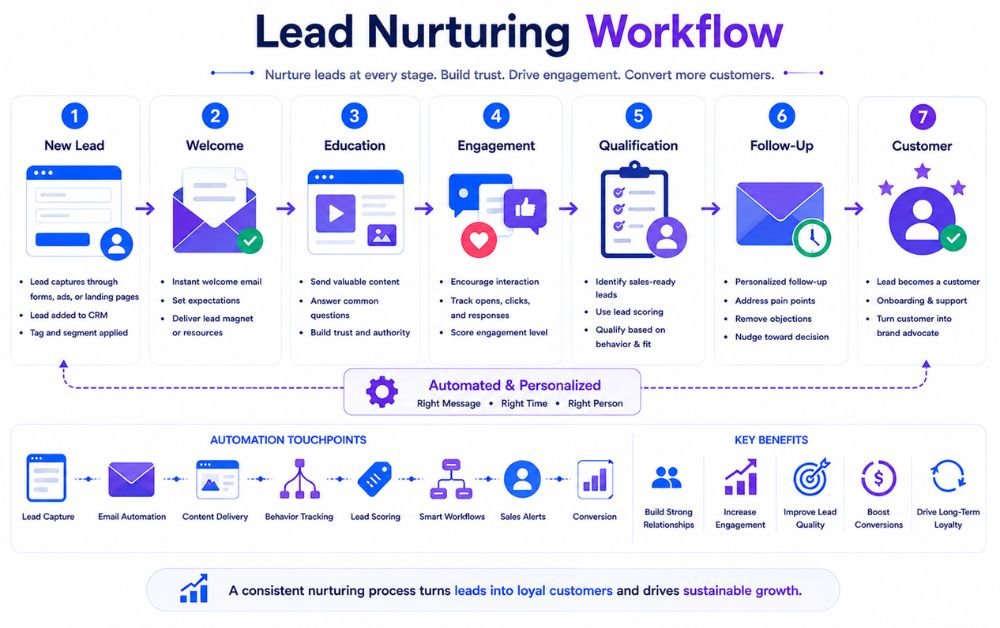
Getting a new lead is only the beginning of the sales process. Many prospects are interested in a product or service but are not ready to buy immediately. If they do not receive useful communication after showing interest, they may forget about the business or choose a competitor.
A Lead Nurturing Workflow helps businesses stay connected with these prospects through timely and relevant communication. Instead of contacting every lead manually, businesses can create a structured process that guides prospects from their first interaction toward a buying decision.
The workflow can include welcome messages, educational content, follow-up emails, lead segmentation, engagement tracking, and sales notifications. Each step should have a clear purpose and provide information that matches the prospect’s stage.
For small businesses, this approach can reduce repetitive follow-up work while creating a more consistent customer journey. The goal is not to send more messages, but to send the right message at the right time.
A Lead Nurturing Workflow is a planned sequence of communication that keeps potential customers engaged after they show interest. A person who fills out a form or downloads a resource may not be ready to make a purchase immediately. They may need more information, time to compare options, or answers to a few questions first.
A nurturing workflow keeps the conversation moving without making every follow-up a manual task. The sequence might begin with a welcome email, followed by helpful content, answers to common questions, and a relevant offer when the prospect becomes more interested.
The messages should reflect where the prospect is in the buying journey. Someone who has just joined an email list needs different information from someone who has already requested a quote.
For a complete process, lead capture automation can connect the initial inquiry with the nurturing sequence, creating a smoother path from first contact to potential customer.
Why Businesses Need Lead Nurturing
Not every prospect is ready to buy after the first interaction. Some are still researching, comparing alternatives, checking pricing, or waiting for the right time to make a decision. Without continued communication, those opportunities can quietly disappear.
Lead nurturing keeps useful information in front of prospects while they make up their minds. Instead of repeatedly asking for a sale, the communication can answer questions, explain benefits, share useful resources, and address common concerns.
Timing also matters. A prospect who receives helpful information at the right stage is more likely to remain engaged than someone who receives the same promotional message again and again.
Email is often one of the easiest channels for maintaining this relationship. Automated email campaigns allow messages to be planned in advance and delivered according to actions, interests, or timing.
The aim is simple: stay relevant, build confidence, and give prospects a clear reason to take the next step when they are ready.
Common Lead Nurturing Problems Businesses Face
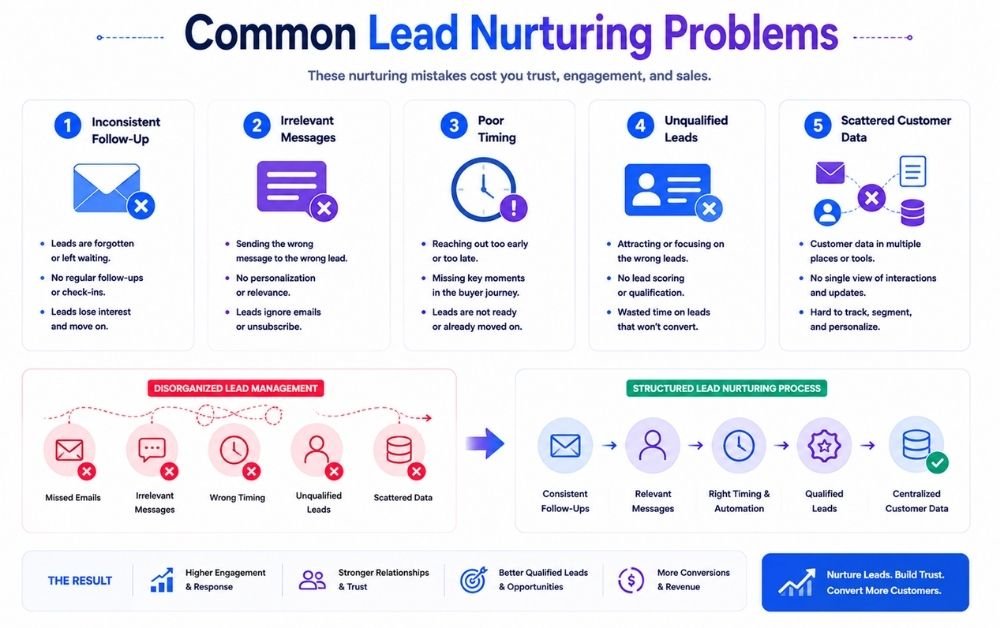
One of the most common problems is inconsistent follow-up. A new inquiry may receive an initial response, but the conversation often stops when there is no immediate reply. After a few days, the opportunity can easily be forgotten.
Another issue is irrelevant communication. Sending identical messages to every contact ignores differences in interests, questions, and buying intent. A person looking for basic information should not receive the same message as someone already asking about pricing.
Timing creates another challenge. Too many messages can feel intrusive, while long gaps can make the conversation lose momentum.
Lead quality is another concern. Without understanding engagement, it becomes difficult to tell which contacts are genuinely interested and which ones are unlikely to move forward.
Customer information can also become scattered between forms, email conversations, spreadsheets, and CRM records. A structured CRM automation process helps keep important interactions organized, making it easier to understand each prospect and decide what communication should happen next.
How a Lead Nurturing Workflow Works
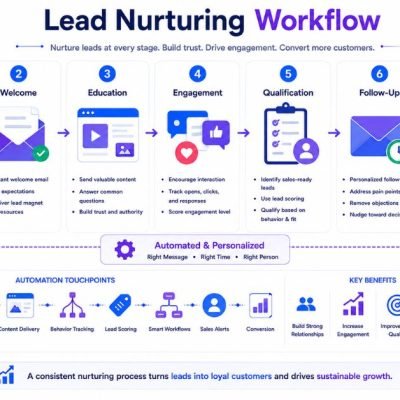
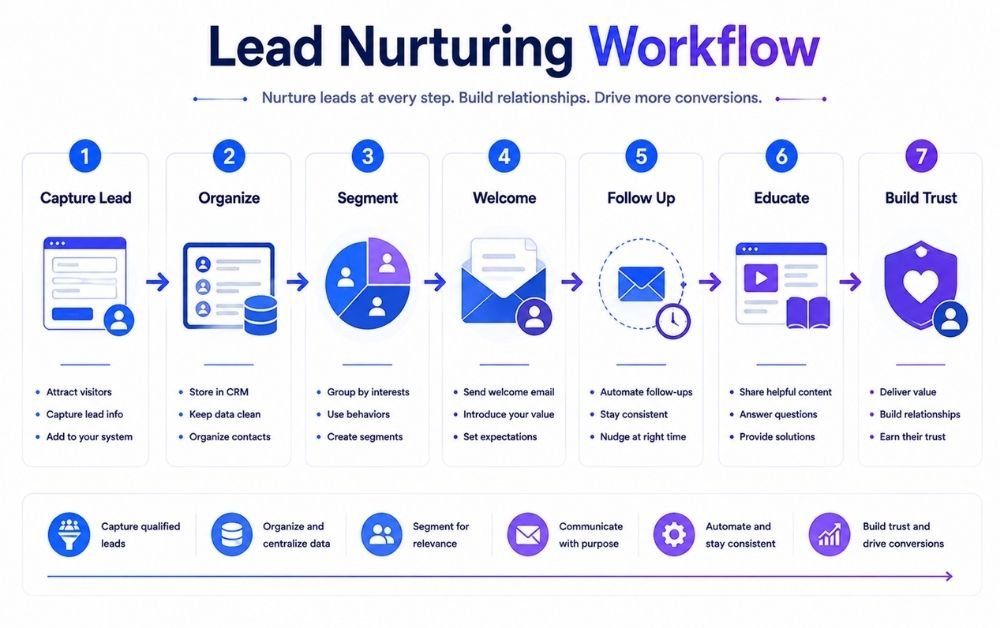
A Lead Nurturing Workflow moves a prospect through a planned series of interactions after they show interest. The process usually begins when someone submits a form, downloads a resource, requests information, or joins an email list.
Once the lead enters the system, their information is organized and used to determine what should happen next. A welcome message can acknowledge the inquiry, followed by useful content that answers questions and keeps the conversation active.
As the prospect interacts with emails, pages, or resources, those actions provide clues about their interests. The workflow can then adjust future communication or notify the sales team when stronger buying signals appear.
This approach becomes easier to manage when marketing automation connects lead capture, communication, and follow-up in one process. Platforms such as Systeme.io can combine email campaigns, funnels, and automation so the workflow does not depend entirely on manual follow-up.
The focus should remain on relevance, timing, and helping prospects make a confident decision.
Step 1: Capture New Leads
The first stage of a lead nurturing workflow is capturing prospects when they show interest in your offer. Leads can come from website forms, landing pages, social media campaigns, content downloads, consultation requests, or other marketing channels.
The capture process should be simple and ask only for information that is genuinely useful. Depending on the business, this may include a name, email address, phone number, service interest, or a specific question from the prospect.
The source of each lead is also worth recording. Knowing whether someone arrived through a landing page, advertisement, organic search, or another channel helps you understand which sources are producing potential customers.
Using lead capture automation can reduce manual work by sending newly submitted information directly into the next stage of the workflow.
A well-designed capture process should also provide a clear next step after submission. This could be a confirmation message, useful resource, or welcome email.
The goal is to make sure every genuine inquiry enters the nurturing process without unnecessary delays.
Step 2: Organize and Store New Leads
Once a lead has been captured, the information needs to be stored in a structured and accessible location. Keeping prospect details across different spreadsheets, inboxes, or notes can make it difficult to understand who needs attention and when.
Store essential details such as the lead’s name, contact information, source, interests, and current status. These details create a useful record that can be updated as the prospect interacts with your business.
It is also helpful to keep lead information consistent. Standard fields and simple categories make it easier to search, filter, and manage contacts as the database grows.
A CRM system provides a central place for storing these records and gives teams a clearer view of each prospect. When information is updated automatically, fewer manual tasks are required and important details are less likely to be overlooked.
Good organization also prepares the lead for the next stages of nurturing. Once the information is clean and accessible, it becomes easier to segment contacts, personalize communication, and track their progress through the workflow.
Step 3: Segment Leads Based on Their Needs
Not every prospect is looking for the same solution. One person may only be researching, while another may already know what they want and be comparing providers. Treating both contacts identically can make the communication feel irrelevant.
Segmentation solves this problem by grouping contacts according to useful characteristics. Leads can be organized by their interests, source, service requested, previous interactions, or stage in the buying process.
For example, someone interested in email marketing could receive content about campaigns and subscriber management. Another contact interested in CRM software could receive resources focused on customer organization and sales processes.
The categories do not need to become complicated. A few meaningful segments are usually more useful than dozens of labels that nobody maintains properly.
Segmentation also makes automated communication more relevant because each group can follow a different sequence.
When customer information and communication work together, CRM automation can help keep these groups organized as contacts interact with the workflow.
This creates a more focused experience without requiring someone to manually sort every new inquiry.
Step 4: Send an Immediate Welcome Message
The first message after someone becomes a lead sets the tone for the relationship. A long delay can create uncertainty, especially when the person has just requested information or downloaded something.
A welcome message does not need to be complicated. It should acknowledge the action, deliver anything that was promised, and explain what the prospect can expect next.
For example, someone downloading a guide could immediately receive the resource with a short introduction. Someone requesting information about a service could receive confirmation along with the next step.
Avoid turning this first interaction into an aggressive sales pitch. The priority is to confirm that the request was received and begin a useful conversation.
The message can also introduce a relevant resource that helps the prospect understand the problem they are trying to solve. Automated email campaigns make this easier by delivering the right message as soon as a new contact enters the workflow.
A prompt and useful welcome creates a stronger starting point for the messages that follow.
Step 5: Create a Valuable Follow-Up Sequence
A single welcome message rarely gives a prospect enough information to make a decision. A follow-up sequence allows the conversation to continue naturally over several interactions.
Each message should serve a clear purpose. One email might answer a common question, another could explain how a solution works, while a later message could address concerns that often delay a purchase.
Spacing is just as important as the content. Sending several messages within a short period can become frustrating, while leaving long gaps may cause the prospect to forget why they originally signed up.
The sequence should also respond to engagement. If a prospect repeatedly interacts with content about one topic, future communication can become more closely related to that interest.
Keep the workflow manageable. Start with the questions prospects ask most often and build the sequence around those needs rather than creating unnecessary complexity.
For example, email follow-up automation can handle scheduled messages while allowing the sequence to remain consistent across new leads.
The objective is helpful communication, not simply sending more emails.
Step 6: Educate Prospects Before Selling
A prospect may be interested in a solution without fully understanding the problem, available options, or what they should look for before buying. Useful educational content can close that information gap.
Instead of immediately promoting an offer, use the nurturing sequence to explain common problems, answer questions, compare approaches, and demonstrate practical solutions.
For example, someone interested in improving sales processes might benefit from information about lead management, response times, follow-up methods, and CRM organization before seeing a product recommendation.
This stage is about reducing uncertainty. When prospects understand the problem and the possible solutions, they are in a better position to evaluate an offer.
Educational content can also encourage continued engagement. A helpful guide, checklist, tutorial, or example gives the prospect a reason to open the next message.
The transition toward a product or service should happen naturally. Once the prospect understands the problem and has seen possible solutions, a relevant recommendation becomes much easier to accept.
Good nurturing educates first and sells when the context makes sense.
Step 7: Build Trust With Relevant Content
Trust develops through consistent, useful communication. Prospects are more likely to stay engaged when every interaction gives them something relevant instead of another generic sales message.
Practical guides, tutorials, checklists, examples, and answers to common questions can demonstrate expertise while helping the reader solve smaller problems along the way.
Proof can also strengthen confidence. Customer experiences, demonstrations, case examples, and clear explanations give prospects additional information when they are evaluating their options.
Relevance matters throughout the process. A person interested in one service should not receive a constant stream of unrelated material. The content should connect with their interests, previous actions, and current stage.
This is also where a broader sales funnel can support the nurturing process by giving prospects a logical path from initial interest to consideration and, eventually, conversion.
For those building the workflow with an all-in-one platform, Systeme.io can also be used to connect funnel stages with email automation and follow-up sequences.
The best workflows create a natural path where helpful information gradually answers questions, removes uncertainty, and makes the next step easier.
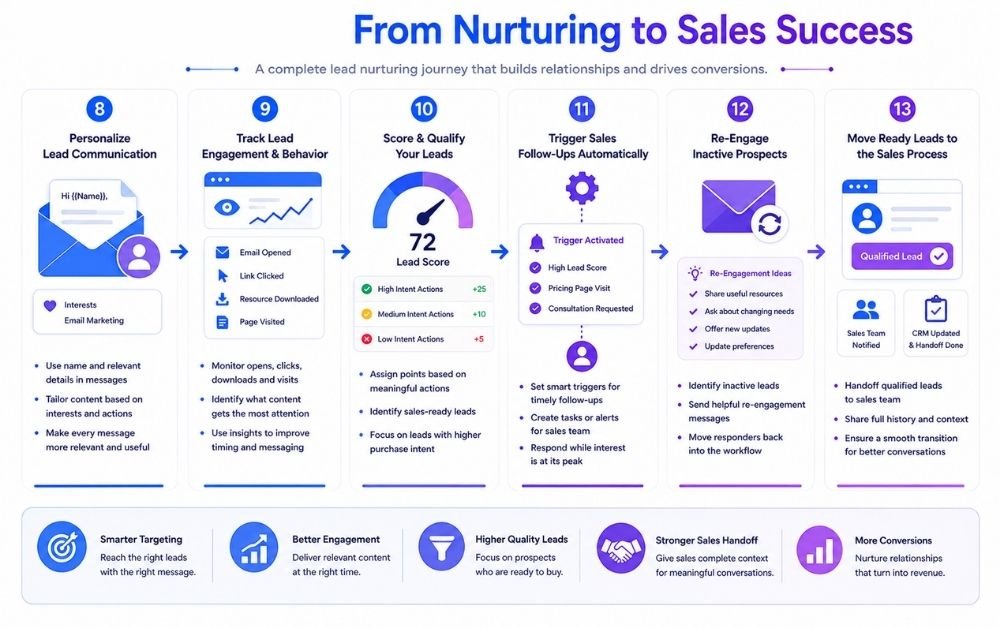
Step 8: Personalize Lead Communication
Personalized communication makes a nurturing workflow more relevant to each prospect. Instead of sending exactly the same message to everyone, use information such as their interests, previous actions, service preferences, or stage in the buying journey.
Simple personalization can start with using the prospect’s name and referring to the reason they originally signed up. More advanced workflows can change the content based on links clicked, resources downloaded, or pages viewed.
For example, someone interested in email marketing can receive related educational content, while another prospect interested in CRM solutions can receive information about customer management challenges.
Email personalization should remain useful rather than becoming overly familiar. The information used should have a clear purpose and improve the prospect’s experience. Platforms such as Systeme.io can help connect email communication with automated workflows and customer journeys. Systeme.io
The objective is not to make every message completely unique. It is to make each interaction feel connected to what the prospect actually needs.
Step 9: Track Lead Engagement and Behavior
Knowing how prospects interact with your communication helps you understand whether the nurturing workflow is working. Track useful actions such as email opens, link clicks, content downloads, form submissions, page visits, and replies.
These signals can reveal which topics attract attention and which messages are being ignored. For example, repeated interaction with content about a particular service may indicate stronger interest in that solution.
Tracking should not mean collecting every possible data point. Focus on actions that can influence the next step in the workflow. This keeps reporting easier to understand and prevents unnecessary complexity.
Your CRM can bring these interactions together so you can see how individual prospects are progressing. Businesses that want to understand the difference between automated marketing activity and customer management can also explore marketing automation vs CRM. Marketing Automation vs CRM
Regularly reviewing engagement signals helps identify where prospects lose interest and gives you useful information for improving content, timing, and follow-up.
Step 10: Score and Qualify Your Leads
Not every lead is equally ready to speak with a sales team. Lead scoring helps prioritize prospects by assigning value to actions that indicate genuine interest or buying intent.
A business might give higher scores to actions such as requesting a consultation, visiting a pricing page, submitting a detailed inquiry, or repeatedly engaging with relevant content. Less meaningful actions can receive lower scores.
The scoring model should reflect the actual buying journey rather than simply rewarding activity. Someone who opens many emails may be interested, but that does not necessarily mean they are ready to purchase.
Clear qualification criteria help determine when a prospect should continue receiving educational content and when they deserve direct sales attention.
A lead scoring system can work alongside CRM data to keep these decisions organized. Over time, review whether high-scoring leads actually convert at better rates and adjust the criteria when necessary.
The purpose is simple: help the sales team focus its time on prospects showing stronger signs of purchase interest.
Step 11: Trigger Sales Follow-Ups Automatically
When a prospect reaches the right level of interest, the nurturing workflow can trigger a sales follow-up automatically. This reduces the chance of leaving a highly engaged lead waiting for a response.
A trigger might occur after a consultation request, pricing-page visit, high lead score, repeated engagement, or another meaningful action. The exact trigger should depend on how prospects typically move toward a purchase.
Once the condition is met, the system can create a task, notify the appropriate salesperson, or begin a relevant follow-up sequence. This allows the sales process to start while the prospect’s interest is still fresh.
Sales follow-up automation can be especially useful for businesses handling leads from multiple channels. It helps maintain consistent communication while giving sales teams more time to focus on actual conversations and closing opportunities. Sales Follow-Up Automation
Automation should support the sales team rather than replace thoughtful communication. When a prospect is ready for a conversation, the salesperson should have enough context to understand their interests and previous interactions.
Step 12: Re-Engage Inactive Prospects
Not every prospect will remain active throughout the nurturing process. Some may stop opening emails, clicking resources, or responding to messages even though they have not completely lost interest.
Instead of removing these contacts immediately, create a re-engagement process. After a suitable period of inactivity, send a helpful message that gives the prospect a reason to return.
The message could highlight a useful resource, share something new, ask whether their needs have changed, or offer a simple way to update their preferences.
Avoid repeatedly sending the same promotional message to inactive contacts. Too many irrelevant messages can damage engagement and make the communication feel unwanted.
A re-engagement campaign can identify inactive contacts and move them into a separate sequence. If someone responds or starts interacting again, they can return to the appropriate nurturing stage.
This keeps the main workflow focused on active prospects while still giving older contacts a reasonable opportunity to reconnect. The goal is to restart genuine interest, not simply increase the number of messages sent.
Step 13: Move Ready Leads to the Sales Process
The final stage of nurturing is recognizing when a prospect is ready for a direct sales conversation. A lead may reach this point after requesting a quote, booking a consultation, reaching a qualification threshold, or showing repeated interest in a specific offer.
The handoff should be clear and timely. Relevant information from the nurturing process should be available to the sales team so the prospect does not have to repeat everything they have already shared.
A CRM can record the lead’s activity, qualification status, previous communication, and next action. This creates continuity between marketing and sales.
For example, a qualified prospect could automatically receive a sales task while their nurturing emails are paused or changed to avoid conflicting messages. Businesses building a more organized system can also review lead capture to CRM automation to understand how lead information can move into a CRM and continue through automated follow-up.
The transition from nurturing to sales should feel natural. The prospect receives the right level of attention at the right time, while the sales team already has enough context to continue the conversation.
Common Lead Nurturing Workflow Mistakes to Avoid
A lead nurturing workflow can lose effectiveness when it is built around too many messages instead of useful communication. One common mistake is sending the same content to every prospect, even when their interests and buying stages are different. This can make messages feel irrelevant and reduce engagement.
Another problem is contacting leads too frequently. A well-planned sequence should give prospects enough time to read, consider, and respond to each message. Poor-quality or repetitive content can also cause subscribers to lose interest.
Ignoring lead behavior is another mistake. If someone repeatedly engages with a specific topic, the workflow should use that information to make future communication more relevant.
Businesses should also avoid sending qualified leads through unnecessary nurturing steps. Once a prospect shows strong buying intent, the workflow should support a timely sales handoff.
Finally, failing to review results can leave problems unnoticed. Regularly checking engagement and conversion data helps identify weak messages, timing issues, and opportunities to improve the overall workflow.
Best Practices for a High-Converting Lead Nurturing Workflow
A successful lead nurturing workflow should begin with a clear understanding of the prospect and the action you want them to take next. Keep each stage focused on helping the lead move forward rather than simply increasing the number of messages.
Use segmentation to make communication more relevant, and personalize messages when you have useful information about the prospect. Every email should provide a clear reason to continue engaging, whether that means answering a question, sharing useful content, or explaining the next step.
Timing also matters. Give prospects enough space between messages while maintaining consistent communication. When engagement increases, use those signals to determine whether the lead needs more education or is ready for sales contact.
Automation can reduce repetitive work, but it should still allow for human interaction when a prospect needs personal assistance. Platforms such as Systeme.io can help connect funnels, email communication, and automated workflows in one system.
Finally, review performance regularly and improve the workflow based on actual engagement and conversion results.
Final Verdict
A well-designed Lead Nurturing Workflow helps businesses turn initial interest into meaningful customer relationships without relying entirely on manual follow-up. The process works best when leads are captured properly, organized, segmented, educated, and given relevant communication at the right time.
Automation can handle repetitive tasks while sales teams focus on prospects who show stronger buying intent. The key is not to automate everything blindly, but to create a useful journey that responds to customer behavior.
When the workflow is regularly measured and improved, it can reduce missed opportunities, maintain consistent communication, and help more qualified prospects move naturally from interest to purchase.
FAQs
A Lead Nurturing Workflow is a series of automated and planned interactions designed to educate, engage, and guide prospects toward becoming customers. It can include emails, follow-ups, segmentation, lead scoring, and sales handoffs.
There is no universal timeframe. The right length depends on the buying cycle, product complexity, and prospect behavior. Shorter cycles may need only a few messages, while more complex purchases may require longer educational sequences.
Yes. Small businesses can automate many repetitive nurturing tasks, including welcome emails, follow-ups, segmentation, lead scoring, and notifications. This can reduce manual work while keeping communication consistent.
Useful content can include educational articles, tutorials, checklists, case examples, answers to common questions, product information, and relevant offers. The content should match the prospect’s interests and stage in the buying journey.
Track metrics such as email engagement, click-through rates, lead progression, qualified leads, sales conversations, and conversions. Comparing these results over time can help identify which parts of the workflow need improvement.