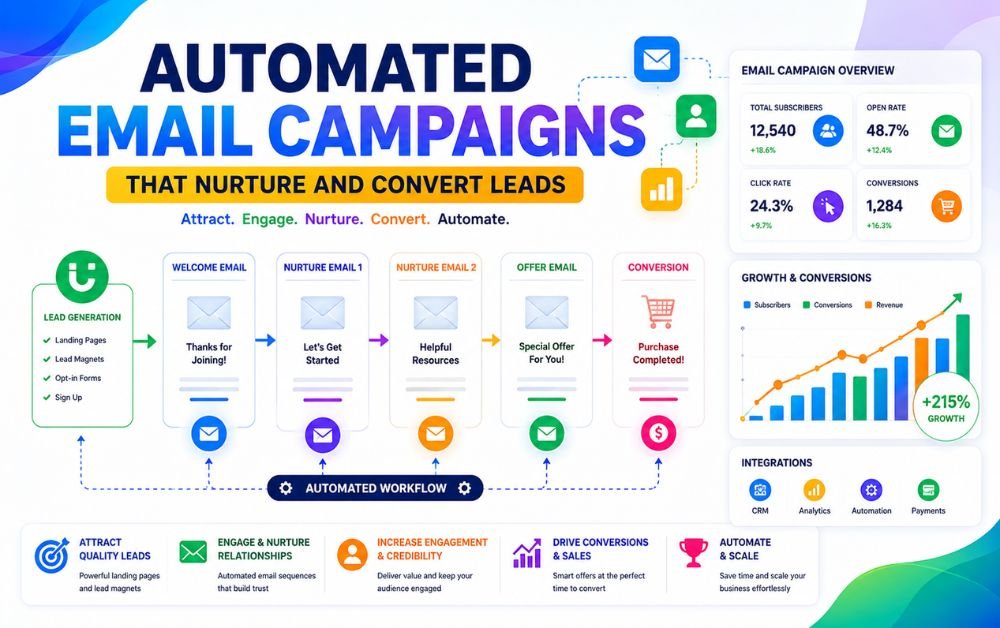
Email marketing remains one of the most effective ways to build relationships, educate prospects, and generate consistent sales. However, manually sending emails to every lead becomes difficult as a business grows. This is why many businesses choose to automate email campaigns and create a more efficient communication process.
Automated email campaigns allow businesses to send targeted messages based on subscriber actions, interests, and behavior. Whether someone joins an email list, downloads a resource, requests information, or books a consultation, automated emails can guide them through the customer journey without constant manual effort.
Instead of worrying about missed follow-ups or inconsistent communication, businesses can create email sequences that work automatically in the background. These campaigns help nurture leads, build trust, increase engagement, and encourage conversions over time.
When used correctly, email automation saves time while creating a better experience for potential customers and existing subscribers.
Automated email campaigns are email sequences that are automatically sent when a subscriber performs a specific action or reaches a certain stage in the customer journey. Instead of manually creating and sending every email, businesses can build workflows that deliver messages at the right time.
For example, a welcome email can be sent immediately after someone subscribes to a newsletter. Additional emails can then introduce products, share useful content, provide customer success stories, or encourage the next action.
The purpose of automated email campaigns is to maintain regular communication while reducing manual work. Every subscriber receives a consistent experience regardless of when they join the email list.
Businesses that use marketing automation software often combine email automation with customer data and behavioral tracking to deliver more relevant messages. Advanced platforms such as ActiveCampaign allow businesses to trigger emails based on subscriber actions and engagement levels.
Why Businesses Need Automated Email Campaigns
Most customers do not make a purchasing decision immediately after discovering a business. They usually need time to learn about products, compare options, and build trust before taking action.
Without a structured communication process, many leads simply lose interest or forget about the business altogether. Automated email campaigns help solve this problem by keeping prospects engaged throughout the decision-making process.
Businesses can educate subscribers, answer common questions, share valuable resources, and build credibility through scheduled email sequences. This ongoing communication helps move leads closer to becoming customers.
Companies that already use a sales funnel can strengthen every stage of the customer journey with automated emails. Platforms such as Brevo help businesses create email sequences that maintain engagement while reducing the time spent on manual follow-ups.
Common Email Marketing Challenges Businesses Face
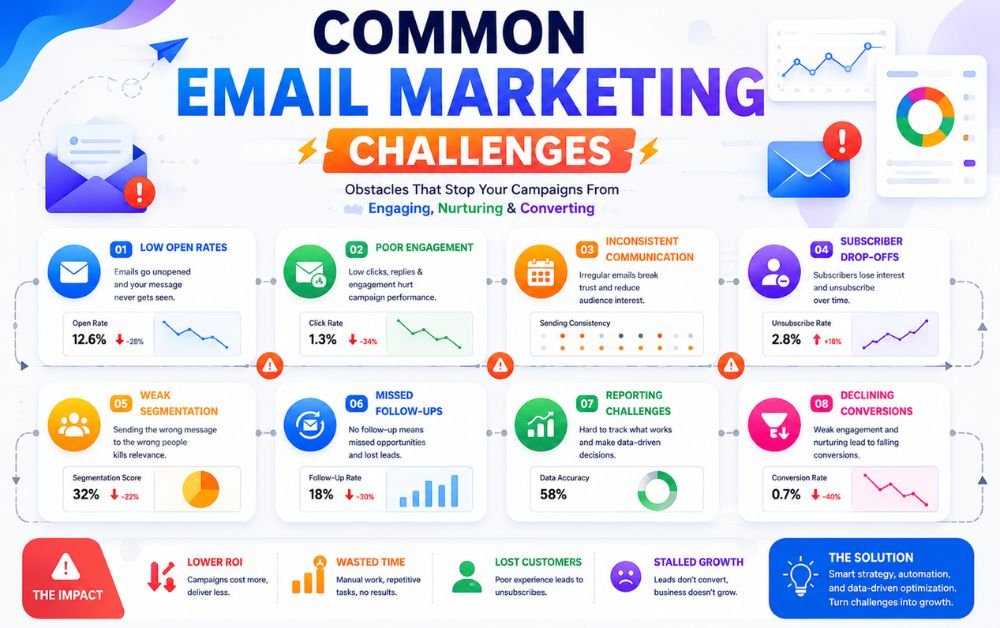
One of the biggest email marketing challenges is maintaining consistent communication. Many businesses start with good intentions but struggle to send emails regularly as daily responsibilities increase.
Another common issue is low engagement. Subscribers often ignore emails when content is not relevant to their interests or needs. Poor segmentation can make this problem even worse.
Businesses also face difficulties managing growing email lists, tracking subscriber behavior, and understanding which campaigns generate results. Without clear reporting, improving performance becomes difficult.
Lead nurturing presents another challenge. New subscribers may require multiple interactions before they are ready to buy, making long-term communication essential. Businesses using automate lead capture strategies often connect their email systems to customer databases for better follow-up management. Tools like HubSpot can help organize subscriber information while improving campaign tracking and reporting.
Benefits of Automated Email Campaigns
Businesses that automate email campaigns can communicate with leads consistently without spending hours sending manual emails. Every subscriber receives the right message at the right time, helping businesses stay connected throughout the buying journey.
One major benefit is improved lead nurturing. Instead of losing potential customers after their first interaction, businesses can continue providing valuable information that builds trust and credibility. Automated campaigns also improve efficiency by reducing repetitive tasks and allowing teams to focus on more important activities.
Another advantage is personalization. Modern email platforms can send different messages based on subscriber behavior, interests, and engagement levels. This creates a more relevant experience for every contact.
Businesses exploring email automation solutions often choose platforms like ActiveCampaign because they offer advanced automation, segmentation, and behavioral targeting features that improve engagement and conversions.
How Automated Email Campaigns Work
Automated email campaigns operate using triggers and workflows. A trigger is an action performed by a subscriber, such as joining an email list, downloading a guide, requesting a quote, or clicking a specific link.
Once the trigger occurs, the automation platform automatically starts a sequence of emails. These messages are delivered according to predefined rules and schedules. For example, a welcome email may be sent immediately, followed by educational content over the next several days.
As subscribers interact with emails, the system can adjust future communication based on their behavior. People who engage frequently may receive different messages than those who remain inactive.
Businesses that use CRM automation often connect customer data with email workflows to create more personalized experiences. Platforms such as HubSpot make it easier to manage subscriber activity and automate communication based on customer actions.
Building Your Email Marketing Strategy
A successful email marketing strategy starts with clear goals. Businesses should identify what they want to achieve, whether it is generating leads, increasing sales, improving customer retention, or promoting specific services.
After defining goals, businesses need to understand their target audience. Knowing subscriber interests, challenges, and expectations helps create more effective email content. Every campaign should provide value while guiding subscribers toward a desired action.
List-building, segmentation, automation, and performance tracking are also essential parts of a strong strategy. Without a structured plan, email campaigns often become inconsistent and less effective over time.
Businesses that already have a sales funnel can align email campaigns with each stage of the customer journey. Tools like Brevo help organize campaigns, automate communication, and manage subscriber engagement from a single platform.
Understanding the Email Customer Journey
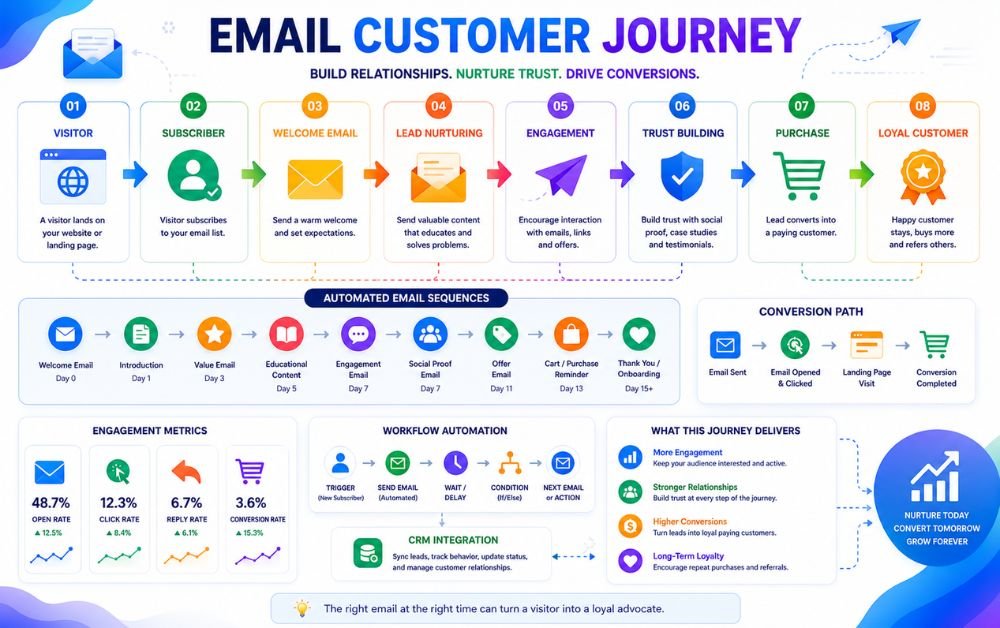
The email customer journey describes the path subscribers follow from their first interaction with a business until they become customers and loyal advocates. Understanding this journey helps businesses deliver the right content at the right stage.
New subscribers typically begin in the awareness stage, where they are learning about a problem or searching for solutions. As trust develops, they move into consideration and evaluation stages before making a purchase decision.
Automated email campaigns support each stage by delivering relevant content that answers questions, builds confidence, and encourages action. Educational emails, case studies, testimonials, and special offers can all play important roles in moving subscribers forward.
Businesses using lead capture systems often map email content to specific customer journey stages for better results. Platforms like ConvertKit help create targeted email paths based on subscriber behavior and engagement.
Choosing the Right Email Automation Software
Choosing the right email automation software is important because it affects how easily you can manage subscribers, send campaigns, track engagement, and automate communication. The ideal platform should save time while helping you build stronger relationships with your audience.
Before selecting a tool, consider your budget, business goals, automation requirements, and future growth plans. Some platforms focus only on email marketing, while others combine email automation with landing pages, forms, funnels, and customer management.
If you want an all-in-one solution that handles email campaigns alongside lead generation and automation, Systeme.io can simplify your workflow by keeping everything in one place. If your primary goal is managing email campaigns, segmentation, and subscriber engagement, Brevo offers features specifically designed for email marketing.
The best choice depends on how you plan to grow your audience and communicate with leads over time. A platform should make automation easier, not more complicated.
Creating High-Converting Lead Magnets
A lead magnet is a valuable resource offered in exchange for a visitor’s contact information. It helps turn anonymous website visitors into email subscribers and potential customers.
The most effective lead magnets solve a specific problem quickly. Checklists, templates, guides, calculators, mini-courses, and resource lists often perform well because they provide immediate value. The offer should directly relate to the products or services your business provides.
Clarity is essential. Visitors should instantly understand what they will receive and how it will help them. Complicated offers usually generate fewer conversions than simple, focused solutions.
A strong lead magnet also works best when connected to an email campaign that continues providing value after signup. This allows businesses to build trust, educate subscribers, and guide them toward future purchasing decisions without relying on one-time interactions.
Building Your Email List the Right Way
Building an email list should focus on attracting people who genuinely want to hear from your business. A smaller list of interested subscribers is usually far more valuable than a large list of inactive contacts.
The best list-building methods include website forms, blog content, lead magnets, webinars, free resources, consultations, and landing pages. Every signup opportunity should clearly explain what subscribers will gain after joining.
Purchasing email lists is generally a poor strategy because the contacts are often unengaged and less likely to interact with future emails. Organic growth creates stronger engagement and better long-term results.
A well-designed sales funnel can help capture subscribers at different stages of the customer journey. By providing useful content and maintaining consistent communication, businesses can steadily grow an audience that is more likely to engage, trust the brand, and eventually become customers.
How to Segment Your Email Subscribers
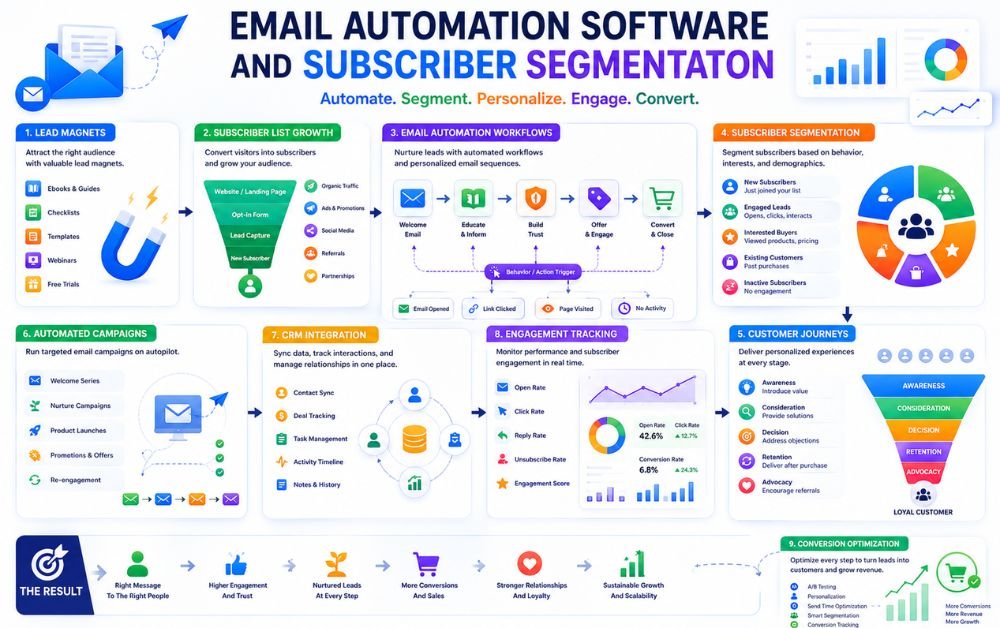
Email segmentation is the process of dividing subscribers into smaller groups based on shared characteristics or behaviors. Instead of sending the same message to everyone, businesses can deliver more relevant content to each audience segment.
Subscribers can be grouped according to interests, lead source, location, engagement level, purchase history, industry, or actions taken on a website. This makes communication more personalized and useful.
Segmentation often improves open rates, click-through rates, and conversions because subscribers receive information that matches their needs and expectations. It also helps reduce unsubscribes by avoiding irrelevant messaging.
When businesses automate email campaigns, segmentation becomes even more powerful. Automated workflows can send different messages to different subscriber groups, creating a more personalized customer experience while improving engagement and conversion opportunities throughout the customer journey.
Creating Your Welcome Email Sequence
A welcome email sequence is often the first impression a new subscriber receives after joining your email list. Instead of immediately promoting products or services, focus on introducing your brand and setting expectations.
The first email should thank subscribers for joining and explain what type of content they will receive. The next few emails can share helpful resources, common solutions, success stories, or useful tips related to their interests. This helps establish credibility while encouraging engagement.
A strong welcome sequence builds familiarity and trust before any sales conversation begins. Subscribers who understand your expertise are more likely to open future emails and interact with your content.
If you automate email campaigns, a welcome sequence becomes one of the most valuable automations because every new subscriber receives a consistent experience from the beginning of their journey.
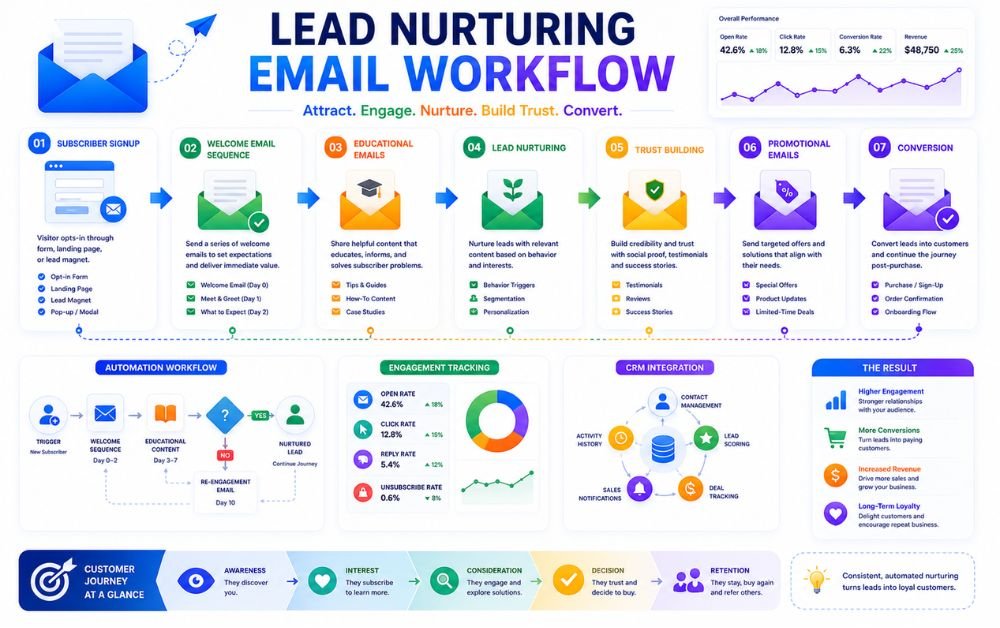
Lead Nurturing Email Campaigns
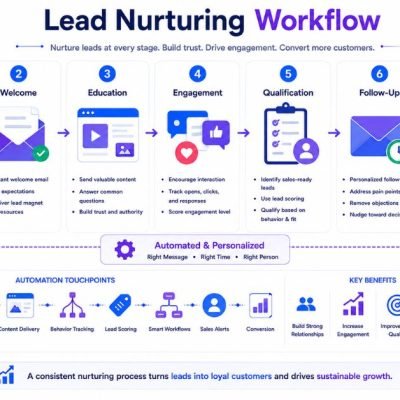
Most subscribers are not ready to buy immediately after joining an email list. Lead nurturing email campaigns help maintain communication while gradually moving prospects closer to a purchasing decision.
These campaigns focus on providing value rather than making constant sales pitches. Helpful content, practical advice, industry insights, and problem-solving information can keep subscribers engaged while building trust over time.
Consistent nurturing helps businesses remain visible during the decision-making process. When subscribers eventually need a solution, they are more likely to remember the business that continuously provided useful information.
An effective email marketing strategy usually includes lead nurturing campaigns because they strengthen relationships and improve long-term conversion opportunities without creating pressure or overwhelming subscribers.
Educational Email Campaigns
Educational email campaigns are designed to teach subscribers something useful while positioning a business as a trusted source of information. These campaigns focus on solving problems, answering questions, and helping subscribers achieve specific goals.
Educational content may include tutorials, guides, case studies, industry updates, best practices, and actionable tips. The goal is to provide genuine value rather than immediately selling a product or service.
When subscribers consistently learn something helpful from your emails, trust naturally increases. This trust often leads to stronger engagement and better conversion rates over time because people prefer buying from brands they consider knowledgeable and reliable.
Businesses that automate lead capture can use educational campaigns to guide new subscribers through a structured learning process while keeping them engaged throughout the customer journey.
Trust-Building Email Campaigns
Trust is one of the most important factors influencing purchasing decisions. Even when people are interested in a product or service, they may hesitate if they are unsure about the company behind it.
Trust-building email campaigns help remove uncertainty by demonstrating credibility and reliability. Customer success stories, testimonials, case studies, behind-the-scenes insights, and real-world results can all strengthen confidence.
Consistency also plays an important role. Subscribers are more likely to trust businesses that communicate regularly and provide value without constantly focusing on sales.
A well-structured sales funnel often includes trust-building emails between awareness and conversion stages. These emails help subscribers feel comfortable before making important purchasing decisions, increasing the likelihood of future engagement and sales.
Promotional Email Campaigns
Promotional email campaigns are designed to encourage subscribers to take action. These emails may highlight special offers, discounts, product launches, limited-time opportunities, consultations, or service packages.
The most effective promotional emails focus on benefits rather than features. Instead of simply describing a product, they explain how it solves a problem or improves a situation for the subscriber.
Promotional campaigns usually perform better when they are supported by educational and nurturing content. Subscribers who already trust a business are more likely to respond positively when an offer is presented.
Businesses that automate email campaigns can schedule promotional messages based on subscriber behavior, interests, and engagement levels. This allows offers to reach the right audience at the right time while maintaining a more personalized customer experience.
Personalizing Automated Email Campaigns
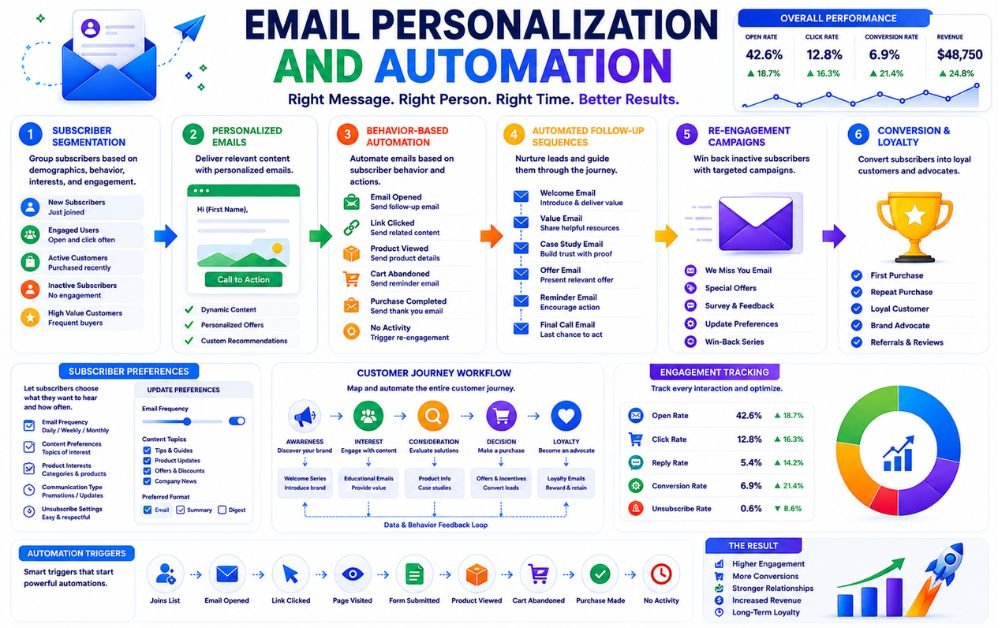
Personalization helps make emails feel more relevant and valuable to subscribers. Instead of sending identical messages to everyone, businesses can tailor content based on subscriber information, interests, and previous interactions.
Simple personalization can include using a subscriber’s name, location, or signup source. More advanced personalization may involve recommending content based on browsing behavior, past purchases, or engagement history.
Personalized emails often generate higher open rates, better click-through rates, and stronger engagement because subscribers receive information that matches their needs. The goal is to create a more meaningful experience rather than delivering generic messages.
When businesses automate email campaigns, personalization can be applied automatically through subscriber tags, segmentation, and behavioral data. This allows every subscriber to receive content that feels more relevant while reducing the manual effort required to manage communication.
Behavior-Based Email Automation
Behavior-based email automation sends emails according to actions subscribers take rather than following a fixed schedule. This approach helps businesses deliver more timely and relevant communication.
For example, a subscriber who downloads a guide may receive educational emails related to that topic. Someone who clicks a product link may receive additional information about that specific solution. A visitor who abandons a form or signup process can automatically receive reminders to complete the action.
Because these emails are triggered by behavior, they often achieve higher engagement than general email broadcasts. Subscribers receive messages based on what they actually do rather than what marketers assume they want.
Many businesses use Systeme.io to create automated workflows that respond to subscriber actions, helping deliver personalized communication while improving engagement and conversion opportunities.
Automating Follow-Up Emails
Follow-up emails help maintain communication after a subscriber takes an action such as joining a list, requesting information, downloading a resource, or making an inquiry. Without follow-ups, many potential opportunities can be lost.
Automated follow-up sequences ensure every subscriber receives timely communication without requiring manual effort. These emails can provide additional information, answer common questions, share useful resources, and encourage the next step in the customer journey.
The timing of follow-up emails is important. Sending messages too frequently may overwhelm subscribers, while long delays can reduce engagement. A structured sequence helps maintain consistent communication while keeping subscribers interested.
Businesses that already use automate lead capture systems often connect follow-up emails directly to signup forms and landing pages, creating a seamless process from lead generation to lead nurturing.
Re-Engaging Inactive Subscribers
Over time, some subscribers stop opening emails, clicking links, or interacting with content. Re-engagement campaigns help reconnect with these inactive contacts before removing them from the email list.
The first step is identifying subscribers who have not engaged for a specific period. Businesses can then send targeted emails asking whether the subscriber still wants to receive updates. Special resources, helpful content, or exclusive offers may encourage renewed engagement.
Sometimes subscribers become inactive simply because the content no longer matches their interests. Giving them options to update preferences can improve future engagement and reduce unsubscribe rates.
A strong email marketing strategy includes regular re-engagement campaigns because maintaining an active list improves deliverability, engagement metrics, and overall campaign performance while keeping communication focused on interested subscribers.
Connecting Email Campaigns to Your CRM
Connecting email campaigns to a CRM helps businesses keep subscriber information, communication history, and customer interactions organized in one place. Instead of managing contacts across multiple systems, all important data becomes accessible from a central location.
CRM integration allows businesses to automatically update contact records whenever subscribers open emails, click links, complete forms, or take other actions. This creates a more complete view of each lead and customer.
Having accurate customer data makes it easier to personalize communication, improve segmentation, and deliver more relevant content. It also helps sales and marketing teams work with the same information throughout the customer journey.
Businesses looking for an all-in-one solution often use Systeme.io because it combines email automation, contact management, forms, and funnels without requiring multiple separate tools. This simplifies lead management while supporting more effective customer communication.
Tracking Email Marketing Performance
Tracking performance is essential because it shows whether email campaigns are producing meaningful results. Without measurement, businesses cannot identify what is working or where improvements are needed.
Performance tracking helps reveal which emails attract attention, generate engagement, and contribute to conversions. It also highlights areas that may require optimization, such as subject lines, email content, timing, or calls to action.
Regular analysis allows businesses to make data-driven decisions rather than relying on assumptions. Even small improvements can significantly increase engagement and overall campaign effectiveness over time.
A strong email marketing strategy includes ongoing performance reviews because subscriber behavior constantly changes. Monitoring results consistently helps businesses improve communication, strengthen customer relationships, and achieve better outcomes from their automated email campaigns.
Important Email Metrics You Should Monitor
Several key metrics provide valuable insights into email campaign performance. Open rate shows how many subscribers opened an email, while click-through rate measures how many people clicked a link within the message.
Conversion rate is another important metric because it tracks how many subscribers completed a desired action after receiving an email. Businesses should also monitor unsubscribe rates to identify potential issues with content relevance or email frequency.
Bounce rates help determine email list quality and deliverability performance. High bounce rates may indicate outdated or invalid contact information that should be removed from the database.
Businesses that automate email campaigns should regularly review these metrics to understand subscriber behavior, identify trends, and improve future campaigns. Consistent monitoring supports better decision-making and more effective communication.
Common Email Automation Mistakes to Avoid
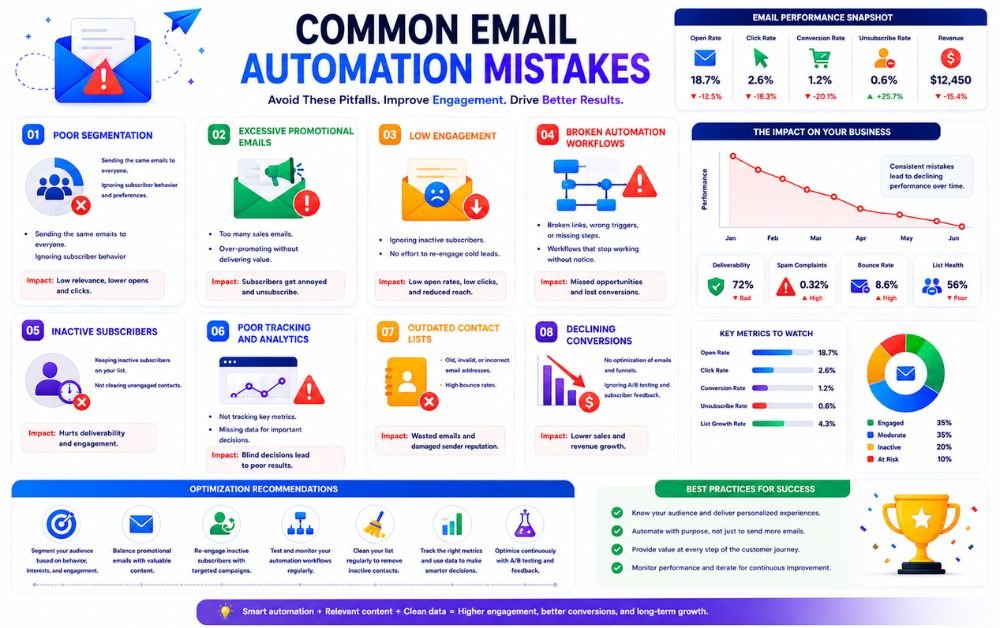
One common mistake is focusing too heavily on promotions while providing very little value. Subscribers are more likely to engage when emails educate, inform, or solve problems instead of constantly selling.
Another mistake is sending the same message to every subscriber regardless of interests or behavior. Poor segmentation often reduces engagement and makes communication feel less relevant.
Many businesses also create automation workflows and then forget to review them. Automated campaigns should be tested regularly to ensure links work correctly, content remains accurate, and subscriber experiences stay consistent.
Ignoring list hygiene can create additional problems. Removing inactive contacts and maintaining a clean subscriber database helps improve deliverability and engagement rates. A balanced approach that combines automation, personalization, and useful content usually produces the best long-term results.
Best Practices for Email Campaign Success
Successful email campaigns focus on delivering value consistently rather than sending emails only when a promotion is available. Subscribers are more likely to stay engaged when they regularly receive helpful information that solves problems or answers questions.
Start by understanding your audience and creating content that matches their interests. Segmenting subscribers and personalizing communication can significantly improve engagement and conversion rates. Every email should have a clear purpose and a simple call to action.
Testing is also important. Subject lines, email content, sending times, and call-to-action buttons should be reviewed regularly to identify opportunities for improvement. Small adjustments often lead to better results over time.
Businesses that automate email campaigns should also monitor performance metrics and update workflows when needed. Consistent optimization, valuable content, and a subscriber-focused approach create stronger relationships, improve engagement, and help email marketing deliver long-term business growth.
Final Verdict
Automated email campaigns help businesses communicate more effectively while reducing manual work. From welcome sequences and lead nurturing to follow-ups and promotions, automation keeps subscribers engaged throughout the customer journey.
The most successful campaigns combine valuable content, personalization, segmentation, and consistent optimization. Businesses that invest in automation can build stronger customer relationships, improve engagement, and generate more conversions over time.
Whether you are growing a small email list or managing thousands of subscribers, automate email campaigns can create a scalable system that supports long-term marketing success while saving valuable time and resources.
FAQs
Automated email campaigns are pre-built email sequences that are automatically sent when subscribers perform specific actions such as joining a list, downloading a resource, or completing a form.
The ideal frequency depends on your audience and goals. Most businesses achieve good results by maintaining consistent communication without overwhelming subscribers with excessive messages.
Yes. Email automation helps small businesses save time, improve lead nurturing, maintain customer communication, and increase conversions without requiring large marketing teams.
The best software depends on business needs. Systeme.io is popular for all-in-one marketing automation, while Brevo is often chosen for dedicated email marketing and automation features.
The most important metrics include open rate, click-through rate, conversion rate, unsubscribe rate, and bounce rate. Monitoring these metrics helps improve campaign performance and identify optimization opportunities.