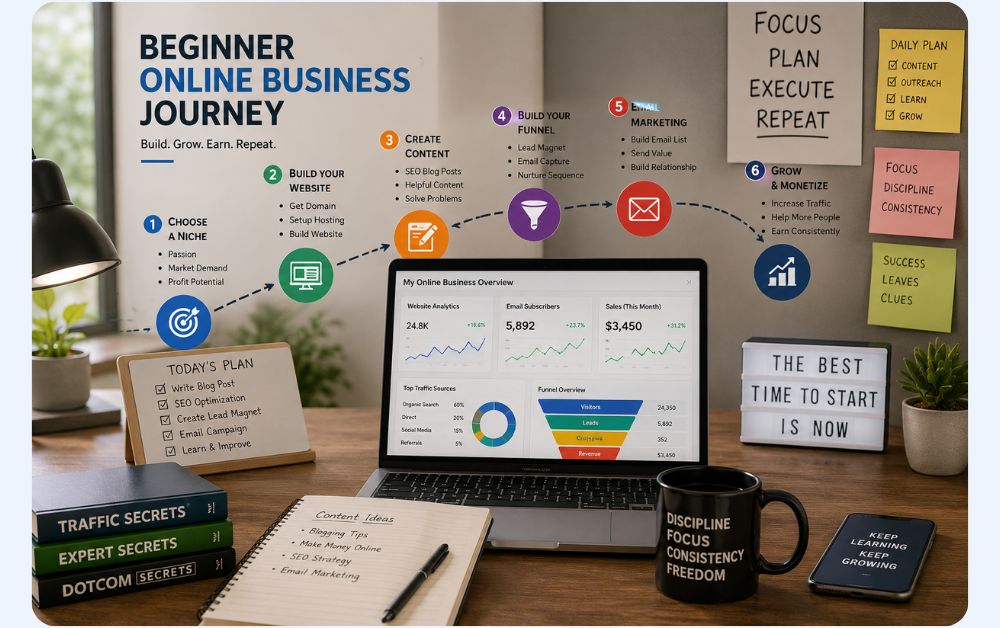
When I first started trying to make money online, I thought success was mostly about working harder.
So I did what many beginners do.
I:
- watched endless YouTube videos,
- followed random advice,
- tested different ideas,
- jumped between tools,
- and constantly looked for “the perfect strategy.”
At first, it felt productive.
But after a while, I realized something frustrating:
! I was staying busy… without building real systems.
That’s one of the biggest differences between beginners and people who eventually succeed online.
Successful creators usually build:
- systems,
- workflows,
- and processes
instead of relying only on motivation.
Honestly, there are many things I wish I understood earlier.
It would have saved:
- time,
- money,
- and a lot of unnecessary confusion.
This was probably the biggest surprise.
I assumed:
more visitors = more money
But that’s not automatically true.
Many websites get traffic every day and still struggle to generate income.
Why?
Because visitors leave without:
- subscribing,
- returning,
- or taking any action.
That’s when I started understanding why funnels and email systems matter so much.
Traffic is only the beginning.
What happens after the click matters even more.
2. Most People Quit Too Early
Online business usually looks faster from the outside.
You see:
- screenshots,
- success stories,
- and “overnight growth” everywhere.
But most real growth happens slowly.
Many successful creators spent:
- months learning,
- testing,
- and improving quietly
before seeing meaningful results.
Consistency matters far more than motivation.
3. Complicated Systems Usually Slow Beginners Down
At one point I tried using:
- separate tools for email marketing,
- another for funnels,
- another for landing pages,
- another for automation.
Honestly, it became exhausting.
Instead of building content…
I spent more time trying to connect software together.
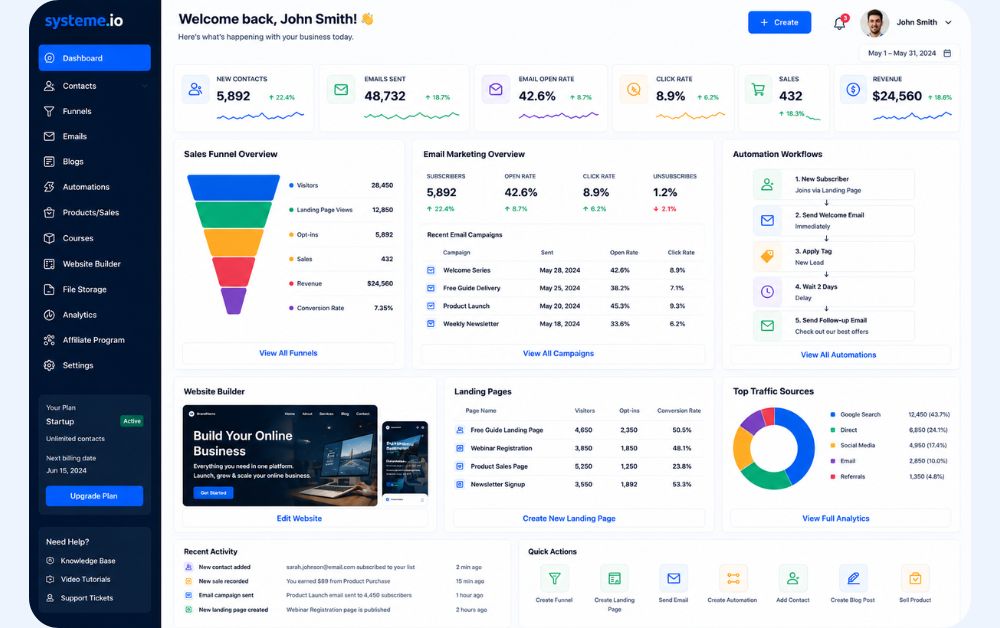
That’s one reason simpler all-in-one platforms like Systeme.io started making more sense to me later.
Having:
- funnels,
- emails,
- landing pages,
- and automation
inside one dashboard removes a surprising amount of friction.
Especially for beginners.
4. Email Lists Matter More Than Social Media Followers
This is something I completely underestimated.
Social media traffic comes and goes quickly.
Algorithms change constantly.
But email lists are different.
When someone joins your email list:
- you can follow up,
- build trust,
- and reconnect later.
Without email collection, many visitors disappear forever.
That’s why successful blogs usually focus heavily on audience building — not just traffic.
5. Funnels Are Simpler Than They Sound
When I first heard the term “sales funnel,” it sounded technical and intimidating.
But funnels are really just structured paths.
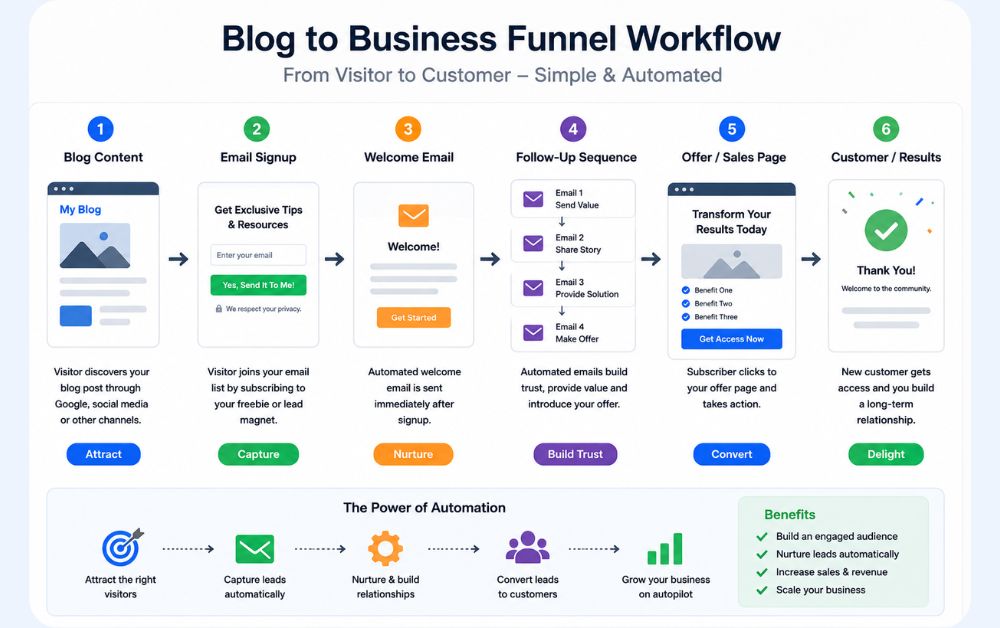
For example:
Visitor → Helpful Content → Email Signup → More Value → Offer
That’s it.
Instead of randomly hoping visitors buy something, funnels guide people naturally.
Once I understood that, online business started making much more sense.
6. Design Matters Less Than Clarity
Beginners often spend weeks:
- changing colors,
- redesigning logos,
- tweaking layouts,
- or obsessing over tiny design details.
I did the same thing.
But visitors usually care about something much simpler:
“Can this help me solve my problem?”
Clear messaging almost always matters more than fancy design.
7. SEO Takes Longer Than Most People Expect
I used to think blog traffic would appear quickly after publishing articles.
But SEO is usually slower.
Google needs time to:
- understand your content,
- trust your website,
- and evaluate consistency.
That’s why many blogs fail early.
People stop posting before momentum has time to build.
Consistency is one of the biggest advantages beginners can develop.
8. Most Online Advice Is Too Complicated
One thing I noticed after consuming endless marketing content:
A lot of advice sounds impressive…
but feels difficult to apply in real life.
Beginners don’t need:
- 50-step funnels,
- complicated automation,
- or advanced strategies immediately.
Usually, simple systems work better:
- one traffic source,
- one audience,
- one funnel,
- one clear goal.
That simplicity creates momentum.
9. Automation Saves More Time Than You Realize
At first, I handled everything manually.
- replying manually,
- sending resources manually,
- organizing contacts manually.
Eventually it became overwhelming.
Automation quietly solves many of those problems.
Simple workflows can:
- send welcome emails,
- organize leads,
- deliver downloads,
- and follow up automatically.
That frees up time for actual content creation.
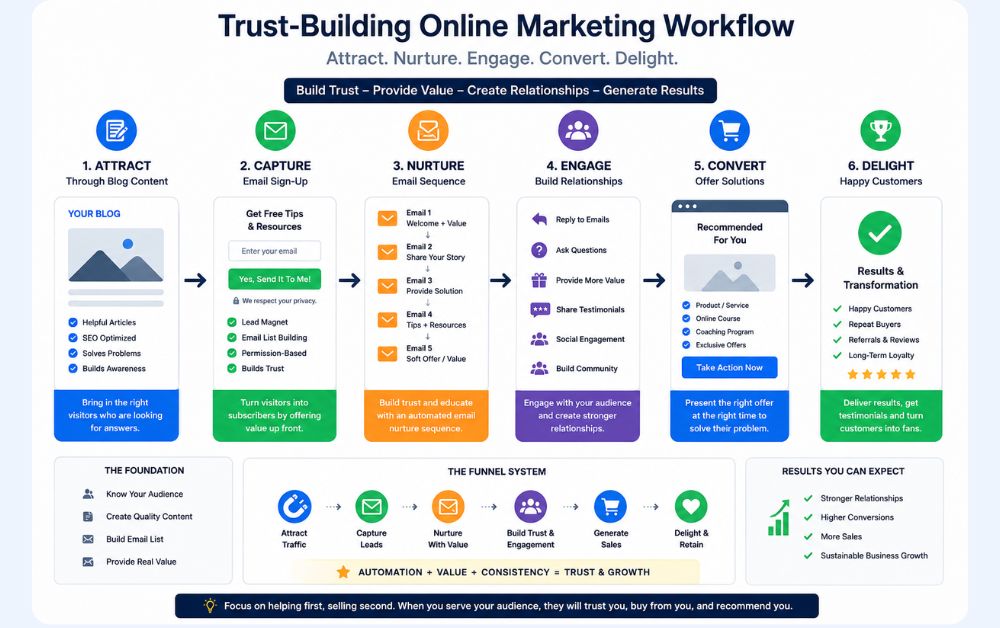
10. Building Trust Is More Important Than Selling Fast
This was another major mindset shift.
People rarely trust strangers online immediately.
Helpful content works because it:
- educates,
- solves problems,
- and builds familiarity first.
That’s why blogs, email sequences, and funnels work so well together.
Trust usually comes before conversions.
11. Systems Reduce Stress
This might be the most underrated lesson.
When everything is disorganized:
- work feels chaotic,
- motivation drops,
- and burnout appears quickly.
But systems create clarity.
Knowing:
- where traffic goes,
- how emails are collected,
- and how follow-ups happen
makes online business feel much more manageable.
That’s why so many creators eventually focus less on “hacks”…
and more on building systems they can consistently maintain.
Final Thoughts
Looking back, I think many beginners struggle because online business feels more complicated than it actually needs to be.
Most progress comes from:
- consistency,
- clarity,
- simple systems,
- and patience.
Not from constantly chasing shortcuts.
And honestly…
understanding that earlier would have saved me a lot of unnecessary frustration.

At the end of the day…
success online usually comes from building systems slowly and consistently —
not from trying to figure everything out overnight.