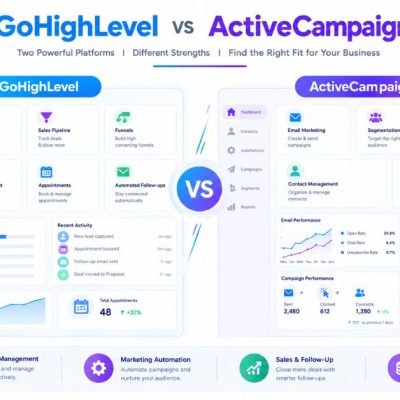
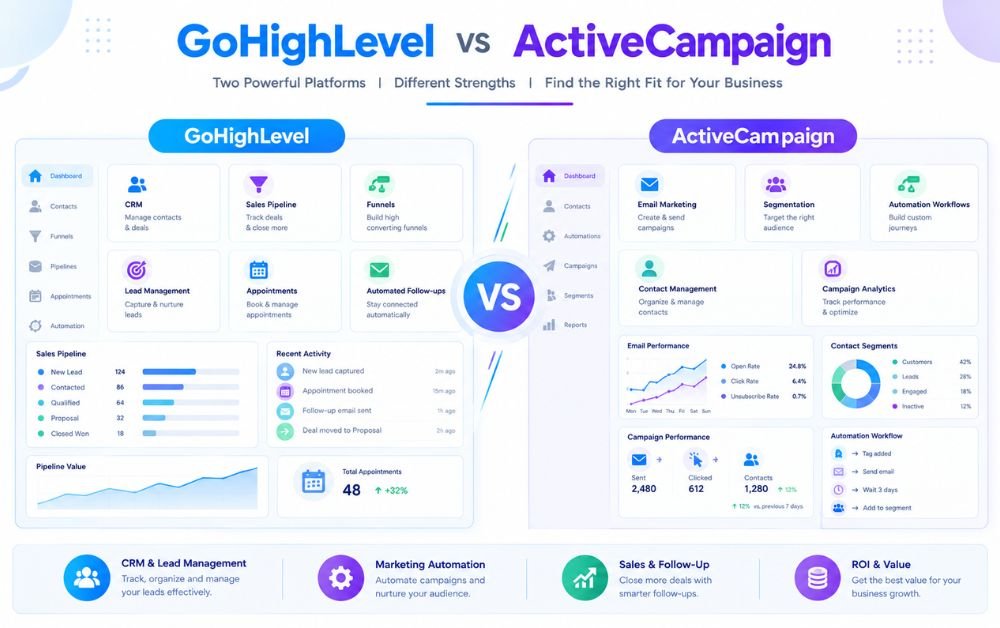
Choosing the right marketing automation platform can be difficult when two tools offer powerful features but approach business growth differently. GoHighLevel vs ActiveCampaign is a useful comparison for businesses that want to automate marketing, manage leads, improve follow-ups, and increase the return from their software investment.
GoHighLevel focuses heavily on combining CRM, sales pipelines, funnels, communication, and automation in one platform. ActiveCampaign has a strong reputation for email marketing, customer segmentation, and sophisticated automation workflows.
The better choice depends on what your business actually needs. A small business may value an all-in-one system, while another company may mainly need advanced email automation and customer engagement.
In this comparison, we will look at their key differences, automation capabilities, CRM features, pricing value, ease of use, scalability, and potential ROI so you can make a practical decision.
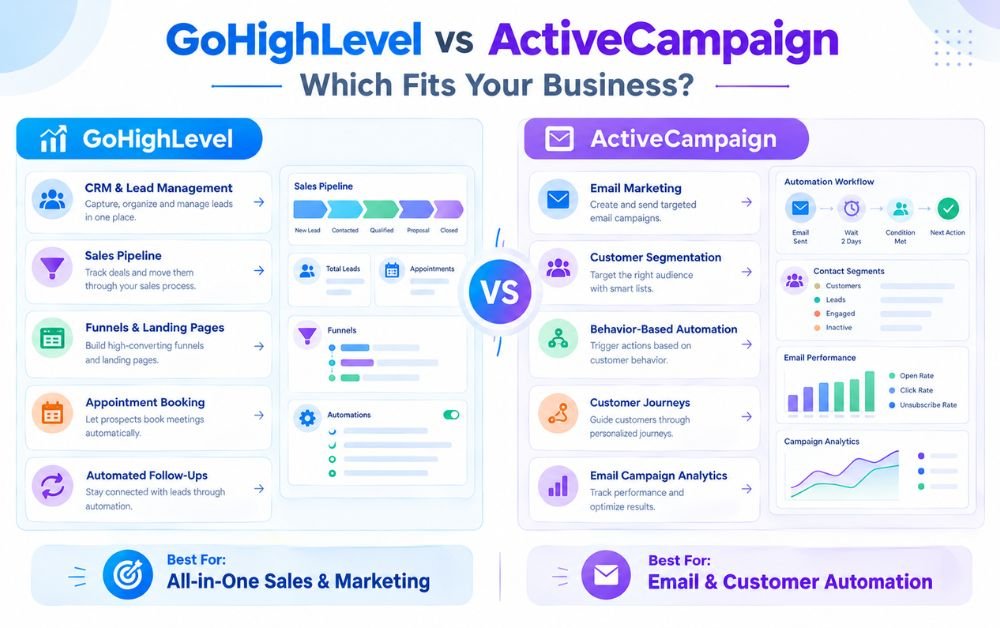
The biggest difference in GoHighLevel vs ActiveCampaign is how each platform approaches business automation. GoHighLevel is designed as a broader business platform that brings CRM, sales pipelines, funnels, appointment management, communication, and automation into one system. This can be useful for businesses that want fewer separate tools to manage.
ActiveCampaign is more focused on customer engagement, email marketing, segmentation, and sophisticated automation workflows. It can be particularly useful when email communication and audience nurturing are central to the marketing strategy.
The right option depends on the workflow you want to build. If your priority is managing leads and sales activities across multiple functions, GoHighLevel may be a stronger fit. If your main goal is creating detailed customer journeys and targeted email automation, ActiveCampaign may make more sense.
Who Should Choose GoHighLevel?
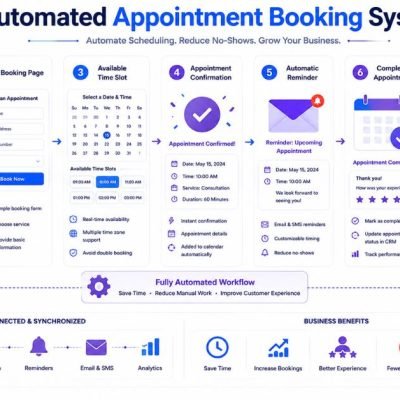
GoHighLevel may suit businesses that want to manage more of their sales and marketing operations from one platform. It can be useful for agencies, service businesses, and teams that need CRM features, lead pipelines, funnels, appointment booking, communication, and automated follow-ups working together.
It is also worth considering if managing several separate tools has become difficult or expensive. Having these functions within one system can simplify the overall workflow and reduce the need to move information between different platforms.
Businesses should still evaluate the features they actually need before choosing it. A platform with more capabilities is not automatically better if most of those features will never be used.
Who Should Choose ActiveCampaign?
ActiveCampaign may be a better choice for businesses that place strong emphasis on email marketing, customer segmentation, and behavior-based automation. It can help marketers create detailed workflows based on actions such as email engagement, website activity, forms, and customer interactions.
It can be especially useful when the main objective is nurturing prospects over time rather than managing every part of the sales operation in one platform. Businesses with established email marketing strategies may also appreciate the ability to build targeted customer journeys.
However, the right choice depends on the complete workflow. If a business needs extensive sales, funnel, appointment, and communication functions in addition to email automation, it should compare those requirements carefully before deciding between the two platforms.
GoHighLevel vs ActiveCampaign: CRM and Lead Management
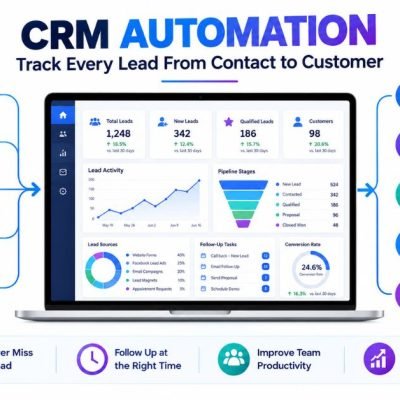
CRM capabilities are an important difference when comparing these platforms. GoHighLevel places CRM and sales pipeline management at the center of its platform. Leads can be organized into pipelines, assigned to team members, tracked through different stages, and connected with follow-up activities.
ActiveCampaign also provides contact and customer management, but its approach is closely connected to marketing automation and customer engagement. Contacts can be segmented, tagged, and organized based on their information and behavior.
The practical difference comes down to how you want to manage leads. GoHighLevel is built around combining CRM and sales activities with marketing tools. ActiveCampaign is particularly focused on using customer data to create targeted communication and automated journeys.
For teams comparing CRM automation platforms, the important question is whether sales pipeline management or customer engagement automation is the bigger requirement.
GoHighLevel vs ActiveCampaign: Marketing Automation
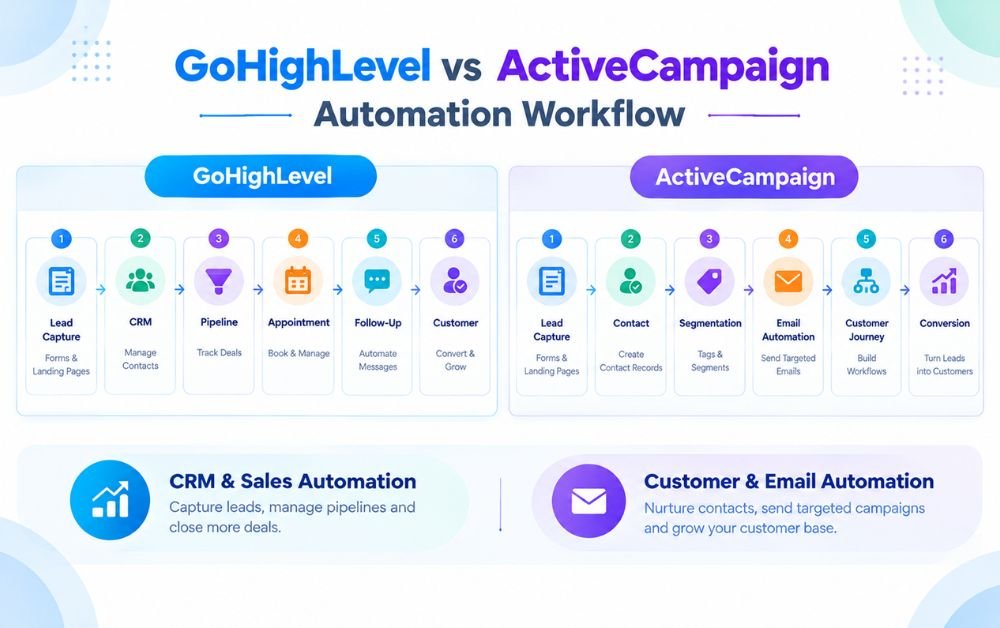
Both platforms support marketing automation, but their workflows are designed around somewhat different use cases. GoHighLevel connects automation with CRM records, sales pipelines, funnels, appointments, and communication. This allows a workflow to continue from lead capture through follow-up and sales activity.
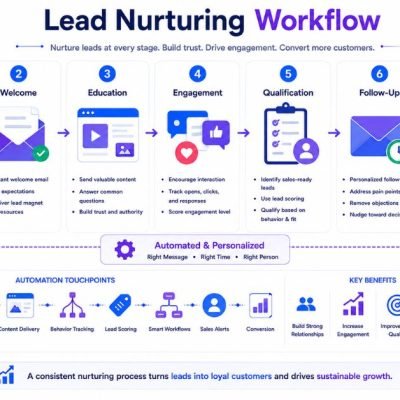
ActiveCampaign is strongly centered on customer journeys and behavior-based automation. Marketers can build workflows triggered by actions such as form submissions, email engagement, contact updates, and other customer behaviors.
This difference matters when designing an automation strategy. GoHighLevel can be useful when marketing automation needs to work closely with sales and customer management. ActiveCampaign can be useful when detailed segmentation and personalized customer journeys are the primary focus.
Before choosing either platform, map your actual workflow first. The right platform should support the actions you need without adding unnecessary complexity to your daily process.
GoHighLevel vs ActiveCampaign: Sales Funnels and Landing Pages
Sales funnels are another area where the platforms take different approaches. GoHighLevel includes tools designed to build funnels and landing pages as part of its broader sales and marketing environment. Leads captured through these assets can then connect with CRM records and automated follow-up workflows.
ActiveCampaign can connect with forms, landing pages, and other lead-generation tools, but its main strength is connecting customer information with email marketing and automation.
For someone building a complete lead-generation process, the workflow matters more than simply having a landing-page builder. Consider how easily a visitor can move from landing page → lead capture → CRM → follow-up → sales pipeline.
If this complete journey is central to your strategy, compare the platforms based on how many separate tools you would need to achieve it.
GoHighLevel vs ActiveCampaign: Email Marketing
Email marketing is a major part of both platforms, but their emphasis differs. ActiveCampaign is particularly focused on email campaigns, segmentation, personalization, and automated customer journeys. This makes it suitable for marketers who want detailed communication based on subscriber behavior.
GoHighLevel also provides email marketing and automated communication, but email can operate as one component of a broader system that includes CRM, funnels, appointments, and sales automation.
When comparing them, look beyond the ability to send emails. Consider whether you need advanced segmentation, behavioral triggers, automated sequences, and reporting alongside your other marketing activities.
A business that mainly depends on email nurturing may evaluate ActiveCampaign around its email capabilities, while a team seeking an integrated sales and marketing workflow may evaluate GoHighLevel across the complete system.
GoHighLevel vs ActiveCampaign: Communication and Follow-Up
Consistent follow-up is essential because leads can easily be forgotten when communication is handled manually. GoHighLevel connects follow-up with CRM records, pipelines, appointments, and other sales activities, allowing businesses to build broader communication workflows.
ActiveCampaign focuses heavily on automated customer communication through email and behavior-based journeys. These workflows can respond to actions and help maintain communication throughout the customer lifecycle.
The important consideration is the type of communication your workflow requires. If your process depends heavily on coordinated sales activities, appointments, CRM tasks, and multiple follow-up actions, examine how the platform handles those processes together.
If email-based nurturing is the main requirement, evaluate segmentation and automation depth alongside campaign management.
In either case, automation should support timely communication without making the customer experience feel repetitive or overly automated.
GoHighLevel vs ActiveCampaign: Pricing and Overall Value
Pricing should be considered alongside the features you will actually use. GoHighLevel combines CRM, sales pipelines, funnels, appointments, communication, and automation, so its value can depend on how many separate tools it replaces in your workflow.
ActiveCampaign offers different plans and focuses strongly on customer engagement, email marketing, segmentation, and automation. Its overall cost can therefore make more sense when those capabilities are the main requirements.
Instead of comparing the subscription price alone, calculate the complete cost of your marketing stack. Include additional funnel tools, CRM software, appointment systems, email platforms, integrations, and other services you may otherwise need.
The better value depends on your specific workflow, team size, required features, and how much of the platform you will actually use.
GoHighLevel vs ActiveCampaign: Ease of Use
Ease of use depends heavily on what you are trying to build. GoHighLevel offers many connected features, which can reduce the need to switch between different platforms but may also require time to learn the broader system.
ActiveCampaign has a strong focus on email campaigns, segmentation, and automation workflows. Users mainly working with customer journeys may find its structure easier to understand.
For either platform, the learning curve depends on workflow complexity. A simple email sequence is very different from building a complete CRM, funnel, appointment, and follow-up system.
Before choosing, consider which platform matches your team’s existing skills and how much time you can spend learning and maintaining the system.
GoHighLevel vs ActiveCampaign: Integrations and Scalability
Both platforms can connect with other software, but integration requirements depend on the tools already used in your business. GoHighLevel can support workflows involving CRM, funnels, communication, appointments, and sales activities.
ActiveCampaign can connect customer data and marketing activity with other applications, helping teams build broader automated customer journeys.
Scalability should not only mean handling more contacts. Consider whether the platform can support additional workflows, team members, communication channels, campaigns, and operational requirements as your organization grows.
Before committing, list the applications you currently use and check whether the integrations you actually need are available on the plan you intend to purchase.
Which Platform Offers Better ROI?
ROI depends on how closely the platform matches your actual workflow and how effectively your team uses its features. Subscription price alone cannot determine the return you receive.
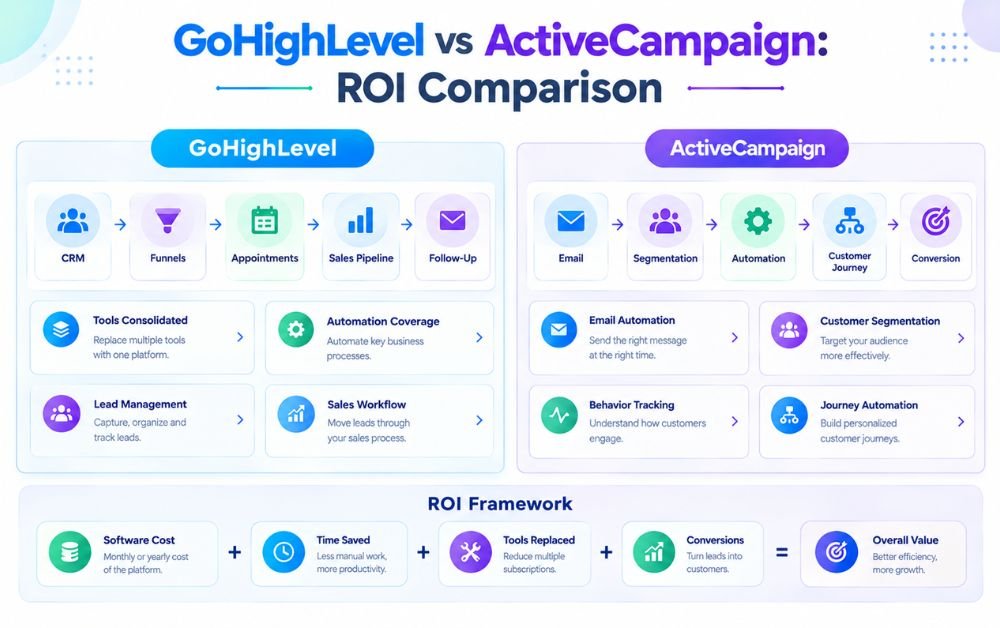
For example, a company that needs CRM, funnels, appointments, sales pipelines, and communication automation may evaluate GoHighLevel based on how many separate tools it can consolidate. A business focused primarily on email marketing, segmentation, and customer journeys may evaluate ActiveCampaign around those specific activities.
A practical ROI calculation should consider software cost, tools replaced, time saved, leads generated, conversions, and ongoing maintenance.
Rather than assuming one platform will produce a higher return for every business, compare the costs and measurable outcomes against your own workflow. This gives you a more realistic view of potential value.
Common Mistakes When Choosing Between GoHighLevel and ActiveCampaign
One common mistake is choosing a platform based only on the number of features it offers. A larger feature set does not automatically mean every feature will be useful for your workflow.
Another mistake is comparing subscription prices without considering the cost of additional tools. Check whether you still need separate software for CRM, funnels, email marketing, appointments, or communication.
It is also easy to overlook your team’s technical experience. A powerful automation system may require more setup and training than expected.
Finally, avoid choosing before mapping your actual customer journey. Identify how leads are captured, nurtured, followed up with, and converted first. Then compare how each platform supports those steps, including integrations, automation rules, reporting, and ongoing maintenance.
Final Verdict: GoHighLevel vs ActiveCampaign
GoHighLevel and ActiveCampaign approach marketing automation from different directions. GoHighLevel combines CRM, sales pipelines, funnels, appointments, communication, and automation within a broader platform. ActiveCampaign focuses strongly on email marketing, segmentation, customer data, and automated customer journeys.
Your decision should therefore start with your actual requirements rather than a general feature comparison. Map your lead-generation and customer journey, identify the tools you currently use, calculate the total software cost, and determine which capabilities your team will actively use.
For a practical comparison, evaluate CRM, automation, email, funnels, communication, integrations, pricing, and measurable business outcomes against your specific workflow.
FAQs
No. Both provide marketing automation, but their platforms have different areas of emphasis. GoHighLevel combines CRM, sales, funnels, appointments, communication, and automation, while ActiveCampaign places strong emphasis on email marketing, segmentation, and customer journeys.
Both platforms provide customer and contact management capabilities. GoHighLevel places CRM and sales pipeline functionality prominently within its broader platform. ActiveCampaign connects contact management closely with marketing automation and customer engagement.
Yes. Both support automated email workflows. The specific capabilities, triggers, segmentation options, and plan availability should be checked against the current plans before purchasing.
Yes. Both platforms support integrations, although the available connections and implementation methods can differ. Check the specific applications your workflow depends on before selecting a platform.
Look beyond the monthly subscription. Compare software costs, additional tools required, time saved, automation coverage, lead management, conversions, and maintenance effort. Your actual workflow and results provide a more useful ROI calculation than the subscription price alone.